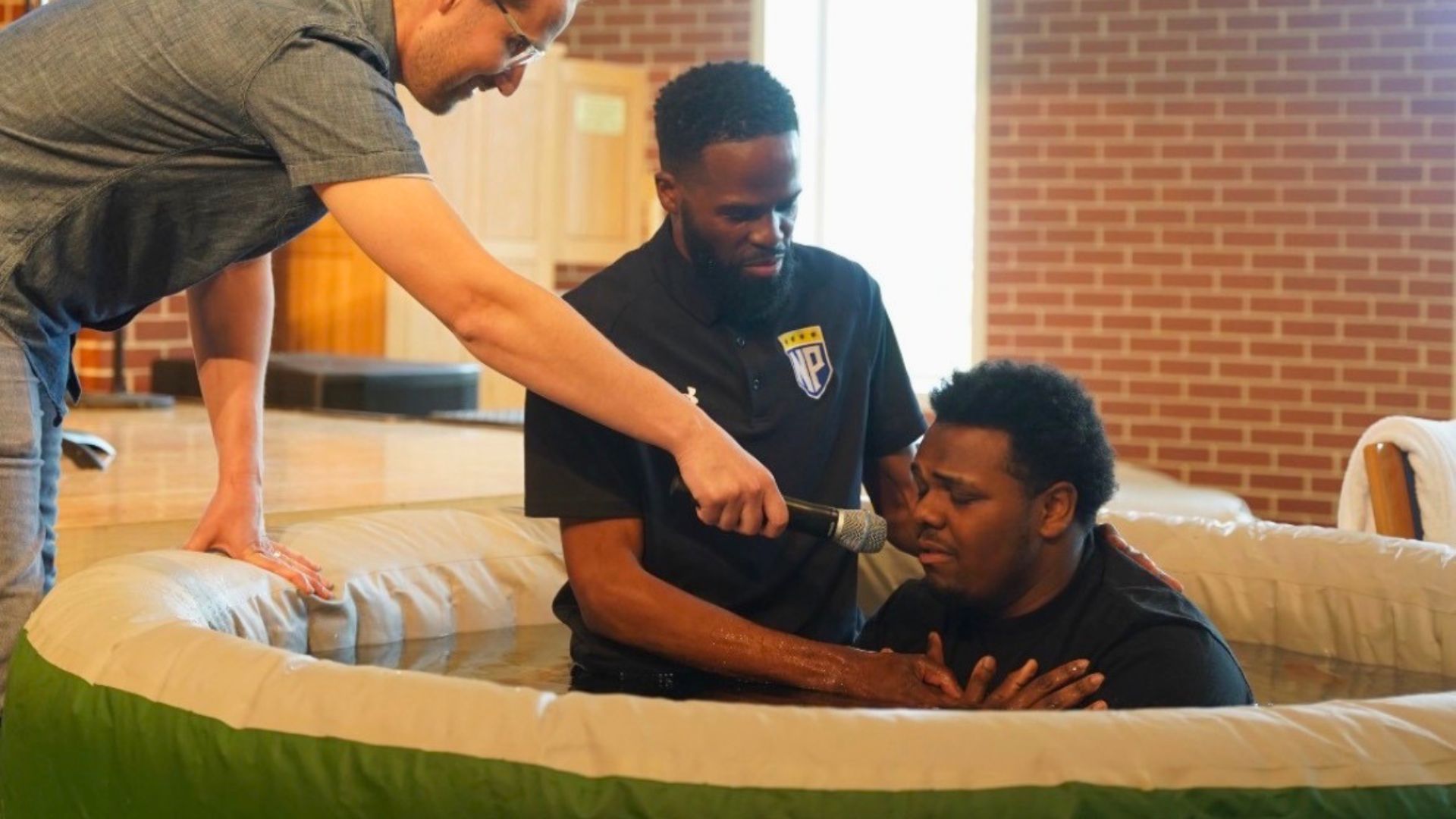
When I was a student at North Park University, Wednesday chapel was a constant. You went. It was part of the rhythm. What I don’t remember is a single baptism ever taking place there.
So when I heard that North Park’s University Ministries (UMin) had just held its first on-campus baptism in fifteen years, I was curious about how it happened. The answer was not a service or a program or a theological initiative. It started with a man showing up to football practice.
“I don’t change anybody, God does the transformational work. I can encourage, I can inspire, but God does the transforming. And that takes the pressure off.”
— Terence Gadsden
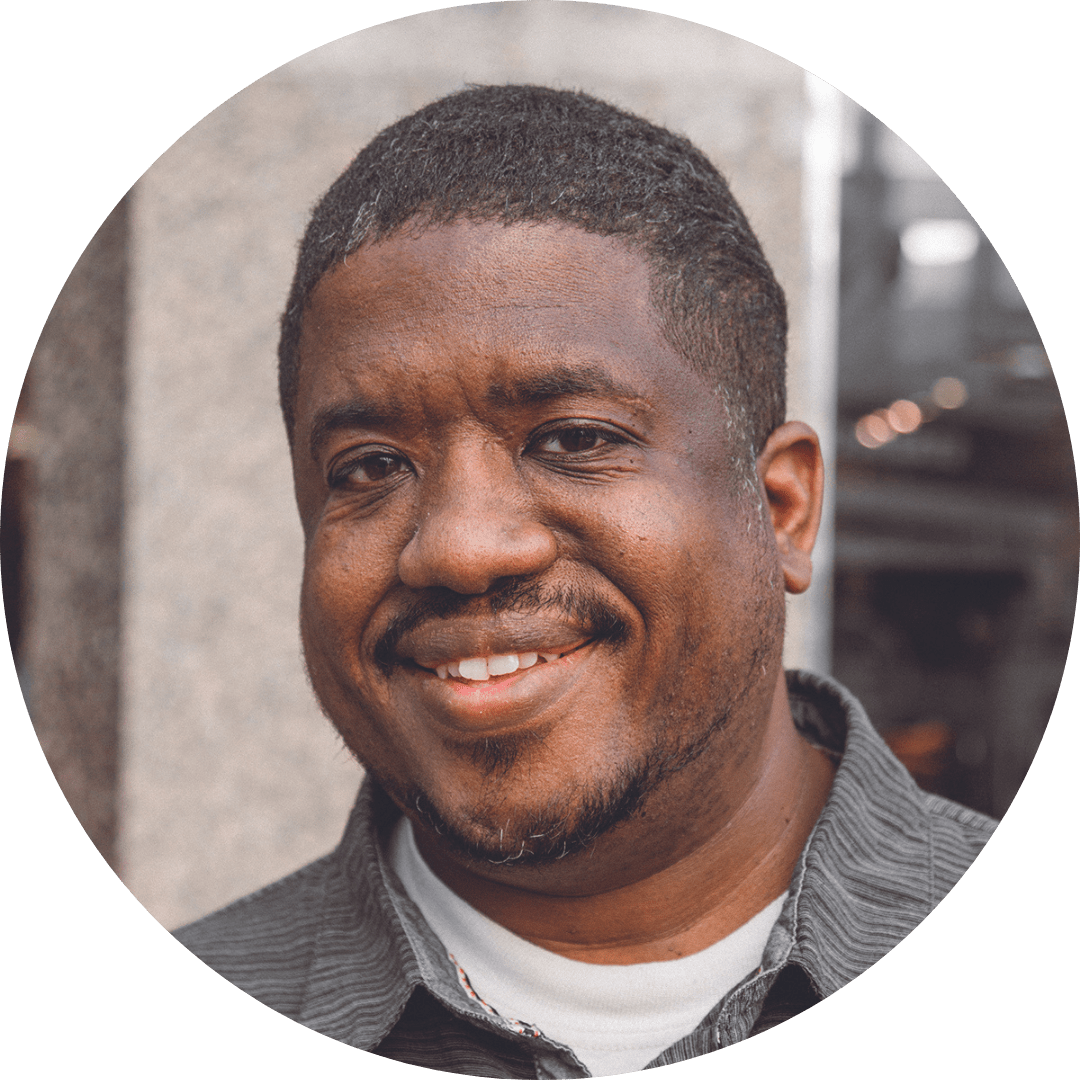
Terence Gadsden has been doing full-time ministry since 2003. He came up as a youth pastor, worked as a coach, and served for a season as a chaplain at University of Illinois–Chicago Hospital on Chicago’s west side. His path to North Park came through a friend who told Gadsden about the university and encouraged him to apply for a job there.
He came in as the part-time athletic chaplain. A year later he moved into the role full-time. By 2019 he had taken on the title of campus pastor alongside his chaplain duties. He now serves as one of six staff members on the University Ministries team, whose mission is “to help students worship, grow, and serve.” He also teaches Kingdom Theology and Practice as part of Crux, North Park’s intentional discipleship cohort for first-year students.
Now, ten years in, Gadsden says his job is not to produce converts. It’s to be present.
“I don’t change anybody,” he says simply. “God does the transformational work. I can encourage, I can inspire, but God does the transforming. And that takes the pressure off.”
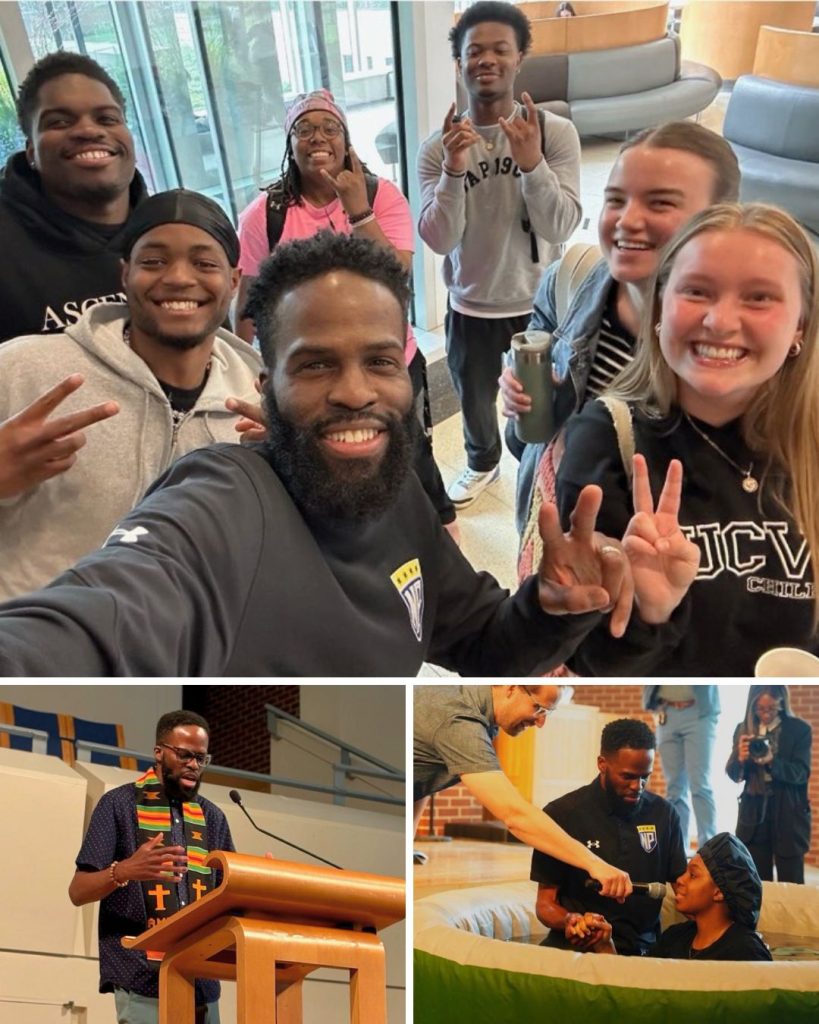
The story of the baptism begins with the graduating class of 2025—the COVID class, the students who arrived during the pandemic and came out the other side more serious about their faith than when they went in.
“They really sparked the movement,” Gadsden says.
A lot of what they sparked started with football. Gadsden made a habit of showing up to early-morning practices at 5 a.m., standing on the sidelines. He didn’t preach or lead a devotional. He was just there, watching, cheering, and supporting the coaches and players with no agenda.
“No speaking engagement, no nothing,” he says. “Just being a presence.”
The players noticed. And they responded. They said, “If Pastor T can come to our practices at five in the morning, we can come to chapel at ten-thirty.”
So they started coming. Week by week, creating a kind of spiritual momentum. Other students started to notice. Football players are going to chapel? What’s going on over there? More students followed. The tide began to shift.
“We all have a story. And if I know your story, there’s a level of empathy that happens, and we connect.”
— Terence Gadsden
College campuses tend to be microcosms of larger society. Alike people tend to congregate. Athletes sit with athletes. Theater kids sit with theater kids. The divides aren’t necessarily hostile, but they’re real. Gadsden knows this firsthand—he was a student-athlete himself, and he remembers which tables were claimed by which groups.
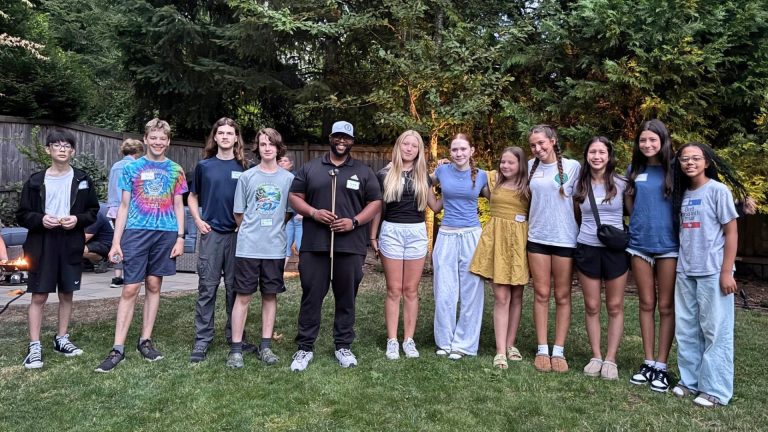
He and the UMin team have tried to create events and spaces that short-circuit that sorting. They moved Chapel Chat—a regular informal conversation series—into the University Ministries office in the Johnson Center, where students from every part of campus naturally pass through. They bring food. They ask questions. They learn names and majors and hometowns. They connect students with each other’s stories.
“We all have a story,” Gadsden says. “And if I know your story, there’s a level of empathy that happens, and we connect.”
They also do Sankofa, an immersive experience that takes students to historic sites connected to the civil rights movement and the Black church tradition. And they do Barbershop Talks, converting the office space into a barbershop where men from across the campus, students of all backgrounds, come together around a shared need.
“Everybody needs a haircut,” Gadsden says. “And while you’re there, you talk about issues guys actually go through.”
As UMin staff continued to interact with them, students began opening up about their own relationships, and they began to notice a greater level of interconnectedness. “We started asking, ‘Wait, how do you know that person?’” said Gadsden. “More and more the answer was, ‘We connected right here.’”
North Park today looks different than it did a decade ago. Roughly 60 percent of its students are commuters, many of them from Chicago neighborhoods. The university is now a Hispanic Serving Institution—a reflection, Gadsden notes, of demographics of both the city and the country at large.
The students coming through the UMin office are working to pay tuition. Some have family responsibilities. Some are first-generation college students, which means they are often learning to navigate financial aid and institutional systems. Some are translating documents for their parents. Some are the primary breadwinner in their household.
“There’s a lot more pressure today,” Gadsden says. “You have to understand that when you’re trying to meet a student where they are.”
He says that partly to push back on a misconception he encounters from time to time, that a campus ministry that doesn’t prioritize conversion metrics isn’t doing enough. That it’s not preaching Jesus. He bristles, gently, at that framing.
“We are absolutely preaching Jesus,” he says. “His death, burial, and resurrection. One hundred percent. But it looks different. It’s a relational, slow marathon. We’re walking with students—some who are exploring their faith, some who are fully committed, and a whole mixture in between. And God is working in their hearts. They’re right where they need to be.”
For we are what he has made us, created in Christ Jesus for good works, which God prepared beforehand so that we may walk in them.
Ephesians 2:10 · NRSV
This past academic year the University Ministries theme was “Show Up—Redeemed with a Purpose,” drawn from Ephesians 2:10. The team spent months talking about what it means to show up for other people, and how God has shown up for them.
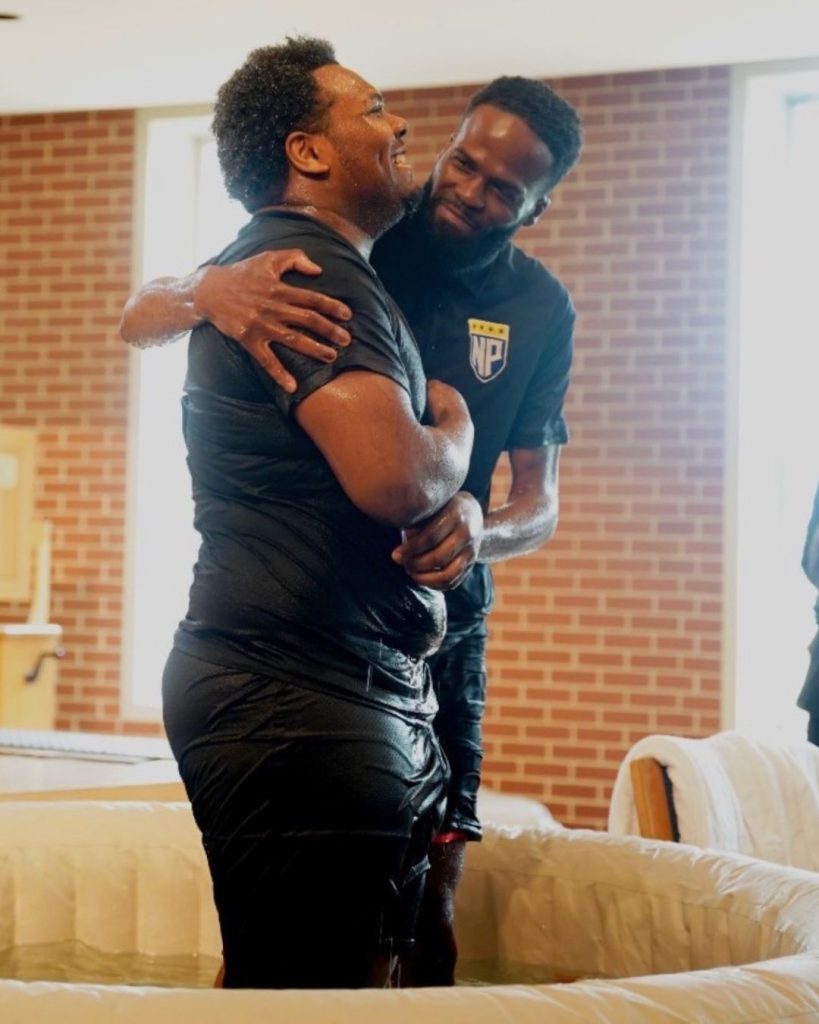
Near the end of the year, two students came to Gadsden with a request. A freshman and a senior. One was a student athlete, one not. Both said the same thing: “I want to get baptized here. This is where my faith journey started.”
Gadsden said yes immediately, before looping in his director Tony Zamble, before checking with the physical plant, before figuring out the details.
“I said yes before I got approval from anyone,” he admits. “I said, ‘Yeah, we can do it.’ And then it was like, ‘Okay, how are we going to do this?’”
The last baptismal service anyone on the UMin team could recall had taken place approximately fifteen years earlier. There were logistics to address.
They figured it out.
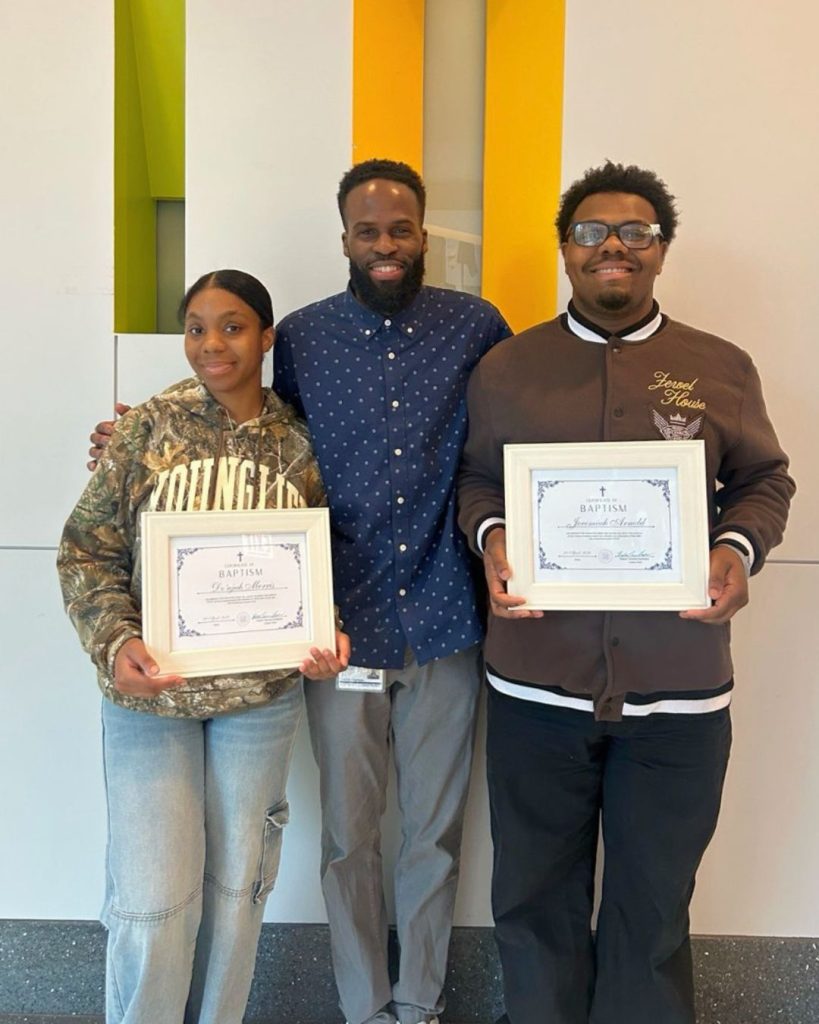
Gadsden has been thinking a lot about culture lately—about how you build one, and what you’re actually building toward. He invokes a phrase he heard years ago from Andy Crouch: “If you want to change culture, you’ve got to create culture.” And the question, he says, is what kind of culture do we want to create?
His answer is one where students feel genuinely loved from the moment they walk through the door—where the staff get out of their seats to engage, where no one is invisible. He’s had to remind people of this directly, saying, “If you’re in student engagement and you don’t engage students, you’re in the wrong job.”
That culture of belonging is the entry point, not the finish line. What Gadsden ultimately hopes students take with them—even the ones who leave North Park uncertain about their faith—is a clear understanding of who Jesus actually is. He borrows a frame from Scot McKnight, one of his former professors at North Park, that the goal isn’t to hand students a theology degree. The goal is that when they leave, they know who Jesus is for themselves.
“They may not say, ‘I get down with Jesus like that,’” Gadsden says. “But I want them to be able to say: I saw something real at North Park. I felt the love of Jesus there. The gospel wasn’t just talked about. It was lived out.”