There are many verses in Scripture about “one another.” Love one another. Encourage one another. Forgive one another. But when I set out to write about what these words mean, God led me in a different direction. I found myself thinking about how I have lived this and how I am still learning it.
In Mark 10 blind Bartimaeus shouts, “Jesus, Son of David, have mercy on me.” And Jesus responds with a question: “What do you want me to do for you?”
I have always been fascinated by that question. Jesus knew the man was blind. Everyone in Jericho knew the man was blind. Yet Jesus stopped and asked him his story.
Perhaps that is where “one another” begins. Not with answers or assumptions, but with curiosity, with listening, with making room for another person’s experience.
When I reflect on my life, I realize it has been a series of crossings. I am an immigrant, so I have always lived in two cultures. I am the mother of an adult child with special needs, and I have learned there are realities people cannot see from the outside. As a pastor and spiritual director, I have met people carrying invisible burdens. As a Latina leader serving on boards and committees within our Covenant family, I have often been the only Latina in the room, helping others see through a Latina lens.
I sit at these tables because I love the Covenant church. I believe we are better when we know one another and stronger when we understand one another. The Holy Spirit also works in board meetings.
Over time I have realized that an important part of my calling was to become a bridge. Many times I have found myself explaining how a decision may affect Latino churches, or why what looks simple from one perspective may be much more complicated from another.
I do not do this to create division. I do it because true understanding is one way we love each other. We cannot bear a burden we do not understand. And we cannot understand a burden unless someone is willing to tell their story and someone else is willing to listen to it.
Years ago when I was still in school, I told Reverend Ed Delgado that I did not feel worthy to serve the church. I believed there were things in my life that disqualified me from ministry. He listened to my fears, and then he said something I have never forgotten.
“Alma, nobody is worthy. We serve only because of the grace of God. God’s grace makes us all worthy.”
Those words did more than encourage me. He saw a gift in me that I could not yet see in myself. He helped me understand that ministry is not built on anyone’s worthiness but on God’s grace.
Looking back, I realize he was building a bridge toward me. He listened. He believed in me. He made room for my calling. Sometimes “one another” looks like helping someone see what God already sees in them.
There is another virtue that makes this kind of listening possible, and that is humility.
Humility is what allows us to remain curious. The moment I think I already know someone’s story, I stop asking questions. The moment I assume I understand another person’s experience, I stop listening. The moment I become certain that my perspective is the only one that matters, I stop learning.
Humility reminds us that every person is more than our assumptions about them. Every person carries experiences, joys, wounds, and wisdom we cannot see from the outside.
I find it remarkable that Jesus, the Son of God, asked so many questions. Not because he lacked knowledge, but because he valued people. His questions invited people to be seen and heard. If Jesus could approach people with that kind of openness, surely we can approach each other with enough humility to listen before we speak.
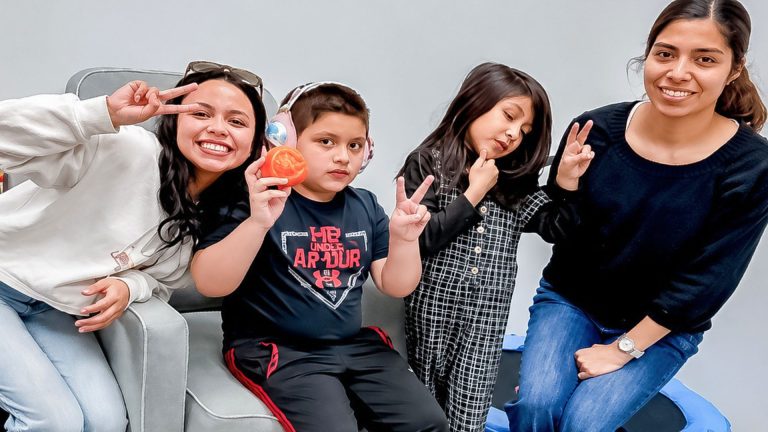
Every year I make the effort to bring my son Ramsey with me to our Annual Meeting. Anyone who has cared for a family member with special needs knows this is not always the easiest choice. There are logistical challenges, accessibility concerns, and moments of real uncertainty. But I bring him because he loves being part of the larger church, and he loves the evening worship services.
Over the years I have come to realize that his presence is not good for him alone. It is also good for the church. He reminds us that the body of Christ is larger and richer than our assumptions and that everyone has something to teach us if we have the humility to listen.
Sometimes I wonder how much we miss because we have already decided who has something to teach us and who does not.
I have also learned that this work sometimes requires more than curiosity and humility. Sometimes it requires sharing power, or entrusting someone before they have all the credentials they think they need.
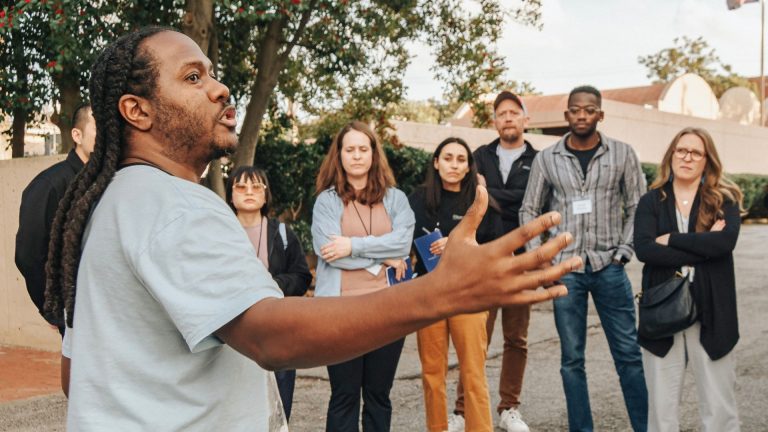
For me, that looked like Pastor Amanda. I met her through a Sankofa journey. At the time I was an ordained pastor, but I had never pastored a church. Amanda knew that. Yet when she took a summer sabbatical, she entrusted her congregation to my care.
She gave me my first opportunity to serve in a traditional pastoral role. That act of trust opened doors that would later allow me to serve other churches and grow into God’s call.
Amanda crossed a bridge toward me. She was willing to make room. She was willing to trust someone who had not yet been given the opportunity. In doing so, she taught me something important.
One another is not only about welcoming people into our circles. Sometimes it is about inviting people into our spaces of influence, about pulling up another chair at the table, about saying, “Come, I think God has something for you here.”
Maybe many of us are serving today because someone before us was willing to do exactly that.
Bridges are not built because we are all the same. They are built because we are different and because we were created for connection. Bridges are built when we become curious enough to cross them.
Jesus crossed bridges constantly. He crossed to the Samaritan woman whom others avoided. He crossed to Zacchaeus whom others despised. He crossed to the bleeding woman and called her a daughter of Abraham. He crossed to blind Bartimaeus, stopping long enough to ask, “What do you want me to do for you?”
Again and again, Jesus moved toward people. He listened. He noticed. He cared.
One of the greatest obstacles to loving one another is the belief that we already know each other. Perhaps what the church needs most is not another curriculum but curiosity. The kind that asks another question, that stays at the table a little longer, that wants to understand before being understood.
That kind of curiosity has a cost. Real relationships always do. It costs time. It costs comfort. It costs certainty. Sometimes it requires letting go of assumptions we have carried for years.
But that is the way of Jesus. He did not love people from a distance. He moved toward them, and ultimately he carried burdens that were not his own. The one who asked people for their stories eventually carried our story to the cross.
So I am not asking us to do more. I am inviting us to notice more. To ask one more question. To listen a little longer. To become curious about the people God has already placed around us.
Whose story have we not yet crossed a bridge to reach? Whose story have we decided we already know? What bridge is humility inviting me to cross?
And what might happen if we approached one another with the same question Jesus asked: What do you want me to do for you?
I cannot conclude without lifting up one community whose story is very close to my heart: immigrant communities throughout our nation.
I would be neglecting my responsibility if I did not ask God for mercy on those living in fear, on those who are detained, on separated families, and on our leaders, that they may pursue laws marked by justice and compassion.
If you think immigration is an issue that does not affect you, brothers and sisters, I invite you to look at me. Immigration has my face. It has the faces of many brothers and sisters who worship beside you, who serve beside you, and who belong to the same body of Christ.
May we be people who pray for mercy, seek justice, welcome the stranger, and reflect the heart of Christ.
Before you pray, ask God to bring someone to your mind. Someone you can ask, “What can I do for you?”
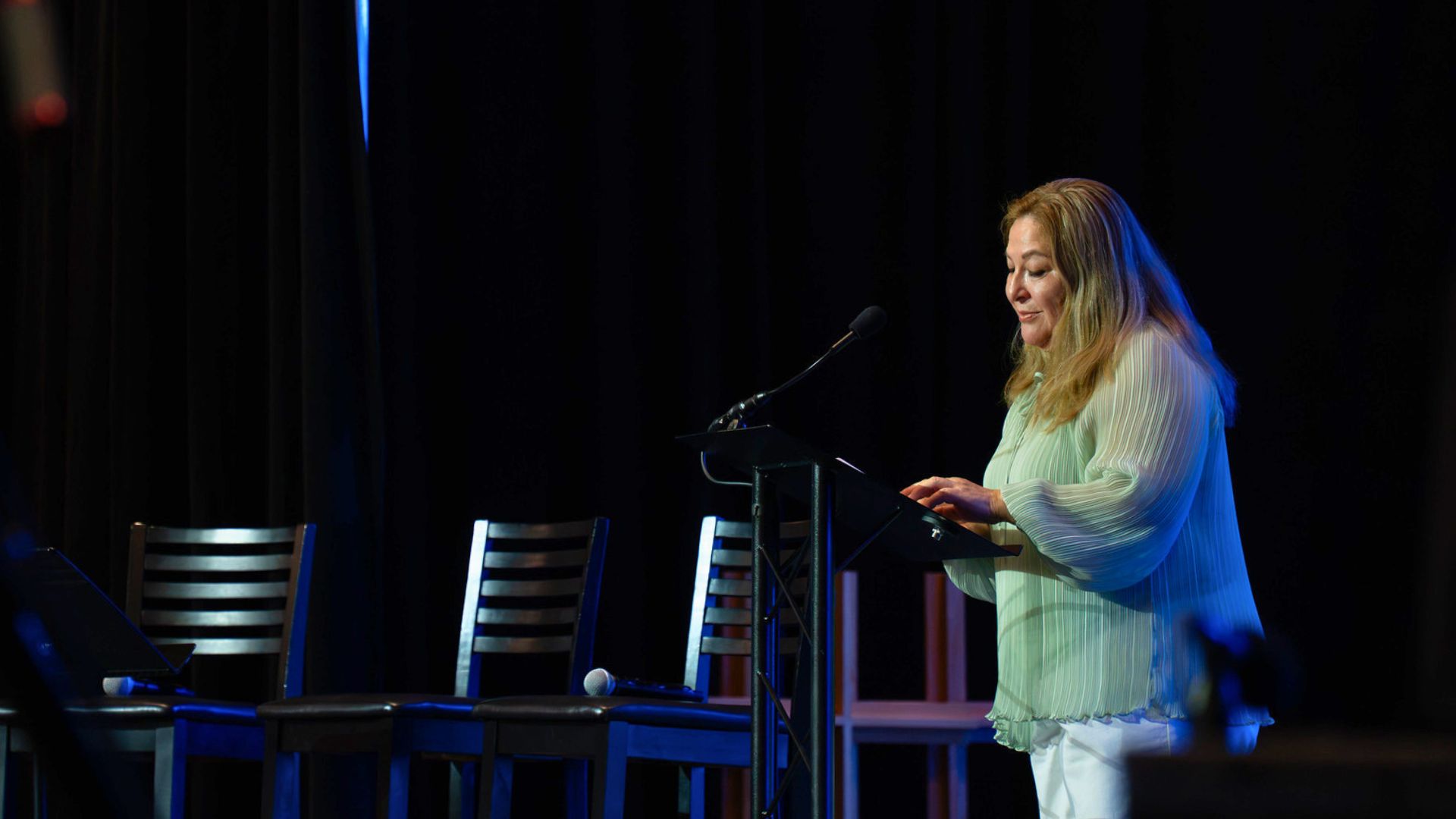
This article is adapted from a sermon delivered by Rev. Alma Rosa Zamudio Maciel at Gather 2026 in Scottsdale, Arizona. Watch the recording here. This is part of our ongoing “From the Pulpit” series, where we share inspiring messages from the Covenant Church community.
Construyendo Puentes con Curiosidad
«La inmigración tiene mi rostro». Una pastora Latina sobre los puentes que otros construyeron hacia ella y los que aún está cruzando.
Hay muchos versículos en las Escrituras que hablan de “los unos a los otros”. Ámense unos a otros. Anímense unos a otros. Perdónense unos a otros. Pero cuando me dispuse a escribir sobre lo que estas palabras significan, Dios me guió en una dirección diferente. Me encontré reflexionando en cómo he vivido esto y en cómo todavía estoy aprendiendo a hacerlo.
En el capítulo 10 del Evangelio de Marcos, el ciego Bartimeo grita: “¡Jesús, Hijo de David, ten compasión de mí!”. Y Jesús responde con una pregunta: “¿Qué quieres que haga por ti?” Esa pregunta siempre me ha fascinado. Jesús sabía que aquel hombre era ciego. Todos en Jericó sabían que era ciego. Sin embargo, Jesús se detuvo y le preguntó por su historia, dispuesto a escucharlo. Quizás ahí es donde comienza el “unos a otros”. No con respuestas ni suposiciones, sino con curiosidad, escuchando atentamente y haciendo espacio a la experiencia de otra persona.
Al reflexionar sobre mi vida, me doy cuenta de que esta ha sido una serie de cruces de caminos. Soy inmigrante, por lo que siempre he vivido entre dos culturas. Soy madre de un hijo adulto con necesidades especiales y he aprendido que existen realidades personales y familiares que no se perciben desde fuera. Como pastora y directora espiritual, he conocido a personas que cargan con pesos invisibles. Como líder latina que forma parte de juntas y comités dentro de nuestra familia del Pacto, a menudo he sido la única latina presente, ayudando a los demás a ver las cosas desde una perspectiva latina. Participo en estos espacios porque amo a la iglesia del Pacto. Creo que somos mejores cuando nos conocemos y más fuertes cuando nos comprendemos. El Espíritu Santo también hace su obra en las reuniones de las juntas directivas.
Con el tiempo, me he dado cuenta de que una parte importante de mi llamado era servir como un puente. Muchas veces me he visto explicando cómo una decisión puede afectar a las iglesias latinas, o por qué algo que parece sencillo desde una perspectiva puede ser mucho más complejo desde otra. No hago esto para crear división. Lo hago porque la verdadera comprensión es una forma de amarnos unos a otros. No podemos conllevar una carga que no comprendemos. Y no podemos comprender esa carga a menos que la persona esté dispuesta a contar su historia y otra persona esté dispuesta a escucharla.
Hace años, cuando aún estaba estudiando en el seminario, le dije al reverendo Ed Delgado que no me sentía digna de servir a la iglesia. Creía que había cosas en mi vida que me descalificaban para el ministerio. Él escuchó mis temores y luego dijo algo que nunca he olvidado: “Alma, nadie es digno. Servimos únicamente gracias a la gracia de Dios. La gracia de Dios es lo que nos hace dignos a todos”. Aquellas palabras hicieron más que animarme. Él vio en mí un don que yo aún no lograba ver en mí misma. Me ayudó a comprender que el ministerio no se fundamenta en la dignidad de nadie, sino en la gracia de Dios. Al mirar atrás, me doy cuenta de que él estaba tendiendo un puente hacia mí. Escuchó. Creyó en mí. Dio espacio a mi llamado. A veces, el concepto de «los unos a los otros» se manifiesta ayudando a alguien a ver lo que Dios ya ve en esa persona.
Existe otra virtud que hace posible esta forma de escuchar: la humildad. La humildad es lo que nos permite mantener viva la curiosidad. En el momento en que creo conocer ya la historia de alguien, dejo de hacer preguntas. En el momento en que asumo que comprendo la experiencia de otra persona, dejo de escuchar. En el momento en que me convenzo de que mi perspectiva es la única que importa, dejo de aprender. La humildad nos recuerda que cada persona es más que las suposiciones que hacemos sobre ella. Cada individuo lleva consigo experiencias, alegrías, heridas y una sabiduría que no podemos percibir desde fuera. Me parece extraordinario que Jesús, el Hijo de Dios, hiciera tantas preguntas. No porque careciera de conocimiento, sino porque valoraba a las personas. Sus preguntas invitaban a los demás a sentirse vistos y escuchados. Si Jesús podía acercarse a las personas con tal apertura, sin duda nosotros podemos acercarnos unos a otros con la humildad suficiente para escuchar antes de hablar.
Cada año me esfuerzo para que mi hijo mayor, Ramsey, esté presente en nuestra reunión anual, Gather. Cualquiera que haya cuidado a un familiar con necesidades especiales sabe que esta no siempre es la opción más sencilla. Surgen desafíos logísticos, cuestiones de accesibilidad y momentos de verdadera incertidumbre. Pero lo llevo porque a él le encanta formar parte de la iglesia nacional, y disfruta mucho de los cultos de adoración vespertinos. Con el paso del tiempo, me he dado cuenta de que su presencia no solo es beneficiosa para él; también lo es para la iglesia. Ramsey nos recuerda que el cuerpo de Cristo es más amplio y rico de lo que suponemos, y que todos tienen algo que enseñarnos si tenemos la humildad de escuchar. A veces me pregunto cuánto nos perdemos por haber decidido de antemano quién tiene algo que enseñarnos y quién no.
También he aprendido que esta labor de servir “unos a otros“ a veces requiere más que curiosidad y humildad. En ocasiones, exige compartir el poder o depositar la confianza en alguien antes de que cuente con todas las credenciales que cree necesitar. En mi caso, esa persona fue la pastora Amanda Oppenhuizen. Conocí a Amanda durante la Experiencia Inmersiva Sankofa. Por aquel entonces, yo era ya una pastora ordenada, pero nunca había pastoreado una iglesia. Amanda lo sabía; aun así, cuando se tomó un sabático en verano, confió su congregación a mi cuidado. Me brindó mi primera oportunidad de ejercer un papel pastoral tradicional. Ese acto de confianza abrió puertas que más tarde me permitirían servir a otras iglesias y crecer en el llamado de Dios. Amanda tendió un puente hacia mí. Estuve dispuesta a hacer espacio y a confiar en alguien a quien aún no se le había dado la oportunidad. Al hacerlo, me enseñó algo importante: el concepto de «unos a otros» no se limita a acoger a personas en nuestros círculos. A veces, se trata de invitarlas a nuestros espacios de influencia, de arrimar otra silla a la mesa y de decir: “Ven, creo que Dios tiene algo para ti aquí.”
Tal vez muchos de nosotros estemos sirviendo hoy porque alguien, antes que nosotros, estuvo dispuesto a hacer exactamente eso.
Los puentes no se construyen porque todos somos iguales. Se construyen porque somos diferentes y porque fuimos creados para vivir en conexión. Los puentes se construyen cuando sentimos la curiosidad suficiente para cruzarlos. Jesús cruzaba puentes constantemente. Se acercó a la mujer samaritana, a quien otros evitaban. Se acercó a Zaqueo, a quien otros despreciaban. Se acercó a la mujer encorvada, la libró de su enfermedad y la llamó hija de Abraham. Se acercó al ciego Bartimeo, deteniéndose lo suficiente para preguntarle: “¿Qué quieres que haga por ti?” Una y otra vez, Jesús se acercaba a las personas. Escuchaba. Se fijaba en ellas. Se interesaba por ellas.
Uno de los mayores obstáculos para amarnos los unos a los otros es la creencia de que ya nos conocemos. Quizás lo que la iglesia más necesita no sea otro programa de estudios, sino curiosidad. Esa clase de curiosidad que hace una pregunta más, que se queda a la mesa un poco más de tiempo, que busca comprender antes de ser comprendida. Ese tipo de curiosidad tiene un precio. Las relaciones auténticas siempre lo tienen. Cuestan tiempo. Cuestan comodidad. Cuestan certeza. Esta curiosidad a veces exige desprenderse de suposiciones que hemos albergado durante años. Pero ese es el camino de Jesús. Él no amaba a las personas desde la distancia. Se acercaba a ellas y, finalmente, cargó con pesos que no eran suyos. Aquel que pedía a las personas que compartieran sus historias terminó llevando nuestra propia historia a la cruz. Así que no les pido que hagamos más cosas. Los invito a prestar más atención. A hacer una pregunta más. A escuchar un poco más. A sentir curiosidad por las personas que Dios ya ha puesto a nuestro alrededor. ¿Que historia aún no hemos cruzado un puente para conocerla? ¿De quién hemos decidido que ya conocemos su historia? ¿Qué puente me está invitando a cruzar la humildad? ¿Y qué podría suceder si nos acercáramos unos a otros con la misma pregunta que hizo Jesús: “¿Qué quieres que haga por ti?”
No puedo concluir sin mencionar a una comunidad cuya historia está muy cerca de mi corazón: las comunidades de inmigrantes en todo nuestro país. Estaría descuidando mi responsabilidad si no le pidiera a Dios misericordia por quienes viven con miedo, por quienes están detenidos, por las familias que han sido separadas y por nuestros líderes, para que busquen promover leyes marcadas por la justicia y la compasión.
Si ustedes piensan que la inmigración es un tema que no les afecta, hermanos y hermanas, los invito a mirarme. La inmigración tiene mi rostro. Tiene los rostros de muchos hermanos y hermanas que adoran junto a ustedes, que sirven junto a ustedes y que pertenecen al mismo cuerpo de Cristo. Que seamos personas que oran por misericordia, buscan la justicia, reciben al extranjero y reflejan el corazón de Cristo.
Antes de orar, pídanle a Dios que traiga a alguien a su mente. Alguien a quien puedan preguntar: “¿Qué puedo hacer por ti?”
Este artículo es una adaptación de un sermón predicado por la Rvda. Alma Rosa Zamudio Maciel en Gather 2026, en Scottsdale, Arizona. Vea la grabación aquí. Este artículo forma parte de nuestra serie continua “Desde el púlpito“, en la que compartimos mensajes inspiradores de la comunidad de la Iglesia del Pacto Evangelico.