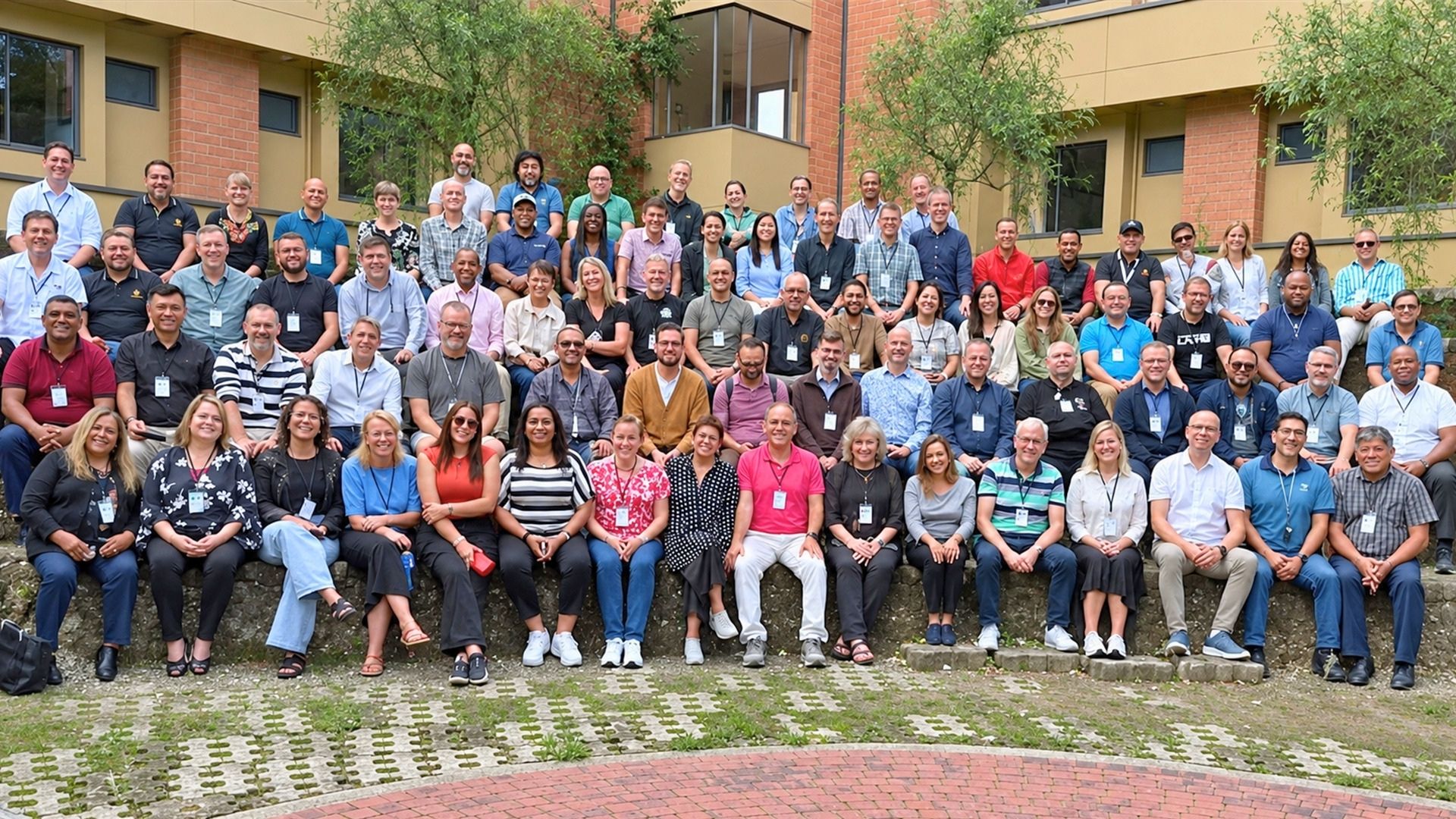
The International Federation of Free Evangelical Churches (IFFEC) is a global fellowship of free church denominations that the Covenant helped launch nearly eighty years ago. Delegates elected Swanson-Draheim at the federation’s general assembly in Nairobi, Kenya, held September 28 to October 3. Like her 2022 election as Covenant president, this one made her the first woman in the role. She succeeds John Nielsen of Denmark. The assembly also elected Thomas Schech, board chair of Germany’s Alliance Mission, as general secretary. As IFFEC president, Swanson-Draheim will work closely with Schech and the federation’s executive committee to guide the network.
“IFFEC is a tangible expression of the picture we see in Revelation 7:9,” she said in a statement. “People from every nation, tribe, people, and language gathered together in Christ. At this year’s General Assembly, forty nations were represented, and I am especially excited about the opportunity to continue widening that table, including several African federations seeking to join IFFEC, among them three Covenant denominations. I look forward to serving alongside our global sisters and brothers as we deepen our relationships, learn from one another, and strengthen our shared witness to Jesus Christ around the world.”
IFFEC was formally established on September 1, 1948, in Bern, Switzerland. The vote came just three years after the end of World War II, and the federation was conceived in part as a work of reconciliation among churches whose nations had recently been at war. Its roots reach back further, to international gatherings of free church leaders in Gothenburg, Sweden (1934); Prague (1936); and Malmö, Sweden (1946).
The Covenant was there from the outset. Theodore W. Anderson, then president of the Evangelical Mission Covenant Church of America, represented both the American church and the Evangelical Mission Covenant Church of Canada at the founding. They were among twelve charter members, alongside mission covenant churches from Sweden, Norway, Denmark, and Finland; free evangelical federations from Germany, the Netherlands, France, and Switzerland; the Evangelical Free Church of Finland; and the Brethren Church of Czechoslovakia.
According to Walter Persson’s history of the federation, Free and United, the 1948 constitution set one requirement for membership: a spiritual life grounded in “personal faith in Jesus Christ as the Son of God, Savior and Lord.” Today IFFEC links free evangelical federations in more than thirty countries, with roughly 700,000 members. The federation describes its purpose as strengthening congregations, equipping workers, and sharing in God’s mission around the world.
Swanson-Draheim is not the first Covenant leader to serve as IFFEC president. Former ECC presidents Glenn Palmberg and Gary Walter both held the role. Curt Peterson served as the federation’s general secretary while also leading Serve Globally as interim executive minister. In 2022, in the first days of Russia’s invasion, he consulted extensively with member churches in Ukraine and Poland.
The Nairobi assembly pointed toward where the federation is headed. Twenty-four member federations submitted written reports describing challenges and hopes they share, from pastor shortages and church planting to youth renewal and prayer for unity.
Schech said his top priority for the next four years is extending the network into Asia and especially Africa. He noted that IFFEC’s history has been closely tied to Europe and the United States, and said the federation now stands at “the threshold of a genuinely global network.” He described IFFEC as a chance to live out a Christ-centered community among its member federations. That work is demanding, Schech acknowledged, because members come from very different regions, languages, and economic circumstances.