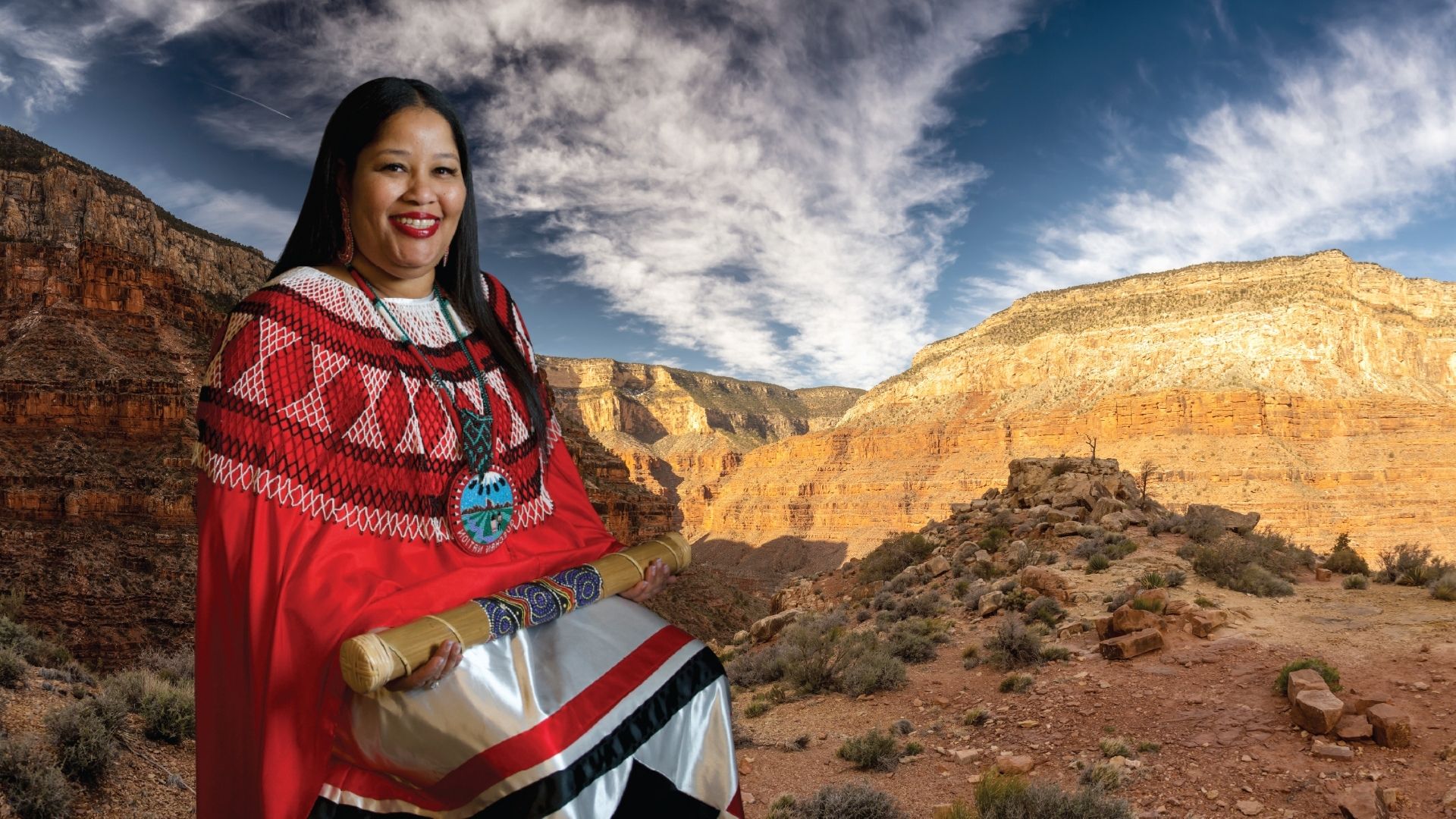
The View According to Mál, My Grandmother
I knew the last time I saw her would be the last time I saw her. The hospital machines at Yuma Regional hummed around me, filling the space with a rhythm that wasn’t mine. My body, frail against the crisp white sheets, was preparing for its return to the earth. But my spirit? My spirit was already passing on the baton, making room for what would lie ahead for the living.
Muk, my granddaughter, stood at the edge of my bed, her hands twisting the strap of her bag, that nervous habit I had seen before when they came to get us to go to boarding school. She didn’t leave right away, and I had nowhere to go. But night had come, and the world demanded its routine of going home for sleep, waking, and carrying on. Preparing to leave, Muk leaned in close, and I caught the scent of the musk rez dirt in her hair. It was a mix of sun and sage and mesquite tree that made me ache for open skies and the call of the Colorado River that lives in harmony with our Quechan land.
“Mál,” she whispered, her voice gentle like the wind before dawn. “I’ll be back tomorrow.”
She didn’t move right away, and I had nowhere to go. We gazed at each other as if to pause the time stretching thin between us. Muk’s light brown eyes lingered on mine, like she was trying to memorize my face, holding onto every crease, every story etched into my skin.
“In Indigenous ways of knowing, life is a circle.”
In that last gaze, I wanted to tell her everything, to remind her of the days we hung outside, sitting on the wall of Pipa Market, passing a cold Pepsi between us. The afternoons we spent at La Flor, Chretin’s, and Taco Mi Ranchito in Yuma, Arizona, laughing over plates of food that gave us a sense of belonging. The evenings in the tribal chambers together, when she watched me shake my head and fuss about what the council was doing, letting me carry on because I needed someone to listen.
I wanted her to remember the many times we prayed together, my hands holding hers, our voices weaving between bird songs, our Quechan history, old church hymns and the words of life my shiyii’ (grandmother) said to me that I passed on to her. I wanted her to know that those prayers didn’t end with those before us, and they don’t end with me. That they would still be with her, even if I wasn’t.
The monitor continued to hum, in the hallway the nurses bustled, the world outside kept moving. But we didn’t. Not yet.
I saw it in her eyes, she knew. Maybe not fully, not in a way she would admit yet, but she knew. With all the energy I could muster, I said, “Okay, Muk. Don’t forget.”
Then I smiled, the kind of smile that holds both joy and sorrow, the millstone of love too deep for words. The kind of smile that says, “I see you, I love you, and I know we are saying goodbye.”
Tomorrow was not for me. I wanted to tell her that. That I would not be here, but I would be everywhere. In the rustling of the trees, in the hush of the river behind 480 at dawn, in the hopes of her dreams. I wanted to tell her how proud I was of who she had become, how much of me lived in her, and how much of those who came before us was reflected in her too. But the words were stuck in my throat, thick against a clock that was about to stop ticking.
Instead, I reached for her hand, and my fingers could feel the bones of her knuckles that echoed my own. I gave her a nod.
She nodded too, blinking her eyes fast, not letting the tears fall, swallowing hard. Then she was gone. With my youngest daughter, Darnella, beside me came the long, unbroken beep, a single note stretching into forever. I exhaled one last time. My spirit slipped free.
Not gone. Not lost. Just…changed. I was now “absent from the body, and…present with the Lord” (2 Corinthians 5:8, NKJV).
And from here, I whisper. The whispers arrive as memories that linger in her spirit. Muk’s life is woven together, threaded, with the stitches of my own, calling her forward into a life her ancestors had hoped to see in their lifetime. Healing has its own way of allowing the past to touch the future through life being lived now.
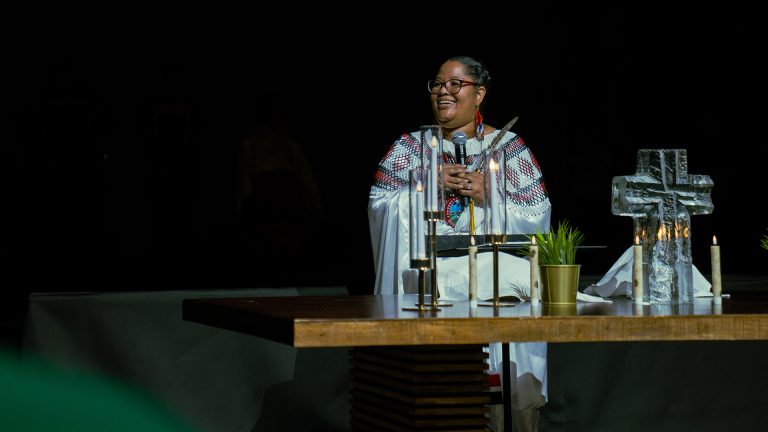
In Indigenous ways of knowing, life is a circle. What has been remains connected to what is, and through that connection, healing continuously finds its way. It travels from one hand to the next, from one generation to another. Muk is my granddaughter. She is the one you now know in the Evangelical Covenant Church as Reverend Tamara Fore-Ravelo. Your first Indigenous woman to be ordained since its existence.
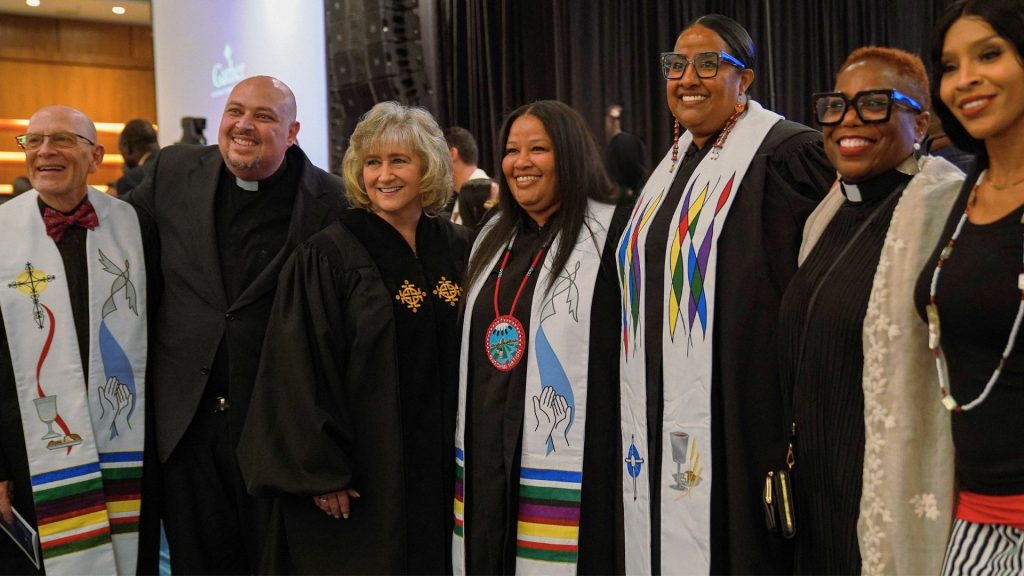
The View According to Muk
My grandmother is Mál, and I am Muk. Muk is my nickname. Short for Mukie. Please don’t call me that when you see me. I hated it growing up. My grandmother made it cool, though, by calling me Muk, and I could live with that. The family called her Mál for short, like Grand Mál, meaning “big grandma.” She was the one who kept us in line and in love. My grandma is etched into who I am, and I can’t talk about me without talking about her.
While the story above is shared from my shiyii’s lens, the inferences within it are our shared history, our faith, and culture. The way we teach, share, and pass things on is by using story.
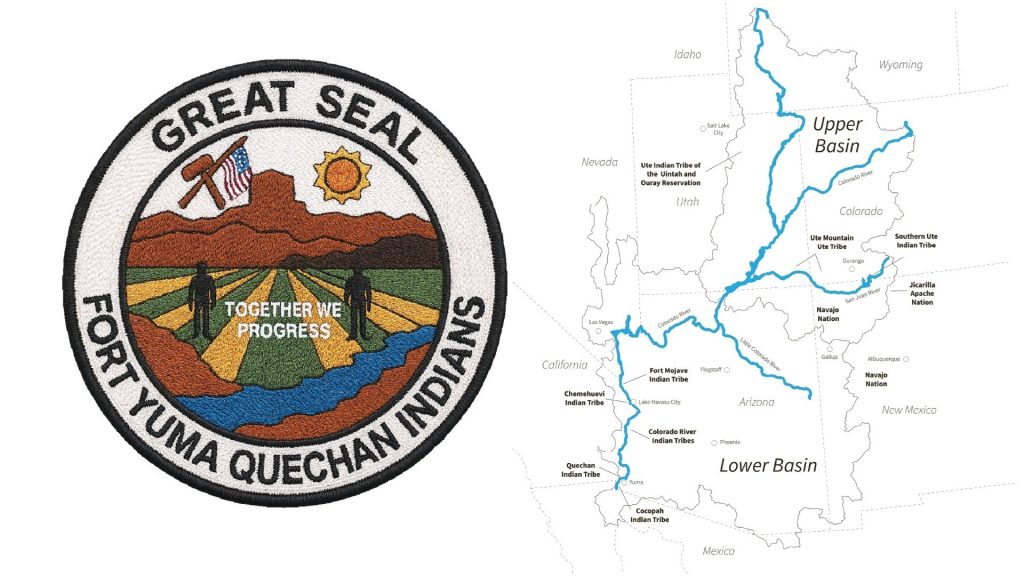
The story is in her memory voice, every part of it coming from what we experienced and lived together. You were invited into the holy moment when I stood at her bedside as she was dying. The prayers were real. She always prayed I would go further than she could, and I have. God is good, and the Lord is faithful. The address of her home on the rez is 480, and it is still there. The Colorado River runs through our reservation—we are a Colorado River Indian Tribe (CRIT). The mesquite trees and the dirt smell locate us. Yuma Regional (now called Onvida Health) is the hospital in town that scares us because we feel that when our people go there, they die. If you happen to travel that way today, you can still eat at the restaurants my grandma and I would frequent.
Her final words to me at her bedside were, “Don’t forget.” My life has hinged on these words. She was reminding me how to remember her, how to tell the truth of her life, how to hold together both her Indigenous identity and her faith in Christ. Don’t forget who you are. Don’t forget where you come from. Don’t forget that Christ and your Indigenous identity belong to you together, complete, and whole. That is my inheritance from her. It is the very faith 2 Timothy 1:5 speaks of—a sincere faith that lived first in a grandmother and now lives on in her offspring. The faith I walk in today lived in my grandmother first. I stand in this inheritance as I serve within the Covenant, holding together the life of Christ and the life of my people as one.
May we never forget who we are, whose we are, and where we come from. The gospel makes room for the whole of us. I live, love, lead, and preach from this place.
What we do with what has been given to us matters. Along the way, someone prayed a prayer for you, like my Grand Mál did for me. The life you are living currently is someone’s answered prayer, whether it was family, a pastor, or our Covenant mission friends. Walk in it. Lead from it. Love from it. The inheritance is yours.
In Quechan life, nothing is separate, everything connected. I have lived that truth in the story between Mál and Muk. In the Covenant, we speak of a faith that is shared and lived, and I know that faith because I have received it. Because I have received it, I can pass it on, and so can you.
Faith has a long reach and every one of us is connected to it through someone who came before us. We all come from something. We all come from someone. And they are cheering us on, some of them now from our great cloud of witnesses. “Don’t forget.”
Read more about Tamara’s path to ministry in From Path to Pulpit.
This article was first published in the Covenant Companion Summer 2026 issue, the official magazine of the Evangelical Covenant Church.