There was a moment in the mountains of South Korea where Alex Song’s life pivoted quietly, almost comedically. He was sitting in a car with his uncle, who had driven him thirty minutes into the hills to a location Alex’s mother had insisted he visit. The uncle took one look at the property, muttered that it was too weird, and started backing the car out. Alex didn’t protest. He just watched through the windshield as the monastery disappeared behind the tree line, and his uncle drove away.
His mother called two days later. “You didn’t go, did you.”
It wasn’t a question.
Alex laughs when he tells this story. That monastery in the mountain valley—an Anglican community, farming the land and keeping the hours of prayer—turned out to be the thing that saved his life.
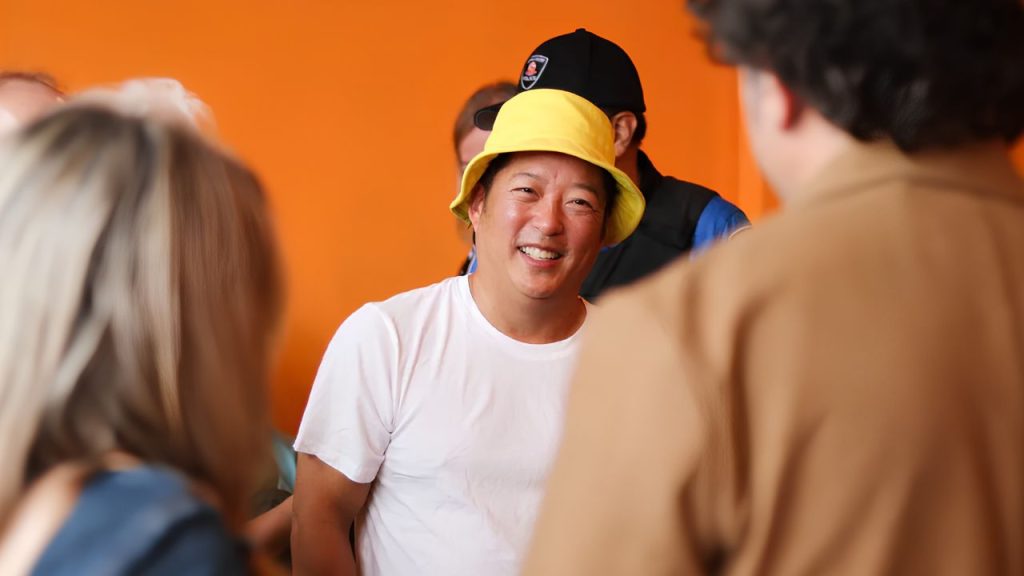
Alex Song grew up in Toronto, Ontario, and spent much of his upbringing in addiction. By the time he reached out for help as a young adult, he was done pretending he was okay.
His parents—who knew better than to send money—said they would help him if he moved from Toronto to Vancouver, where they were living. So he did. Then his mother put him on a plane to her brother’s house in South Korea, which was her way of saying, “We love you, and we’re not taking any chances.” His uncle spoke almost no English. Alex spoke almost no Korean. He smoked cigarettes, rented VHS movies, and was bored out of his mind.
Then came the monastery.
After his uncle’s failed attempt, Alex returned there alone. The community was Anglican, rooted in a monastic rhythm of prayer and labor. What struck him first was the structure. Bells marked the hours. They gathered for corporate worship multiple times a day. At ten in the evening came the greater silence, which the community held until morning. “Something I never had in my whole life,” Alex recounted. “And I felt this…safety.”
He stayed for three years.
In that container of silence and community and work, something cracked open. Alex started asking questions—about love, about God, about what it meant to be forgiven for what you’ve done and to forgive what has been done to you. “That’s where I experienced God’s love,” he says. “First, asking the question, what even is God’s love? What is love, period?”
He eventually met his wife there. When Mun-hee came to the monastery, she was a missionary discerning her next move and had a deep sense of call toward China. Alex, still learning what it meant to be a person again, asked for her email before she left. Over the next six months, he sent her letters. One was made from construction paper and crayons—jumbo sheets, arts-and-crafts Bible verses assembled like a grade schooler’s Valentine. She did not respond for months. When she finally did, it was to say she wasn’t interested in anything romantic and just wanted to be friends.
“I said okay. And I meant it.”
That was the beginning of a friendship that later blossomed into something more. Alex and Mun-hee eventually married, had children, and built a small Christian community of “gospel-driven farmers and community developers” in the Korean mountains.
Then his father died by suicide.
Alex and his family returned to Vancouver. He spent his days packing up his mother’s apartment, his wife and baby alongside him, trying to convince his mother that they would stay there with her long-term. She was convinced Alex and his family should stay in Korea. Finally, Alex turned to his mother and said, “What if it’s my turn to go to school?”
In the community in Korea, Alex had been serving as a school principal, even though he only had a high school diploma. His mother was immediately on board with the idea of him going back to school. She picked up the phone and started calling her friends.
“Alex is going to school. He’s going to be a pastor.”
He hadn’t exactly said that. But she wasn’t wrong.
Alex applied to Tyndale Seminary in Toronto and, through a combination of grace and a well-connected international student who helped him navigate the process, he was admitted directly into the master of divinity program.
He says seminary was the hardest thing he’d ever done. He had no academic formation to speak of. He didn’t know how to sit still, or research, or write a paper that anyone would want to read. He handed in one assignment ten months late. The department head kicked him out of the program. Then called him back a week later and relented. “I graduated,” Alex says, with an air of incredulity.
The program had a focus on urban ministry, and Alex wrestled with questions such as, What does it mean to be a pastor in a city? How do you lead people toward God if they have no framework for who God is?
One name kept coming up in those conversations—a community developer named Bob Cameron in Windsor, Ontario. Apparently, he was out there in the field doing exactly what the professors were teaching.
Alex found the Covenant through Avenue Community Church in Toronto, where he attended and then eventually began to serve as the family and children’s pastor.
When the congregation buckled under the weight of the pandemic, he was looking for options. He knew Windsor could be an affordable alternative to Toronto. The family decided to move.
When Alex met Bob and saw the work he was doing with the Downtown Windsor Community Collaborative (DWCC), he recognized the theology they were embodying. They lived in the neighborhood where they served. They sent their kids to the neighborhood school, walked the same streets, became a known presence, and gained trust. “I hit the ground running,” Alex says. “It’s a small town—trying to do things like this in a bigger city like Toronto was harder because there are so many gatekeepers. In Windsor, because of the work Bob had been doing for eight or nine years, it seemed so easy to connect with the right people.”
He volunteered first. When his employment insurance ran out, he went to Bob and said, “I need a job.” He’s been on staff with DWCC ever since.
For years, the work was relational, slow, and often invisible. They threw block parties and organized youth programs. A weekly Tuesday gathering at Bruce Park started with food and a couple of speakers, then grew into something the neighborhood was showing up for. During COVID, when gatherings had to move outside, they went to the park with food, sang songs, and held a short service. Kids from the neighborhood, many from Muslim families, started drifting over when they saw the food. When Alex and Mun-hee served communion or sang the doxology, the kids scattered.
“We discerned that the Spirit was doing something with us gathering in this park,” he says. “Not so much with a traditional form of communion and prayer. But something with food.”
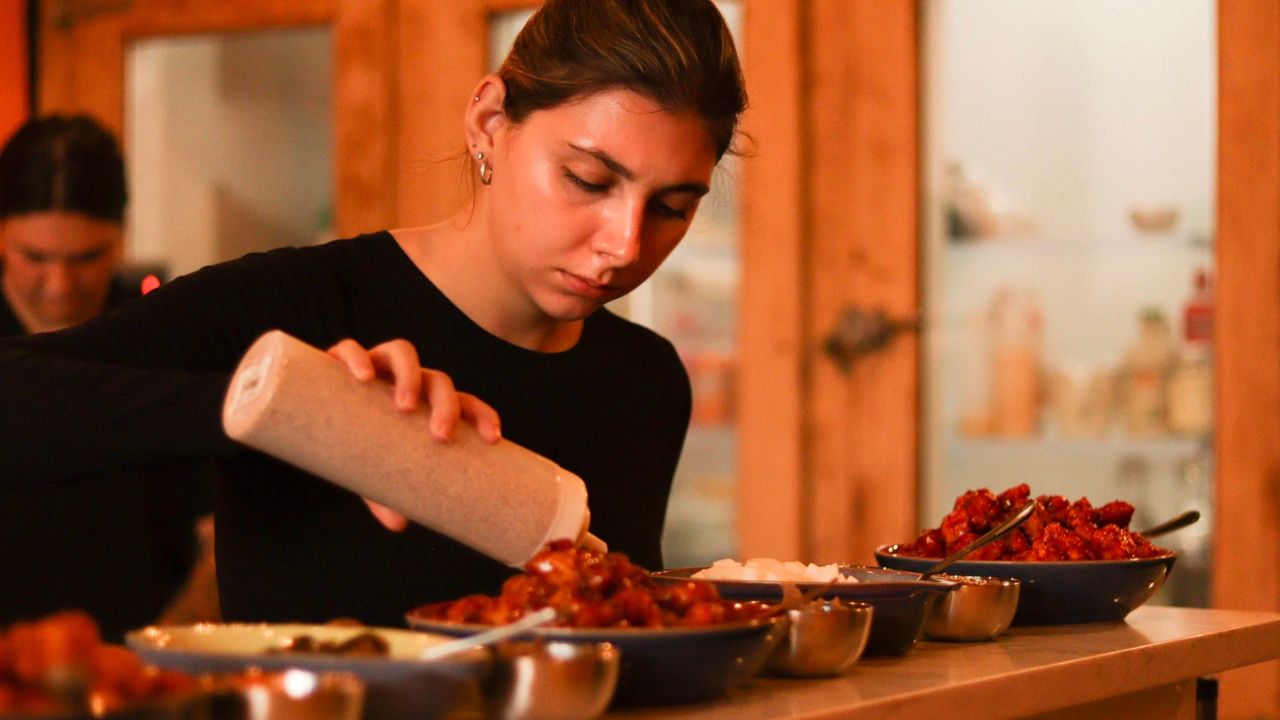
In September 2024, Alex opened Good Hood Community Kitchen in a space that had been a Chinese restaurant for forty years. The $40,000 renovation transformed it into something that looks like a neighborhood restaurant, with an open kitchen, tables for gathering, and a menu of Korean comfort food, including K-pop chicken, bulgogi, and dumplings. Prices are designed to stretch a food dollar without stripping anyone’s dignity.
But the kitchen was never just about the food.
“It goes back to the monastery,” Alex says. “One of the principles there was that work is prayer. Prayer is work. It’s a daily rhythm. When you’re together with someone for three or four hours, you get to know that person pretty quickly. You have no choice. You get to see the bad. You get to have conflict. You get to celebrate.”
The kitchen’s twenty-plus volunteer cooks are mostly neighborhood moms who drop their kids at school and come in to chop and stir and talk. They have special nights together. Alex and Mun-hee have become a kind of surrogate family to many of them, to the teenagers who drift in and out, to the young adults who call them eomma and appa, the Korean equivalent of “Mom” and “Dad.”
The youth program has become one of the kitchen’s signatures. Alex trains local teenagers in basic kitchen skills, such as food handler certifications, punctuality, and responsibility. He pays them $19 an hour and holds the money for the day they show him a high school diploma. If they want to cash out early, they can—at $10 an hour.
“It’s not the money they want,” he says. “They want an identity. They want to feel like they’re doing something.”
He also runs an activity he calls the Ghost Gang, “where everybody gets ghosted.” Phones go on the counter, and the teens work or sit in silence. At first, they started with just five minutes. Over the course of six weeks, each shift included a Ghost Gang session, which would last for longer and longer periods of time. By week five, the students had exceeded the mandatory quiet time, and Alex let them break the silence together—phones still on the counter—as they spent time talking to each other, laughing, being present, rediscovering that other people are interesting.
The bigger dream that Alex and Bob and the other missional families at DWCC are moving toward is a gathering of all their communities, with their different cultures and languages and stories, in worship together. Not necessarily a traditional Sunday service, but something more like the monastery—a community that works and cooks and argues and laughs together, lifting all of it back up to God.
“We’re not there yet,” Alex says. “But that’s the driving force.”
Those are the practices and connections that guide Alex through food and fire. He knows what it feels like to be in a place where silence holds you, where work and prayer are the same motion, where someone can be found in the mountains and made new.
He’s building that place now, in the neighborhood, one meal at a time.