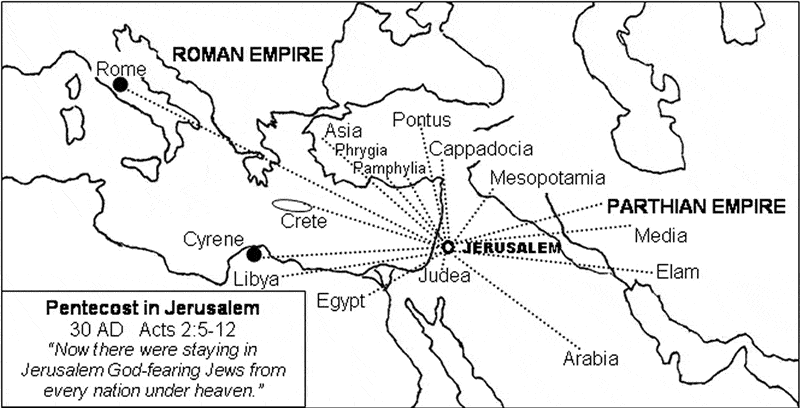
One of my favorite holidays in the church year is Pentecost Sunday. The story expressed in the Book of Acts is powerful, mysterious, and not without a little silliness and confusion mixed with a healthy dose of chaos. Easter Sunday has come and gone. Christ has risen, and he has been making unexpected appearances for forty days before he is whisked away to heaven. He leaves behind the promise that the Holy Spirit will come and be with the disciples. Their only instruction is to wait together in Jerusalem until then.
It makes sense that they are in Jerusalem. Jewish people would be coming from all parts of the world to take part in the Feast of Weeks, which celebrated the anniversary of God giving the Torah to Moses, as well as the dedication of the annual wheat harvest and bringing the first fruits of the harvest to the Temple. This festival was celebrated 50 days after the Passover feast, giving it the name Pentecost, or “fiftieth” in the Greek translation.
In Acts 2, the Spirit has come, not just for a season, but forever, and it comes in the form of a violent wind and tongues of fire. WHOA! That is how the church was formed and birthed. From day one, it has been mysterious, powerful, chaotic, sort of confusing, often draped in holy silliness, but meant to be lived out loud among all the people gathered, to preach the gospel message in a language that makes the most sense to those present.
“It’s not just the pastor who leads the church. As each of us lives out Christ’s call in our lives, we become the very heartbeat, skin, and breath of the church!
— Betzy Cisneros
How did we get from the birth of the church in Acts to where we are as a church today? Well, to put it as Tevye would sing in the Fiddler on the Roof…tradition! According to Acts, the church was growing by the thousands daily, and it needed to be organized.
Each year, the bulletin for the Service of Ordination, Commissioning, and Consecration at Gather offers these words of explanation from the Board of the Ordered Ministry:
“At the end of the first century, the early church was facing two stark realities. The apostles—the eye witnesses to the resurrection and the great teachers of the faith—were dying, and Jesus had not yet returned. It was in response to this looming deficit that the early church began to shape the forms of ordered ministry. A few from among the body would be set apart for ministry within the body, thus holding the church true to its beginnings in the gospel of Jesus Christ—Christ born, Christ crucified, Christ risen, Christ coming in glory. It is the responsibility of each succeeding generation of the church to do the same, setting apart men and women for ordered ministry.”
Much as the twelve tribes of Jacob were organized under Moses in the early days of the Jewish tradition, the apostolic tradition developed out of the need to pass down the sacred duties of the church, and those charged (called) to carry them out. This sacred act is carried out through the laying on of hands each year as the Covenant Church ordains, commissions, and consecrates women and men to specific areas of vocational ministry.
What I find most meaningful in this sacred enactment is seeing the role of the laity in the service. Each year, lay members place stoles on each pastor and global service personnel, symbolizing the role of the whole church and the symbiotic relationship between clergy and the laity. It’s the laity who are charged with calling a pastor to a local church; it is the laity who willingly place their trust in a fellow human being to help lead, teach, and enter into the holy spaces of daily life with the authority of God; and it is the laity who serve as the litmus of health for any given ministry.
Where would the church be without lay leaders? In her address to the denomination in 2025, President Tammy Swanson-Draheim laid out a vision for who the Covenant Church already is, as well as who we are becoming. It says, “The Evangelical Covenant Church envisions living into the kingdom of God through the prayerful, intergenerational, multiethnic, growing movement of churches served by women and men striving to follow in the way of Jesus by loving others as Jesus loves us.” We read in Ephesians 2:10, “We are God’s handiwork, created in Christ Jesus to do good works, which God prepared in advance for us to do” (italics mine). It’s not just the pastor who leads the church. As each of us lives out Christ’s call in our lives, we become the very heartbeat, skin, and breath of the church! As we live out our faith, we are all a living witness and testimony for Jesus.
“It’s the laity who are charged with calling a pastor to a local church; it is the laity who willingly place their trust in a fellow human being to help lead, teach, and enter into the holy spaces of daily life with the authority of God; and it is the laity who serve as the litmus of health for any given ministry.”
— Betzy Cisneros
One of the core identifying markers of Covenant theology is the priesthood of all believers, which is included as one of our six affirmations. We read in the Covenant Affirmations booklet, “The ‘priesthood of all believers’ means that every believer is called to be part of a fellowship of believers and to participate in evangelism, formation, worship, and service. The believers’ church is not simply a human institution or organization, but a people whom God has called. Emphasis does not fall on buildings or hierarchical structures, but upon a grace-filled fellowship and active participation, through the Holy Spirit, in the life and mission of Christ.”
Some of the Covenant’s early theological influencers were laypeople. Carl Olof Rosenius was viewed as a powerful evangelist and preacher, who led in a variety of conventicles throughout Sweden. He was a partner to several clergy people but never felt a call to ordination by the church. The Covenant’s longest serving president, T.W. Anderson, was also a lay leader, serving from 1933 to 1959. At the Annual Meeting each year an award is given in Anderson’s honor to a lay leader nominated by their church who exemplifies a life of service to the church.
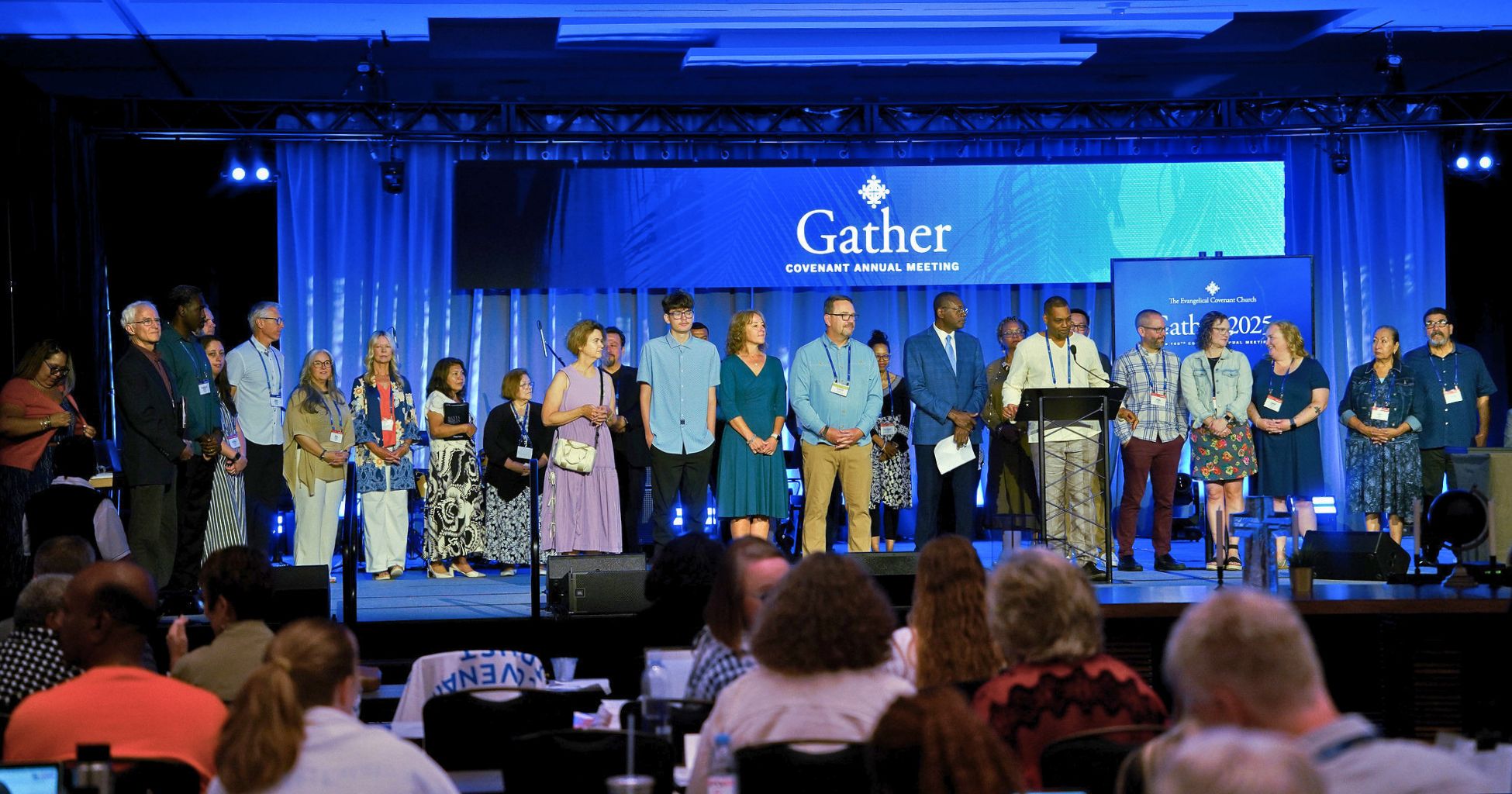
At the Annual Meeting of the Evangelical Covenant Church each year, we come together to enter into the business of the church, to ask questions, to celebrate what God has done, to hold our leaders accountable for what they have been entrusted to do on behalf of the church. The delegates who gather each year are a mixture of lay leaders and clergy, and it is this beautiful mix who keeps the church moving forward. It is also this beloved group who holds the most power and influence in our ministry life. I look forward to being in the midst of the Spirit, with those of you who will be at this year’s Annual Meeting in person and online, who sit with us in love, power, mystery, and a little silliness for good measure as we all live out our faith together as a holy witness.