Come as you are
Ryan Bynum showed up at Community Covenant because a woman from Japan named Chie would not stop asking. He had come to the area from Washington, D.C., in 2004 for music school and had no church home. He played piano at a Baptist congregation where Chie sang in the choir. She then left every week for midweek gatherings at Community Covenant. “They need a musician,” she kept telling Bynum. She eventually hired him to accompany a choir concert at the church. When he arrived, he found a small, acoustic church with a grand piano, a drum set nobody played, and Pastor Luke on guitar. That was eighteen years ago.
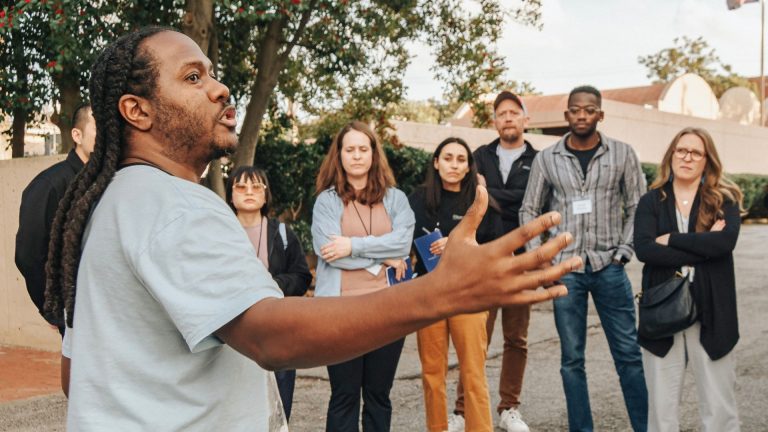
What Bynum remembers is not the music. It is how he was received. He had long hair—“cornrows or an afro”—plus jeans and Timberland boots. His previous Baptist church was in the proud African American tradition, “full of scholars and judges and lawyers.” But they always made comments about how he dressed, which hurt. At Community Covenant, nobody was dressed up. “It was come-as-you-are,” he said. “I just felt very much welcomed, no matter what I was wearing, no matter what my hair looked like. And these people didn’t even know me yet. They didn’t know I played piano.”
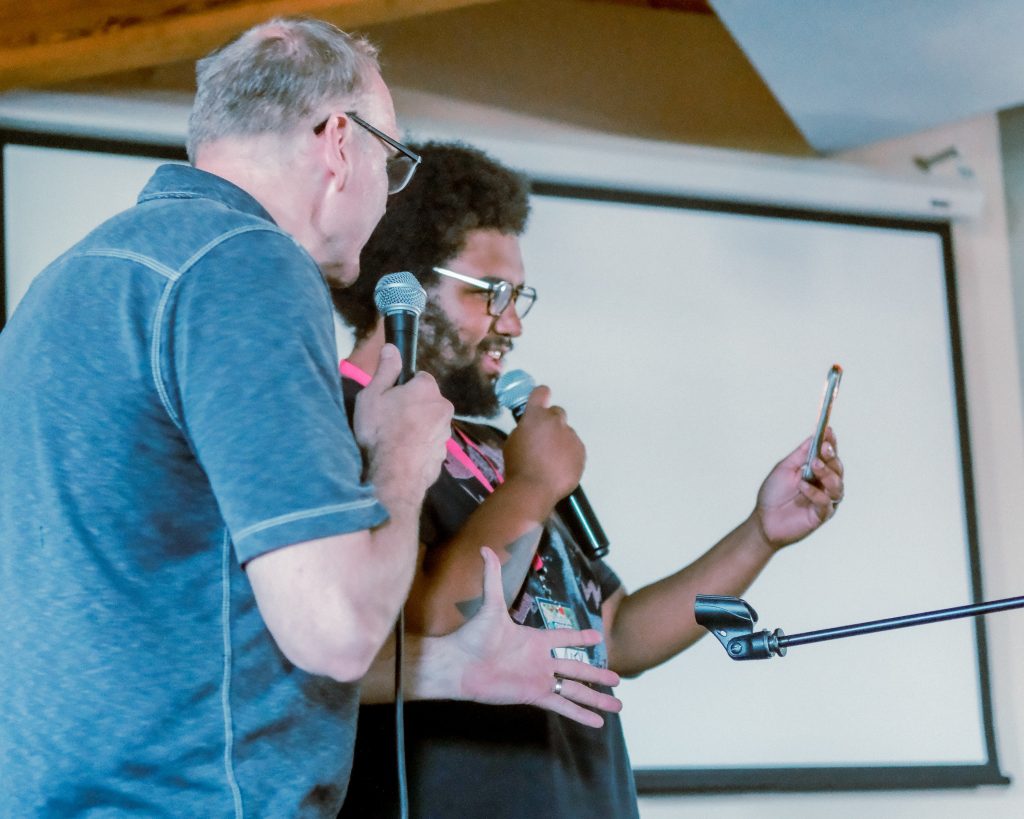
Now Bynum is the music director. “I might have to tour and go on the road a lot,” he said, “but Community Covenant Church is my home.” As an Emmy-winning musician, Bynum has accompanied stars including Diana Ross, Ice Cube, and Debbie Allen. But he’s clear about the difference between his work and his ministry. “Those are all adults making a check just like I am,” he said. “We’re going to get our money, and we’re going to go. This hits harder for me. They’re like my family members.”
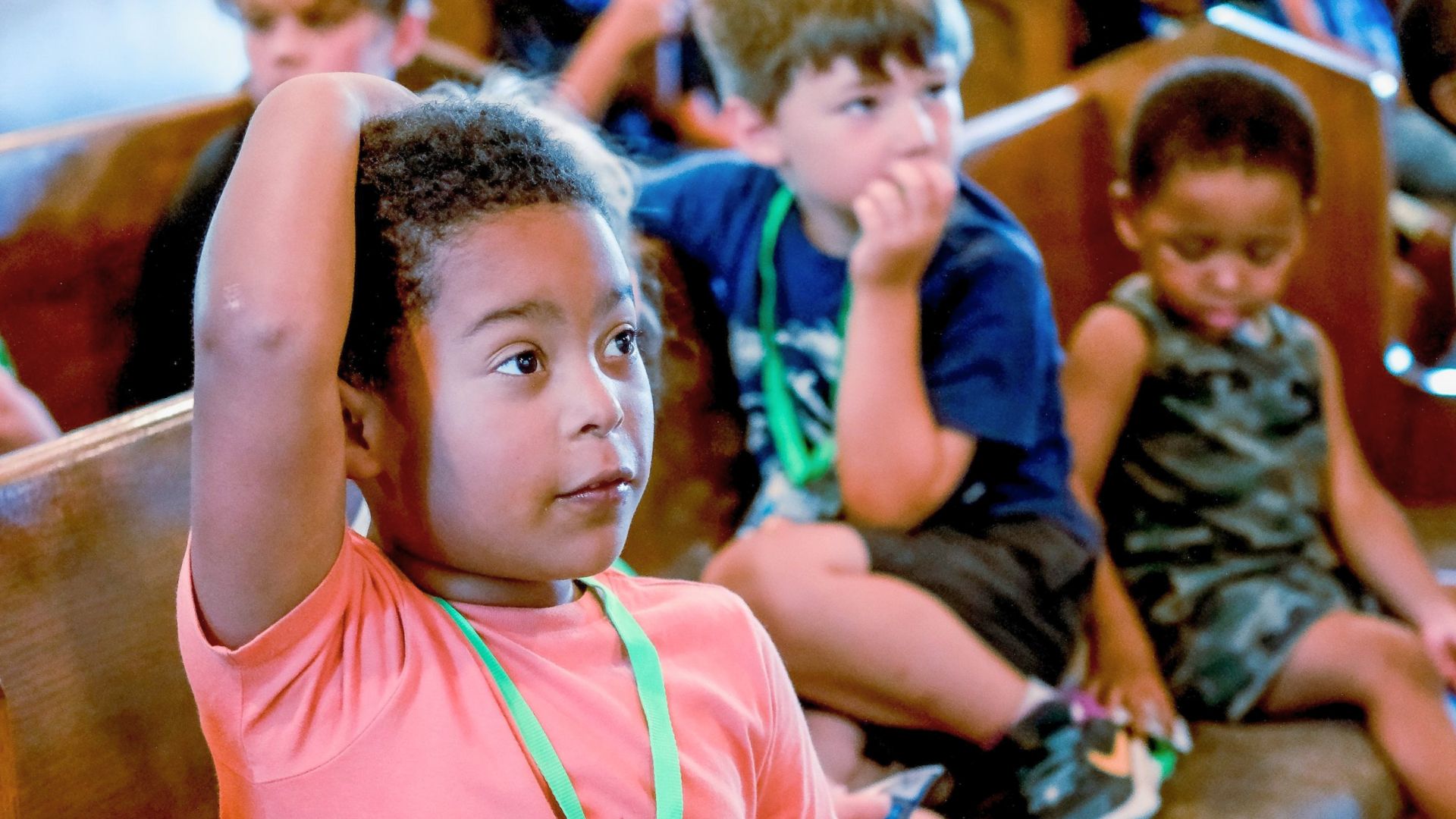
 On Wednesday nights after dinner, the kids come in around seven. Bynum starts with something familiar, then something fun. The Sunday school classic “Father Abraham” is a reliable way to get them moving and help get the wiggles out, he says. Then, mid-song, he stops.
“Stop. Who is Father Abraham? We sing about Jesus. Why are we singing about this Father Abraham guy?”
“You get a lot of weird answers,” he says, laughing. “God’s other son. Jesus’s brother.” So they open the Bible and find out. “We break it down and it goes deep.”
Bynum uses the lyrics to give kids language for praise and gratitude, which is sometimes missing from their lives. “Enter his gates with thanksgiving and enter his courts with praise. That’s my structure of prayer right there,” he says. “If they learn nothing else, they know how to pray.”
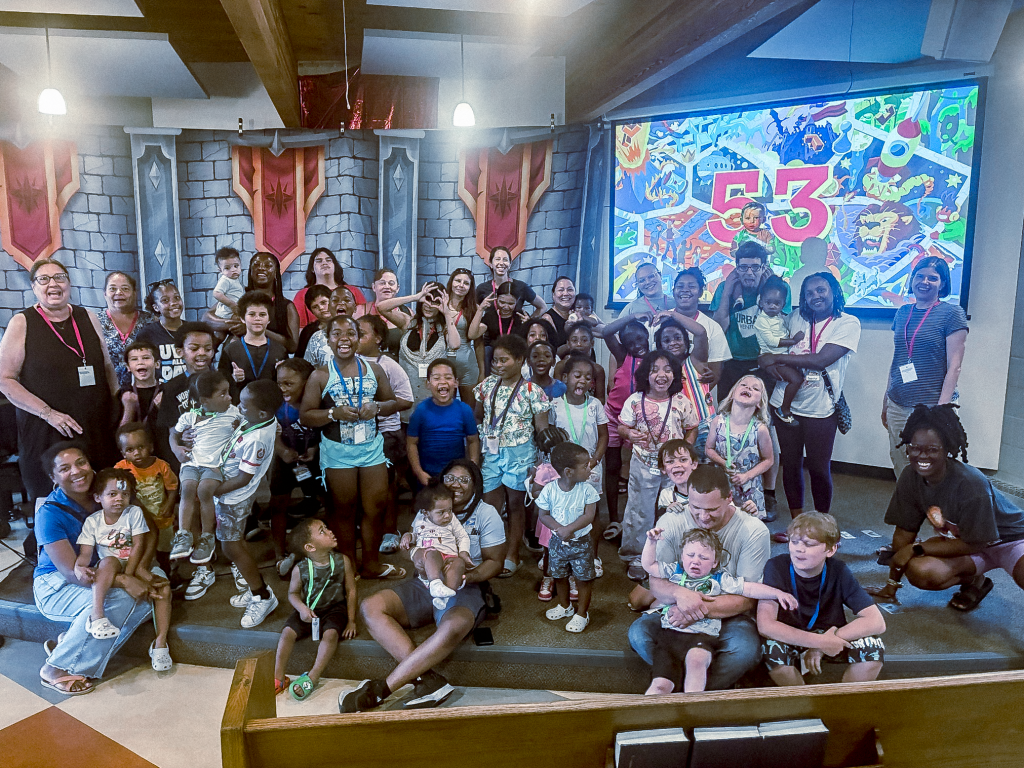
The proof came the Wednesday after VBS, when every kid from that week turned up at church. They sang, and a little boy got up to close them out. He started the way Bynum taught him, “Dear God, thank you for the food we ate.” Then he said, “I’m not afraid of the kids who pick on me or treat me wrong in school, because you are my shield, Father.”
“This kid’s four years old. He can barely talk,” Bynum said, “and he said that.”
The pattern has repeated itself throughout the church’s history. In 1962, a young woman named Hazel Rand, who had grown up in the church, returned to Community Covenant as a parish worker. She had attended at thirteen, drifted away, and was invited back by a persistent friend. Community Covenant has been growing its own staff for sixty years.
After that first week of VBS, the church invited two neighborhood families to join them on Sunday for worship. They didn’t come.
But days later, they showed up unannounced while Swanson was in the office. Alex thinks they saw a bunch of cars in the lot and figured something was happening.
They were right. The church ordered pizza and sat with them. Wednesday night gatherings grew out of that, and they still start with a meal. Now the night includes Bible study, twelve-step recovery, children’s worship, and youth group.
 Bynum’s advice to any church that wants the same thing is to start with love and patience. When parents apologize for a child acting up, he waves it off. “Let them act out. Because when I put them up to sing in front of the parents in church, they get all shy and quiet.” Some of the youngest arrive, cursing at grown women; two years on, those kids tell the newcomers to cut out such behavior. Bynum grew up getting whipped with a switch. He wants the opposite for these children. “Get it right,” he says, “and the relationship changes. They don’t call me Mr. Ryan anymore. They call me Uncle Ryan.”
Alex says, “It really has been as simple for us as creating a safe space where people can gather and make memories.”
“Tell the stories of Jesus, and they happen again,” Swanson said.
The kids eat pizza, learn to sing, and are transformed. Those who are bound are set free.
In North Minneapolis, Unique’s prayer remains true. The church is open.
Historical background is drawn from Jon Kramka, “The Making of an Urban Church: Community Covenant–Minneapolis” (2005).