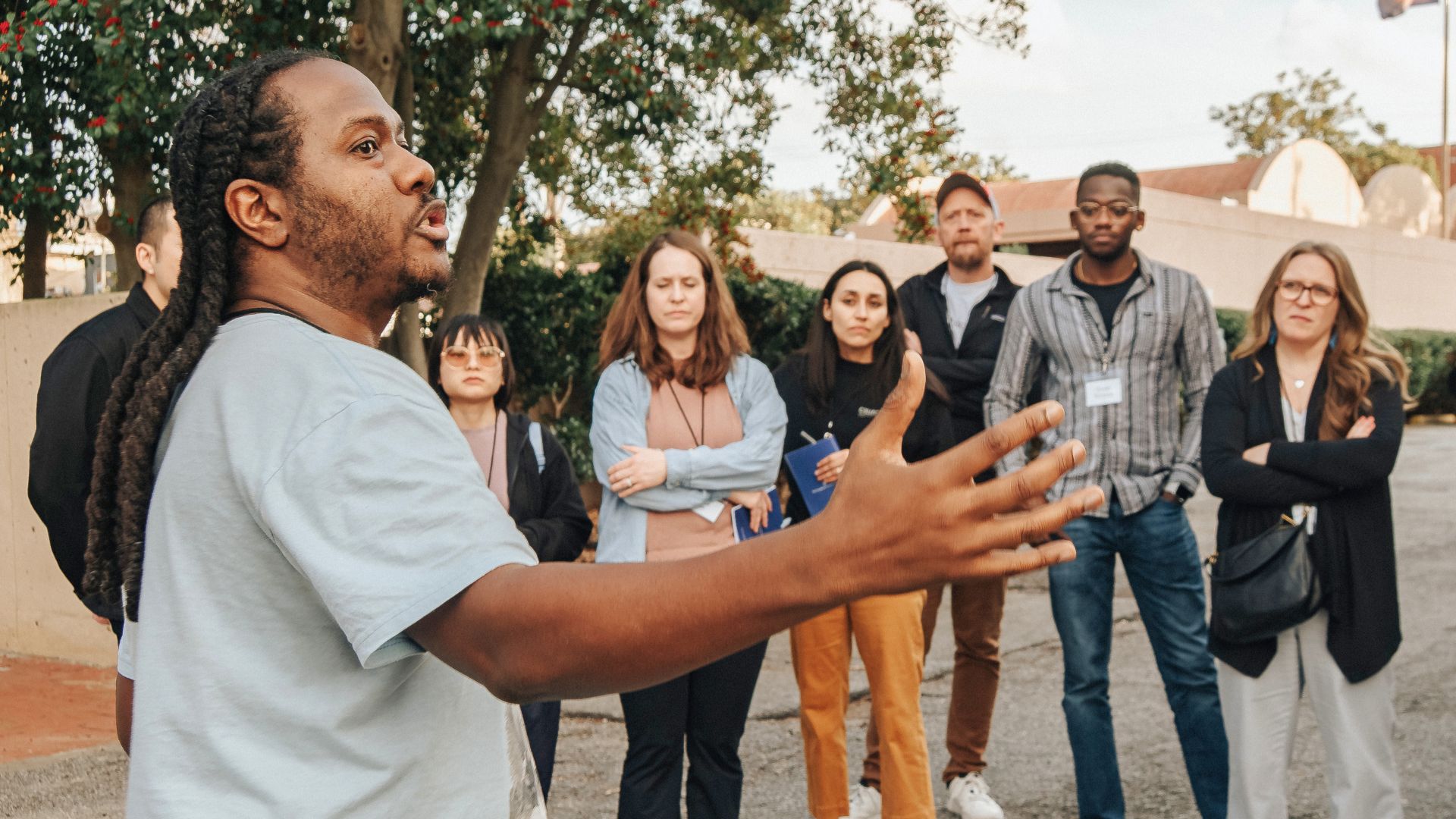
Rev. Dominique Gilliard was recently named senior director of discipleship, evangelism, and justice for the Evangelical Covenant Church, a role in which he provides supervision for both the Love Mercy Do Justice and Make and Deepen Disciples teams. He most recently served as director of racial righteousness and reconciliation with Love Mercy Do Justice.
Gilliard’s path to this work came through the classroom and the local church. After teaching at North Park Theological Seminary, he served as associate pastor of Convergence Covenant Church in Oakland, California, where his ministry included discipleship, small groups, and community engagement. He went on to a combined executive pastor / next-generation role at New Hope Covenant Church, also in Oakland, where he sought to cast a vision for holistic discipleship in a city where many congregants were already engaged in service and justice work alongside neighbors who did not share their faith.
The Covenant Companion spoke with Gilliard about his new role and why he believes the church is facing an unusual opportunity. This interview has been edited for length and clarity.
Can you tell us about your new role and how it came about?
How it came about really aligns with the Vision for Renewal and our conviction around discipling people into a holistic understanding of the gospel. We are trying to intentionally bridge the chasm—the unbiblical chasm—that has existed for far too long in the Western church between evangelism and biblical justice, between the Great Commission and the greatest commandment, as if they are not inherently wed. How do we close the gap between proclamation and demonstration through resourcing, spiritual formation, and the preaching and teaching of God’s word?
My previous role involved racial righteousness and reconciliation, but I have always understood my calling and gifting to be more expansive than this component of biblical discipleship. My chief concern is: how do we disciple people in ways that equip them to live and love like Jesus? How do we form not only disciples who make disciples, but holistic disciples who make holistic disciples, who are committed to embodying both orthodoxy and orthopraxy—connecting these things so that they are no longer estranged or pitted against each other?
Serving in local congregations, I focused on holistic discipleship even when that was not what we called it. In Oakland, California, many of our congregants reported working alongside great people who were doing invaluable work for the common good—teaching in alternative schools, practicing restorative justice, and working in public health. While they celebrated their peers’ social impact, they also lamented how many coworkers were doing such meaningful work without the hope of the gospel. That often led to burnout, high rates of turnover, and colleagues who eventually felt overwhelmed by their neighbors’ needs. Our congregants consistently gave thanks for a church community where they were reminded that they did not just have a job; they had a vocation. Work was an opportunity to join God in making things right in our broken world. We discipled members to live as mission friends, people whose faith fueled their work. They relished having a space to process how Jesus made a difference in what they did, and how they were called to do it. They also loved to strategize about how to effectively share the gospel when peers noticed the difference in how they approached and engaged in their work. They would practice succinctly sharing their testimonies and sharing the gospel in order to be prepared to respond.
What initiatives are you and your teams working on that you are excited about?
I’m excited about the revitalized, intergenerational BLESS curriculum, where we are committed to mobilizing entire congregations to prioritize relational evangelism. We hope to help people see that every Christian, of every age, has opportunities to share the gospel. Children through seniors need to be equipped, encouraged, and empowered to engage in relational evangelism. The gospel calls us to be transformed by the good news of Jesus Christ, to share it, to bear witness to it, and to invite others to experience it.
When we talk about a holistic gospel, many people assume that means emphasizing justice more. But it really means prioritizing both proclamation and demonstration. In some communities, good justice work is being done, but a commitment to evangelism or the conviction that evangelism is a core component of what it means to faithfully follow Jesus is lacking. That needs to be remedied. When we talk about a holistic gospel, we mean evangelism and biblical justice. Living and loving like Jesus. Proclaiming saving faith in Christ and taking on the mindset of Christ. Inviting other people to come to know God and live transformed lives because of God’s love.
Every generation needs contextualized biblical content that will enhance their understanding of evangelism and provide them with tools to be effective evangelists in word and deed. What is new in this BLESS revitalization is that the children and families, youth and young adults, and adult expressions of the curriculum all focus on the same biblical passages, which are broken down in age-appropriate ways. Families can go home and engage in intergenerational conversations about evangelism, which are then reinforced on Sunday with the congregation.
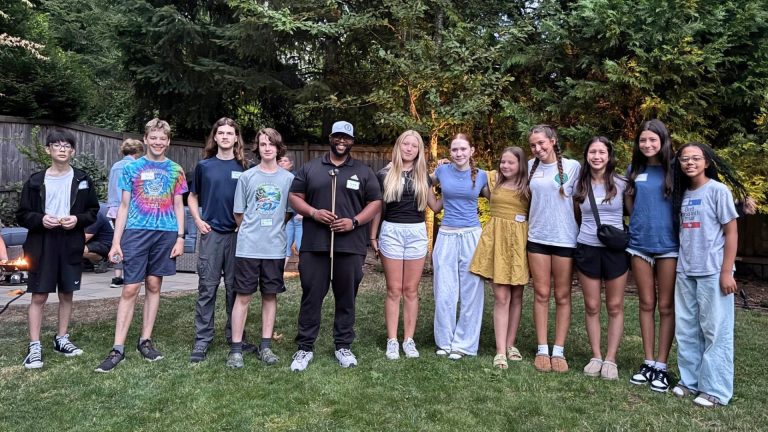
The triennial Unite conference for youth is an expression of the Covenant’s investment in a generation. We are committed to mobilizing people across generations to participate in our common mission of making God’s name known and love shown. That is the call: evangelism and biblical justice together.
I am also excited about the work of ministries such as Crescendo. People often assume that once you reach a certain age, all that is before you is retirement. Our Crescendo leaders are modeling something very different—purposeful living and leveraging accumulated wisdom. Their Justice Journey in Charleston, South Carolina, is an immersive discipleship experience, and we want to make it intergenerational, with leaders coming alongside children and grandchildren for that kind of gospel-centered wisdom-sharing. I’m also really excited about Crescendo’s Grandparenting small group study.
I want to contribute to a denomination that sees how desperate the world is for an authentic embodiment of the gospel. We see so much depression, anxiety, disillusionment, and fatalism, because people are clear that the way things are is not the way they should be. But I do not think people are clear about what a possible alternative would look like. The church must be the place that offers that alternative and creates on-ramps for people who are spiritually curious and open to come and taste and see the goodness of God.
We are in a watershed moment. So many people are open and looking. Now is the moment to recalibrate our witness so that people see our saltiness—so they see the hope of the gospel through people who would never choose to commune with one another on their own terms, but who are compelled by the power of the Spirit to live so distinctively for Christ that their communion itself is a testimony. People are curious about that. And because of our humility and submission to the Spirit, we get the chance to welcome them into God’s beautiful family, where there is rest for the weary and renewed hope in the presence of our Lord and Savior Jesus Christ.