Covenant pastor Rob Fairbanks was eating breakfast with his wife and son in a park near their home in Spokane, Washington, when the sky suddenly changed. They packed up to drive home, looking west toward their neighborhood. They saw a plume rising off the horizon that stopped Fairbanks mid-sentence.
“It looked like a nuclear  explosion or something,” said Fairbanks, lead pastor of Immanuel Evangelical Covenant Church, one of several Covenant congregations in Spokane. “This huge plume was going out, and we immediately started looking at news to figure out what was going on.”
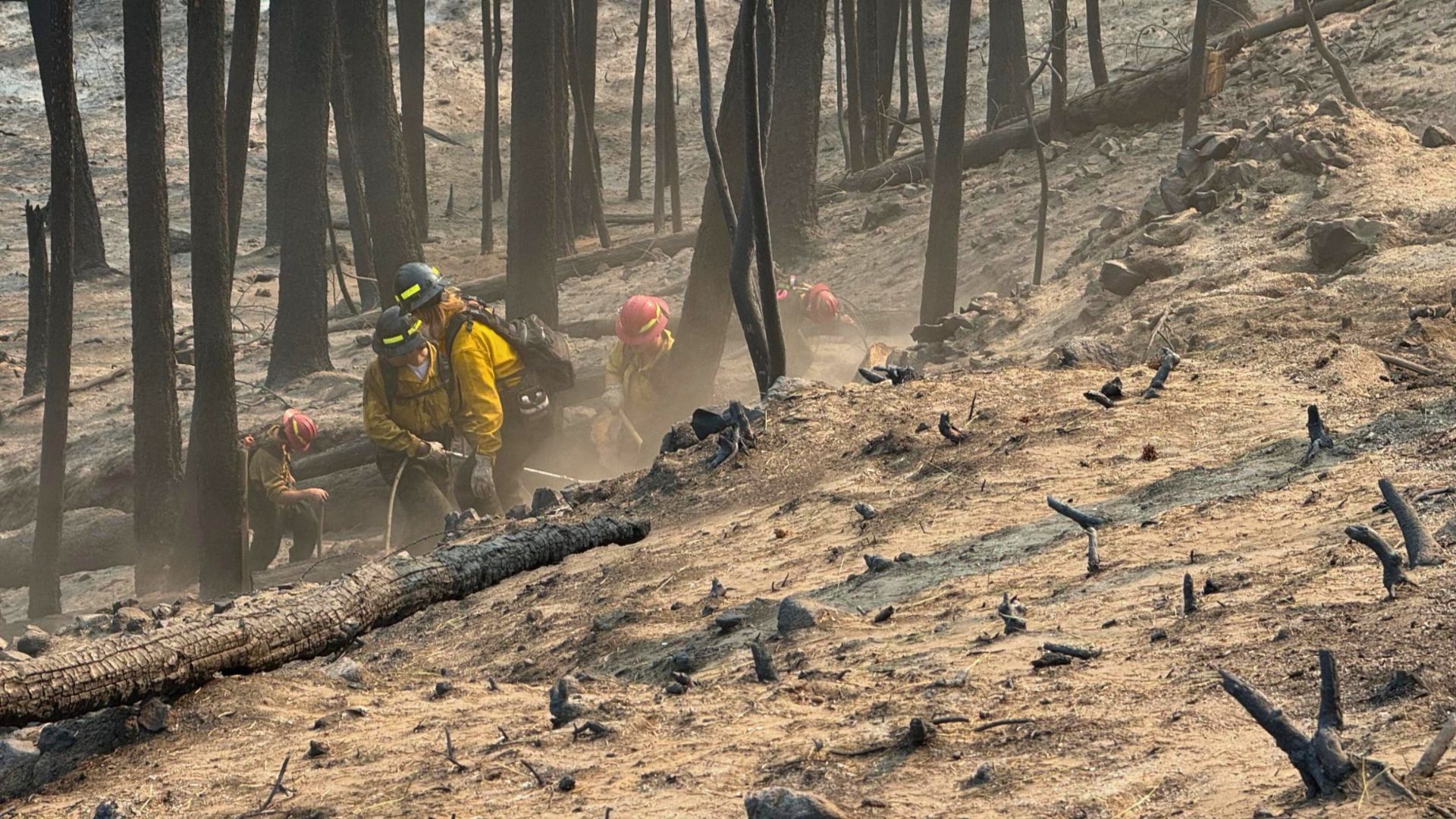
It was the start of the Old Trails Fire, less than half a mile from the church. Investigators say the blaze was deliberately set, timed to catch the highest winds of the season. It jumped the Spokane River within hours, and pushed north into neighborhood after neighborhood, driven by gusts that hit 45 miles an hour.
The Old Trails Fire, along with two neighboring fires, scorched nearly 10,000 acres, and forced roughly 67,000 people from their homes—the largest, most destructive wildfire event in the state’s history.
 “It is a miracle that nobody has been killed in these fires,” said Mark Finney, a licensed Covenant minister serving Emmaus Church, a congregation in Spokane. “A thousand structures burned down, and we don’t have any fatalities. That’s unbelievable.”
For Fairbanks, the fire hit close to home in the most literal sense. When his neighborhood was evacuated, a former elder’s house at the bottom of a hill where the flames were coming down was saved only because a neighbor who refused to leave spent the night dousing the hillside with water by hand. “He literally rescued twelve homes,” Fairbanks said. “The fire came down the hill, and then it kind of went around those twelve houses and just kept burning. My good friend escaped having her house burned by some heroic dude who risked his own life to save his neighborhood.” Fairbanks’s brother watched a fire line close to within fifty yards of his front window.
The next day Fairbanks stood in front of his congregation and did something he rarely does: he asked for money. “I don’t ask you for money much, but today’s the day,” he told them. The church started a fire relief fund on the spot. Within days it had raised $7,000 and begun handing out $1,000 grants, with no strings attached, to families affected by the fires. The fund has since grown to nearly $12,000.
A former staff member at the 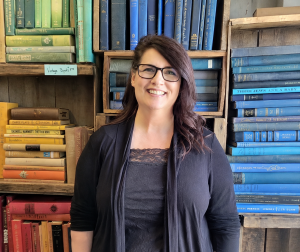 church, Michelle Areta, teaches at Salk Middle School, which serves most of the neighborhoods that burned. She helped identify which families needed the grants.
Through Areta, the church connected with more than fifty displaced families whose homes were uninhabitable due to smoke and structural damage. Fairbanks and the team have been working through them family by family, offering grants, furniture, gas cards, and food cards. “She’s the hero of our story,” Fairbanks said. “She gives us real flesh and blood people to move toward and love.”
“I guarantee you every dime that we take in will be given to somebody else,” Fairbanks said. “We’re a pass-through thing. We’re not going to tell you what to do with our help. We just want to be there.”
Across town, Finney’s congregation of twenty or thirty people watched the disaster unfold. Two families evacuated and spent days not knowing whether their houses had survived. One moved in with another church family. It’s the kind of response Finney saw echoed across the city: of the 67,000 people forced out of their homes, less than one percent ended up in Red Cross shelters. Roughly 60,000 people were absorbed into networks of friends, family, and church. “That was initially what impressed me the most,” Finney said. “Churches were just letting their friends stay, crash in their Sunday school room. That was amazing.”
Finney says he’s been watching Spokane’s churches build muscle for exactly this kind of moment through previous fires. A blaze outside the city limits burned homes in Medical Lake two years ago. Another hit the town of Malden a few years before that.
“Because we’ve seen this in the area, it’s caused folks to have to respond and to anticipate more,” Finney said. He sees the same pattern in his full-time work running Thrive International, a nonprofit that houses refugees and immigrants in transitional housing across Spokane. “The connective tissue that we’ve developed by having to learn to care for our immigrant neighbors over the last ten years—that’s the same connective tissue showing up now.”
Finney recognizes what the church can’t do. “The church is never going to be a disaster response agency like World Vision or the Red Cross,” he said. “But to absorb the people within our sphere of influence and to provide the long-term spiritual, emotional, and material support beyond the headlines—that’s our wheelhouse.”
“What happens in three months?” Fairbanks asked. “People will still be struggling three months from now. Six months from now, they’re still going to be underwater in some ways.”
Finney’s wife, a marriage and family therapist, recently told him about research showing that healing from trauma depends less on any particular technique than on simply being in the presence of someone who is safe enough to hear the story.
“That’s what the church does,” Finney said. “We tell the stories of Jesus and the stories of Scripture, and we integrate those into our personal stories and our bigger communal stories. That’s what we need for the next year and a half in Spokane—for folks to take that painful experience and weave it into a story where their life still makes sense, where God is in this with them.”
The Covenant’s Domestic Disaster Response Fund exists to help churches like Immanuel and Emmaus do exactly that kind of work, through months of case management, rebuilding, and pastoral care that follow once the plume has cleared and the cameras have moved on. Fairbanks has already applied for a denominational grant to keep his church’s relief fund going.
To give to the Domestic Disaster Response Fund and help stand alongside churches as they join their neighbors on the long road to recovery, click here.