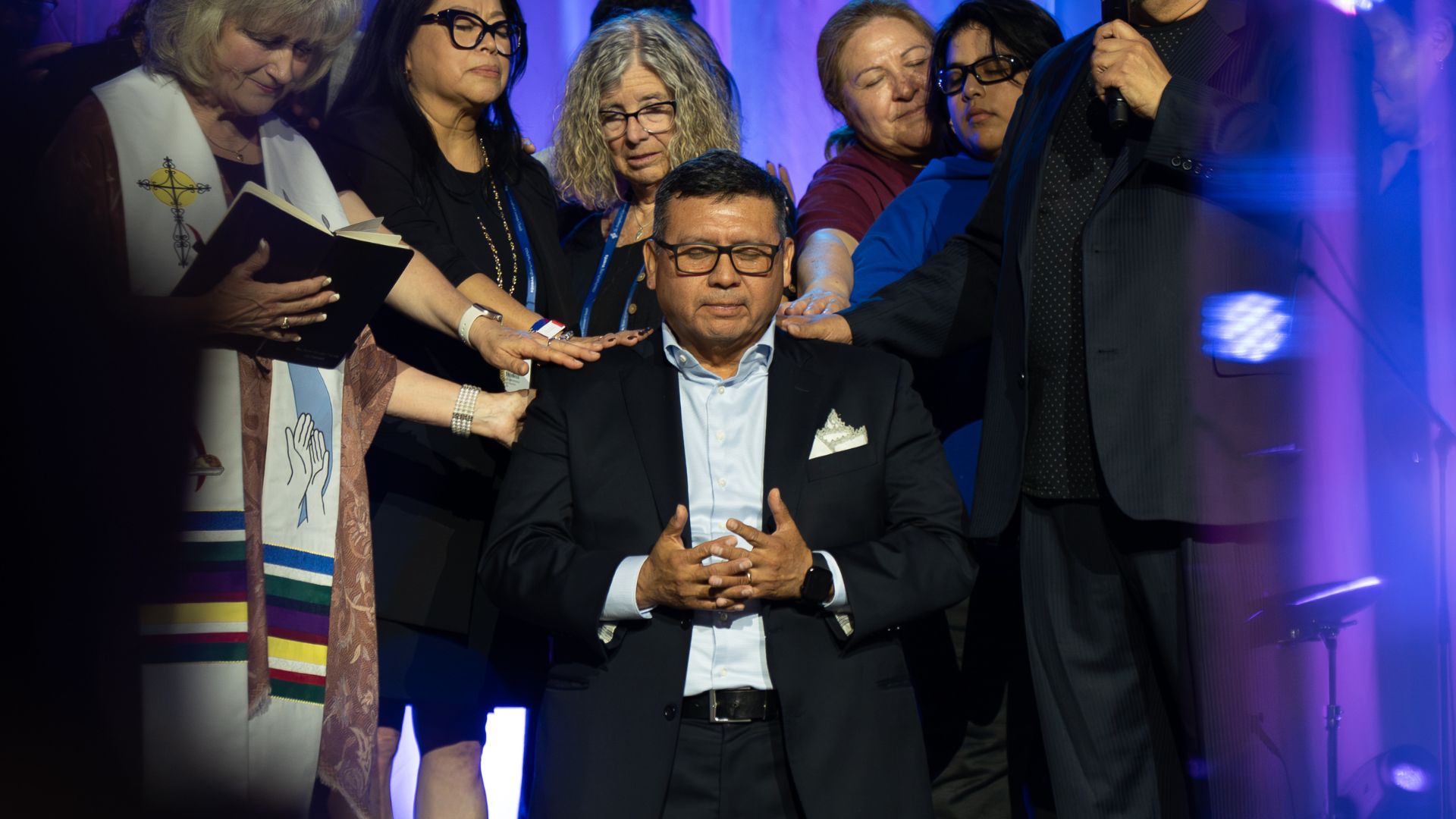
As Latinos, we initially serve Jesus in the way He calls us to. We become more equipped later, once we understand that ministry requires more than just passion.
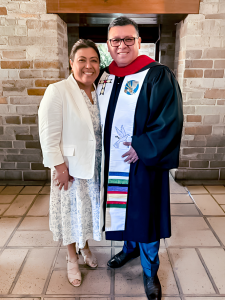
When I entered the ministry, I immediately understood that I needed to embark on a lifelong path of formation. CHET became the foundation for everything that followed for me.
The truth is that access to theological education is limited for Latinos. It is difficult to find an institution that is academically sound, biblically faithful, and affordable. CHET understands this reality. It was created for people like me: first-generation immigrants learning to navigate theological education in this country. Our hope is to eliminate any barriers that prevent us from reaching that goal. Without sacrificing academic quality, we need to create accessible pathways for Latino leaders to receive the training necessary to serve Christ and His church with wisdom and excellence.
When I came to the United States in 1990, I came to work hard for the American Dream: to have a decent life, a church, a place to live, to provide for my family, and to feel safe wherever I went. Today, many Latino families and churches live with growing fear and uncertainty in the face of immigration policies. Even those with legal status can feel vulnerable because of the environment around them. Our churches need well-prepared leaders who can shepherd people through these realities with wisdom, courage, compassion, and a deeply biblical understanding of justice, human dignity, and the hope of the gospel.
If you want to have a voice—if you want to guide the Latino church, protect it, represent it, and help it navigate the realities of immigrant life—you need a degree. Certificates are valuable because they open doors to learning, but they shouldn’t be the ultimate goal. We need ongoing training because the realities we face in our communities are complex, and the demands and needs of the Latino church are constantly changing.

We need to be prepared with more than certificates. We need bachelor’s degrees, master’s degrees, eventually doctoral programs—diplomas that equip us to face what the Latino church is facing right now. Our churches deserve leaders who keep growing throughout their lives and who can find a voice to protect and guide the church. I tell our pastors that if God has called you to ministry, he has also called you to a lifetime of preparation.
Like leaders in any culture, we balance ministry, work, and family—but we do so while navigating the realities of immigrant life in our communities. Most of us are bivocational. We struggle to give the church enough time as pastors, but if we give the church more time, we give less time to our families as spouses and parents. CHET was created with understanding of these realities. Most of our students are already leaders in their churches, working hard to make it all fit.
Our daily work to provide for our families often isn’t enough on its own, so many pastors need a second job to afford seminary—while still trying to find that balance of caring for our families. I know these pressures firsthand. I was once a manager at a sign company, and my employer wanted me to push the Latino workers to produce twice what the white workers did. I refused and I lost my job for it. So, I became a school bus driver to afford seminary. More than a theological institution, CHET has been a refuge for a lot of immigrants, me included, who came to this country because of hardships in their country of origin. It’s a safe haven. People come to CHET and find not only training but comfort, hope, and healing, and they carry that back to their communities.
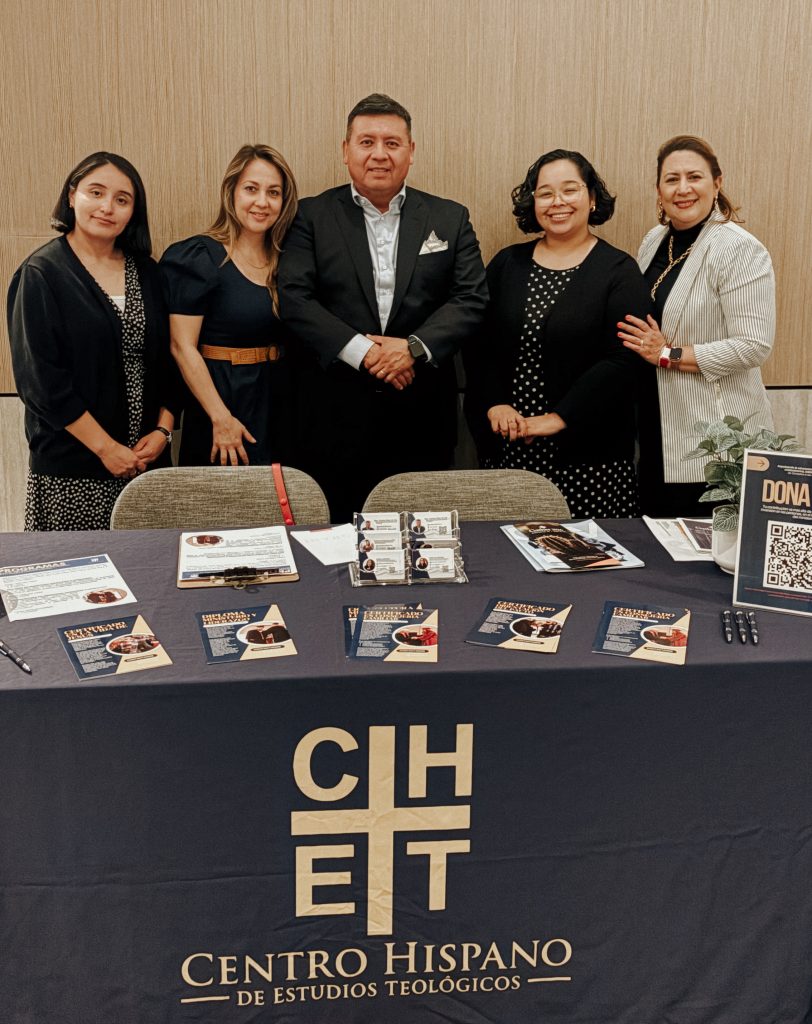 CHET focuses on three things: strong academic theological training, spiritual formation, and practical tools for ministry, both locally and globally. We offer one two-hour class a week, so students have room for ministry, work, other jobs, and homework. That’s how CHET operates—forming and transforming people spiritually while equipping them for ministry and for healing, peace, safety, and hope.
CHET has been training Latino leaders for thirty-six years. We understand the realities of the immigrant community and the needs of the Latino church. This is a message for those who hold positions of power within the Covenant: CHET is an important ministry of the Covenant, and if we want to strengthen the Covenant, we need to strengthen CHET, because CHET is training the Latino members of the Covenant. We’re not a foreign group. We are here together, in the body of Christ, and it’s important to collaborate in strengthening the Latino church.
I also want to be clear about what accessibility means. Some people may think it means diluting academic rigor in order to create space for Latinos. We don’t want that—speaking for myself, it’s insulting. It makes me feel like people don’t think we have the capacity for academic success. Some people hear my accent and assume I think with an accent too.
Let us not dilute academic rigor for Latinos. Let’s create accessible pathways for theological training instead. Let’s work together to strengthen the Latino church by strengthening CHET and by strengthening Latino leaders.
We recently held our annual board meeting in Chicago, and we talked through five areas we need to strengthen and contextualize going forward. One is fundraising—we are being more intentional about strengthening relationships across Covenant ministries and churches so CHET can build a sustainable financial foundation for long-term ministry. That, in turn, helps us make theological education more accessible to Latino leaders.
Second, we need to contextualize and elevate our curriculum. Our programs aren’t going away, but we’re working to elevate them. For example, we are turning our counseling certificate into a full bachelor’s degree. As we are in conversation with different seminaries, our goal is to elevate our bachelor’s programs to the master’s level. Certificates are a good entry point, but Latino leaders need more training than that.
We are also elevating our faculty. Since we offer a bachelor’s degree, most of our instructors hold a master’s degree—and several of us are pursuing doctorates. I’ve been accepted into a PhD program at Talbot School of Theology. Our director of operations was accepted at Fuller and starts this fall; our director of academic programming is doing the same. We want to elevate CHET by elevating ourselves, so we can eventually offer master’s-level programs.
We also want to grow. Right now we have around 150 students specifically training for pastoral ministry. We want to grow that to three or four hundred students within the next three or four years. That’s a big number—and it matters that every one of those students is training specifically for ministry. We’re not adding other kinds of programs to bring the count up; we’re training leaders for local and global ministry.
I want to say this to my Latino brothers and sisters: if God has called you to ministry, he has also called you to a lifetime of preparation. Your calling deserves your very best, and the
people God has entrusted to you deserve your very best too. CHET would be honored to walk alongside you in that journey.
Walking with Jesus is the most beautiful experience a Christian can have. Preparing for ministry is part of how we join him in that work. Both matter, and we’re here for any leader who wants to take part in this lifetime of training.