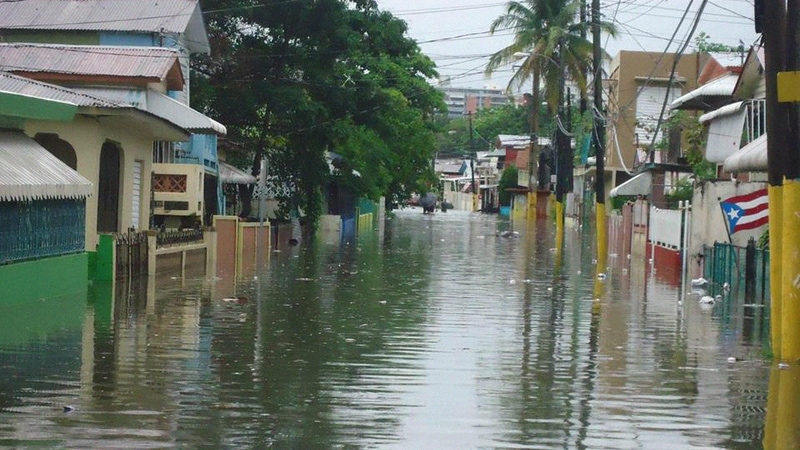
 CHICAGO, IL (September 27, 2017) – Many Covenanters with family members in Puerto Rico are still learning about the fate of their relatives after Hurricane Maria destroyed much of the island on September 20.
Those who have learned that their relatives survived still are concerned about how their family members will make it through the next several months.
Tomas Sanabria, pastor of Albany Park Covenant Church in Chicago, learned that his two half-sisters and stepmother survived, “but that’s what it is,” he says, “survival.”
Some are learning from social media about friends and family. José Humphreys, pastor of Metro Covenant Church in East Harlem, New York City, said one congregation member had not heard from several relatives but happened to see a picture of her dad waiting in line to get gas on social media .
Humphreys’s aunt, who lives near Luquillo, had the roof of her house blown off but is safe, he said.
Residents in Puerto Rico who still can get around the island are checking on relatives and then letting people in the States know how they are faring. They also are taking in family members who have lost homes.
Getting word out from the island has been challenging. Daisy Echevarria, an employee at Covenant Offices, said her family had finally heard from her step-brother last night. He had driven an hour to find a weak cell-phone signal and get out a brief message before the signal dropped.
Rebecca Gonzalez, executive director of operations at Covenant Offices, said she had been learning about relatives as family members relayed messages among themselves. One relative had a motorcycle and went looking for family members and took pictures to send to relatives. She learned about her father’s family only last night after a message was posted on by another relative Facebook.
Covenant minister Gricel Medina still is waiting to hear about some of her relatives. “It’s very heartbreaking,” she said. “This is a catastrophic situation that is only getting worst with time.”
Government officials have called the damage to the island of 3.5 million people “apocalyptic.” Maria ripped up much of the nation’s power grid, and residents could be without electricity for four to six months.
“The main issue right now is getting access to areas because of the flooding and debris on the roads,” Humphreys said.
Gonzalez said her family was drawing on wisdom gained from surviving Hurricane Hugo, which devastated the island in 1989 and left some areas without power for months. They have generators and sometimes they can get electricity by hooking them up to their car batteries.
Gonzalez said her family’s faith also will sustain them.