“A wandering Aramean was my ancestor” (Deuteronomy 26:5).
It was an odd choice for my first memorized verse. It was the first day of fourth-grade Sunday school at Covenant Congregational Church in Bridgeport, Connecticut. It was the first time my mother was teaching my Sunday school class, and I was so excited! Those were her first words that day. The “wandering Aramean” made me think of long hikes in the hot summer, adventure, and the unknown. We were going to learn all about the Israelites and their freedom from slavery in Egypt. I wanted to know who that Aramean was and how we were connected to him.
That was in 1968.
In 1989, my mother started her list of the books of the Bible that she taught. That list ended in 2021, right before she died. And in November of 2004, she chose Exodus for the Bible study she was teaching.
I love the Passover story. I’ve been honored to celebrate the Passover with Jewish friends and to hear those ancient words retold in the ancient Hebrew language. I love how they honor and remember each detail as they were instructed by Moses as they prepared for that first, terrifying night of Passover. The entire story of Moses and the Israelite captivity is full of terror, with the focus so often on Moses. But the terror came much earlier in his life.
Throughout history, people with faith in the one God have been a threat to those in power. The Hebrew people were welcome in Egypt through Joseph. But as they thrived, they became a threat.
— Julie E. Bromley
Throughout history, people with faith in the one God have been a threat to those in power. When the Israelites came to Egypt through Joseph and his family, they were welcomed with open arms. But they became too numerous and too strong, and that was a threat to those in power. So they were enslaved. And just to make sure they would never become a threat, the king ordered all sons born to Hebrew women to be killed. The midwives refused, but the command went out that anyone who saw a male child was to throw him into the Nile.
But the king didn’t know about Jochebed. She was the daughter of Levi, the man chosen as the first of the priestly tribe of Israel (Numbers 26:59). Her husband was Amram, also a Levite. In Hebrew, her name is “yokheved,” which means “YHWH is glory.” Her name is the first in the Bible with “yah” in her name, a shortened form of YHWH, or Yahweh, which God reveals is his name, as Carol Meyers writes in Women in Scripture.
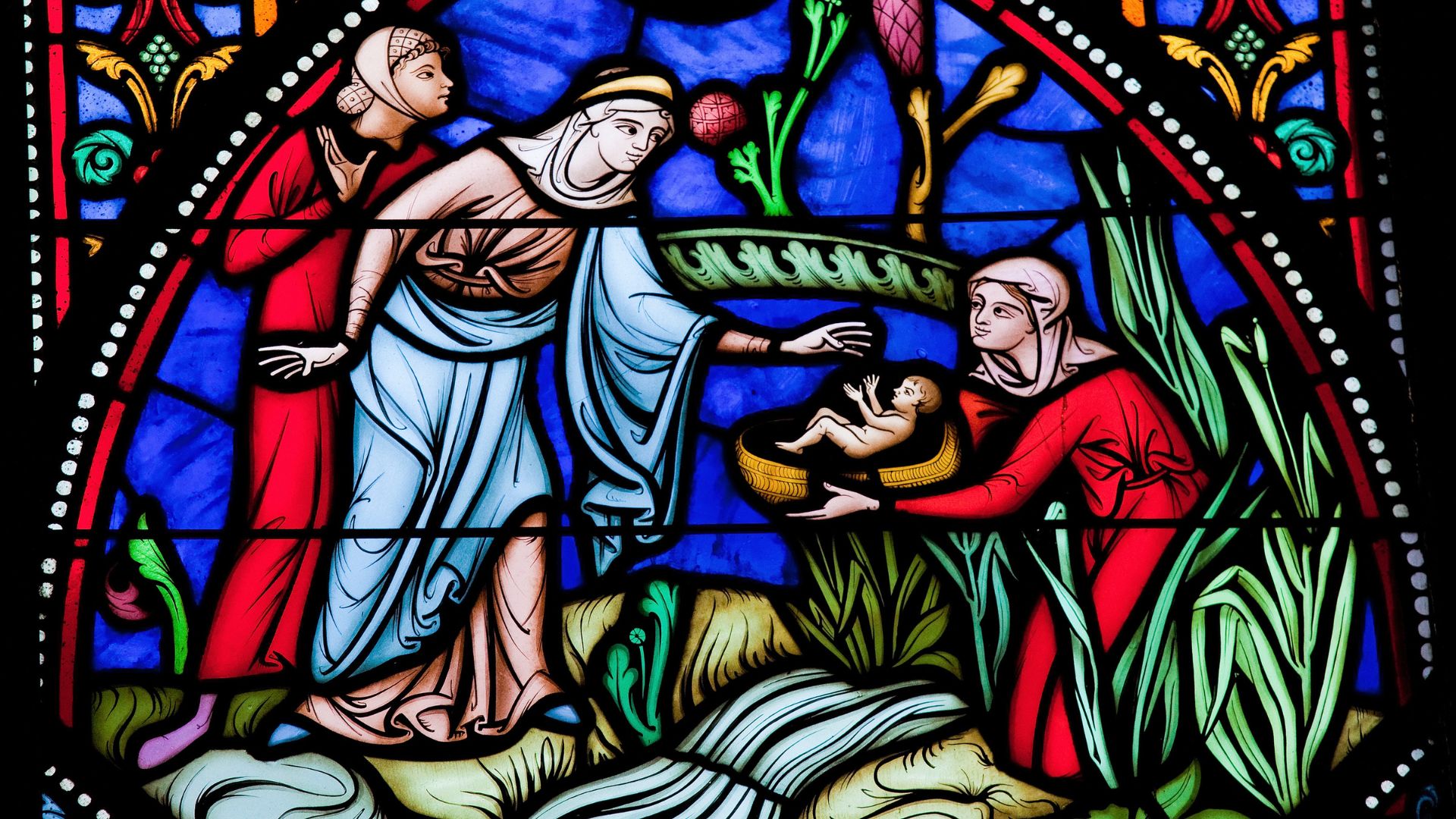
Jochebed is no ordinary woman. She proved to be as determined as her name called her to be. She bore a son, Moses, and hid him in a basket and floated him on the Nile toward the king’s daughter. We all know the story! The daughter finds the baby, recognizes that he is a Hebrew, but immediately loves him and wants him for her own. Jochebed’s daughter, Miriam, offers to find him a wet nurse. And so, Moses is returned to his mother.
“A man from the house of Levi went and married a Levite woman. The woman became pregnant and gave birth to a son. When she saw that he was a fine child, she hid him for three months.”
Exodus 2:1–2 · NRSV
It’s a familiar story, right? We’ve heard it over and over. Most of us have seen that old movie at least once! Martha Scott played Jochebed, Charlton Heston played Moses, and his son Fraser played the baby Moses. But, as most movies do, they got the story partly wrong, and, in fact, many Sunday school teachers miss an important aspect of the story as well. It was a question I couldn’t let go: a recent reading in The Covenant Home Altar called for Exodus 2:5-8, 10 — skipping verse 9, which reads, ‘Pharaoh’s daughter said to her, “Take this child and nurse it for me, and I will give you your wages.” So the woman [Jochebed] took the child and nursed it’ (NRSVUE). On this verse hangs the rest of the Exodus story.
My mother not only taught my fourth-grade Sunday school class; she also taught my first year of confirmation studies. My father was the pastor and, of course, in those days, had no staff at all, so my mother did many things to help. She typed and printed bulletins, organized VBS, helped run youth group programs—you know all the pastor’s wife things that made it possible for churches to survive with little money and no help. Every evening before we left the supper table, we had family devotions, and they always centered on The Covenant Home Altar. As the years went by, and my parents both retired, they joined and then began to lead the women’s and men’s Bible studies at their church. Many mornings over breakfast, they would dig deep into theological conversations, and sometimes real arguments about what they were currently studying. When my father died, my mother longed for someone to have those conversations with—let’s just say I did the best I could. What I learned from my mother was to dig deep, study harder, and ask questions without fear.
So my question here is, do we really think that Exodus 2:9 is about breastfeeding? In those days, a “wet nurse” didn’t just breastfeed; she raised a child, often for as long as three years. Jochebed was able to raise Moses and teach him who he was as a Hebrew. The first verse we read about Moses as an adult is Exodus 2:11: “He went out to his people and saw their forced labor.” How did he know that the Hebrews were “his people”? Even if Pharaoh’s daughter had made plain to him that he was a Hebrew and not an Egyptian, would he even have cared?
In the very next verse, Moses kills the Egyptian guard who was beating “a Hebrew, one of his own people.” Clearly, Moses knew who he was and, even more importantly, he knew who he belonged to. He was the son of Jochebed, a member of the Hebrew priestly tribe of Levi. He was a Hebrew who belonged to YHWH, whose mother’s name echoed that fact. When God called him from the burning bush, he may have asked his name, but Moses knew who Israel’s God was already because he had been raised and taught by his Hebrew mother. Yes, God saved Moses from the Nile. But God was also saving Jochebed’s son, and God gave him back to her so she could instill in him his identity and belonging. In no other way could he have ever been raised to stand before Pharaoh and say, “Let my people go”!
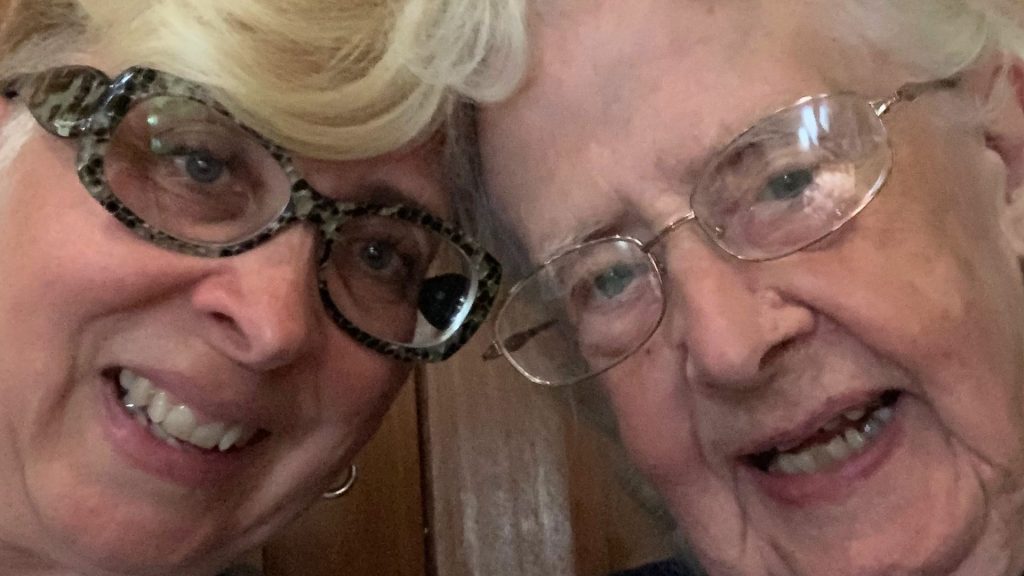
In my mother’s obituary, I wrote, “She felt free to question theology and the Bible and enjoyed fervent discussions on such topics. She wasn’t entirely sure what heaven was all about. She would say that no one here had been there and come back, so no one could really be certain…she knew most of all that heaven would be where she could see and be with God her Savior. And the rest she would leave up to Him. All her questions are answered now.” As I wait until all my questions are answered as well, I’ll keep asking, challenging, studying, and working it through. Because my mother, like Jochebed, taught me who I am and who I belong to. I am a child of Helen and of God.