This month we celebrate Latino Heritage Month, a time to honor the history, resilience, and creativity of Latin voices. In times marked by both challenge and hope, these stories remind us of the strength found in community and the beauty of cultures woven together. Join us as we lift the voices, gifts, and legacies that continue to shape our collective story. In this post, we share a bibliodrama—a scriptural interpretation that stands inside the text to give voice to silent characters and deepen the meaning of the story—written by a Latina voice.
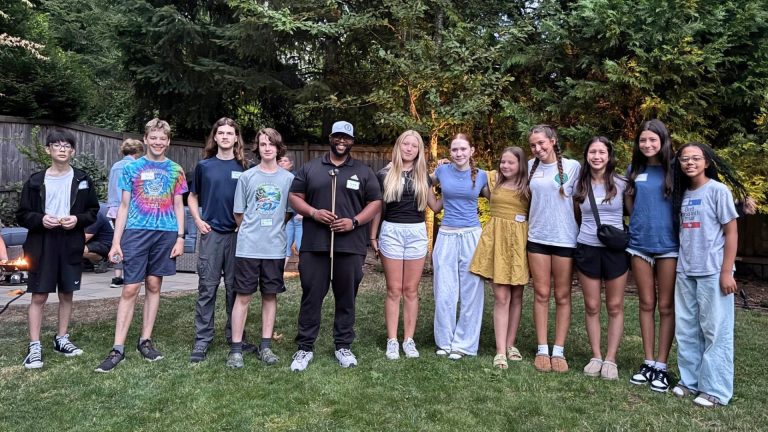
As I wrote this bibliodrama of Ruth 4:1-12, I thought about the stories I heard on our Immigration Immersion experience. I also reflected on the stories we hear across the country of our brothers and sisters being deported without due process. We don’t tend to hear their voices, and their future is in the hands of people who don’t seem to value their humanity. As you read this monologue, I invite you to hold in tension the raw feelings Ruth may have experienced, knowing her future was in the hands people who didn’t know her story, along with the challenge to consider whatever privilege you hold and how you might become a voice at the gate for those whose stories and futures are dismissed.
Ruth: I never thought I’d end up here. A foreigner from Moab, now a widow in the foreign land of Bethlehem. Who would want to marry me? I’ve heard whispers from those who work in the fields. They call me names. They think I’m taking advantage of Naomi, of Boaz, of the system. I’m not wanted here. My life is in the hands of people who despise me because of my native land. I hate that I have no say in my future. I am starting to doubt this God that Naomi and Boaz speak of.
God, do you really care about me—a woman, a widow, a foreigner?
I can hear the conversations of those walking from the town gate. I heard Boaz is sitting with my kinsman-redeemer and elders. Who are these elders, and will they object to his offer? What if my kinsman-redeemer refuses to redeem me? Will his refusal discourage Boaz from taking his place? I hate that I have no say in my future. Boaz has treated me well, but can he see past the bias his people hold against me? Will he dutifully provide us with food and shelter but fail to fully see and love me? Even if he does really love me, will I always have to contend with the gossip? Will I be ignored by the other women when I go to the well? Will people treat Boaz and Naomi differently because of their association with me?
God, can you really redeem and restore?
Two women just walked by and said something about a sandal being exchanged. What does that mean? Naomi said that’s how they legally transfer property. Who’s transferring it to whom? Am I considered property? I hate that I have no say in my future. Naomi, a widow, has used her privilege to protect and guide me so we can both live well. She didn’t have to. Our name may not live on, but at least Naomi can live her days in peace.
God, please make sure Naomi is taken care of.
I hear shouting and praise! I wish I were there—they are discussing me, my inclusion, my legacy! Are they shouting because they are going to exile me, or are they celebrating my redeemer? Whoever it is, they are owners of more property now. A group of people just walked by. They must have left before the outbursts. I overheard them say the man refused his right because he didn’t want to “marry a Moabite.” I made a vow to Naomi: her people are my people, and her God is my God. I believe this. But does that mean I have to abandon who I am and where I came from?
God, I hate that I have no say in my future, but I trust you are in control.
I see Boaz. He’s smiling! I feel a wave of peace over me. I can breathe again. I think I am going to be okay. Boaz said the outbursts were from the elders and all those at the gate. These people are happy for me? They accept me? They want me here? I asked about the kinsman-redeemer—he said his name is not worth mentioning. He will have no place in history. He said the witnesses blessed us and compared me to Rachel, Leah, and Tamar. These are women I have heard stories about from Naomi. They are mothers of Israel—and they are declaring my house will like theirs.
God, you are in control! You do redeem, restore, and care about me and Naomi!
I am Ruth, a Moabite, a widow, and a foreigner in Bethlehem. I am married to my kinsman redeemer, Boaz. I didn’t have a say in my future, but someone spoke up for me at the town gate. The community has welcomed me and blessed us. My mother-in-law is taken care of, and our family name lives on.
God, thank you that you have the final say over my future and that those who follow you are vessels of your kindness. The vow I made to Naomi was tested and has been proven to be true: her people are my people, and her God is my God. There is a hope that lives inside me, and I know my descendants will also be agents of redemption.