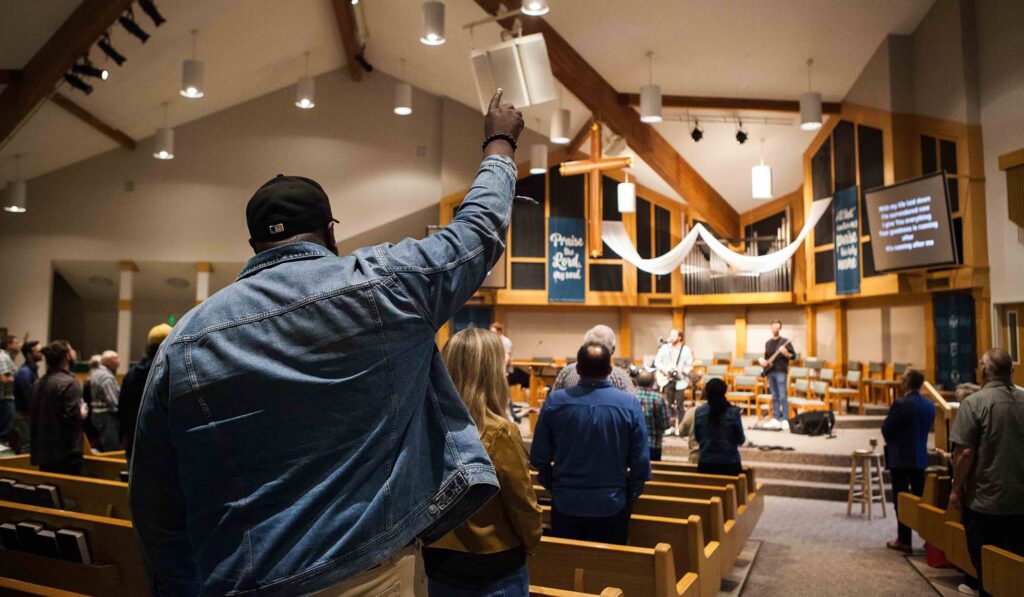
This story is the first in Eleven Conferences, a monthly series on how each of the Covenant’s conferences began and what ministry looks like there today.
In late November 1884, delegates from eight churches met in Dassel, Minnesota. One was the Minneapolis congregation of E. August Skogsbergh, one of the early Covenant founders. Their purpose was to gather church leaders across the region for collaboration and cooperation.
One participant, C. J. Nyvall, reported afterward that he sensed “a degree of disturbance and tension.” After pooling their resources for one year, the new association had $126.64 in income, against $75 in expenses. (In 2026 dollars, that would be about $4,300 against $2,500.) Writing a centennial history of that gathering, which was the precursor to the Covenant’s Northwest Conference, Covenant historian Philip J. Anderson called it “a modest beginning.”
The Evangelical Covenant Church organized in Chicago for the first time three months later.
At the Covenant’s first Annual Meeting, in Princeton, Illinois, in September 1885, the program committee put a question to the delegates: “How can the work be best carried out in the separate states?” The consensus was to encourage mission conferences regionally, similar to what had already started in Minnesota. Anderson wrote, “The Northwest association not only predated the Covenant, but it was also the first regional conference.” Ten sister conferences followed within twenty years, from the Middle East association in 1885—the territories of which eventually expanded into the Great Lakes Conference—through the Canada Conference in 1904.
Those eight churches in Dassel crafted a statement that the association would “not encroach on the rights of the churches…but on the contrary, to be their servant or the channel through which the gifts and strengths might be brought together to carry out the common task which individually they cannot do.”
Kara Stromberg, who has served as superintendent of the Northwest Conference since 2022, described her role in nearly the same terms in a recent virtual interview. “A conference at its most basic sense is a scaffold of support for local churches,” she said. “It’s not about making the conference stronger; it’s about making the local church stronger so that people can know Jesus.” She continued, “We broker resources and relationships between the local church and the Covenant. We’re really that middle strand of 3StrandStrong.”
Pastors describe that connection as kinship. Paul Knight, who retired in April after thirty-four and a half years serving as pastor of Hope Covenant Church in Grand Forks, North Dakota, summed up nearly four decades of ministry this way: “I walk into any Covenant church and I feel like I’m home.”
Four States, 130 Churches
When Skogsbergh, who was known as “the Swedish Moody,” arrived in Minneapolis in 1884, he started a school in his living room. Three years later he built a 2,500-seat tabernacle in Minneapolis, the largest meeting hall in the city. When that school moved to Chicago in 1894 and became North Park College, he started another school in Minneapolis, which became Minnehaha Academy and continues today as a ministry of the conference.
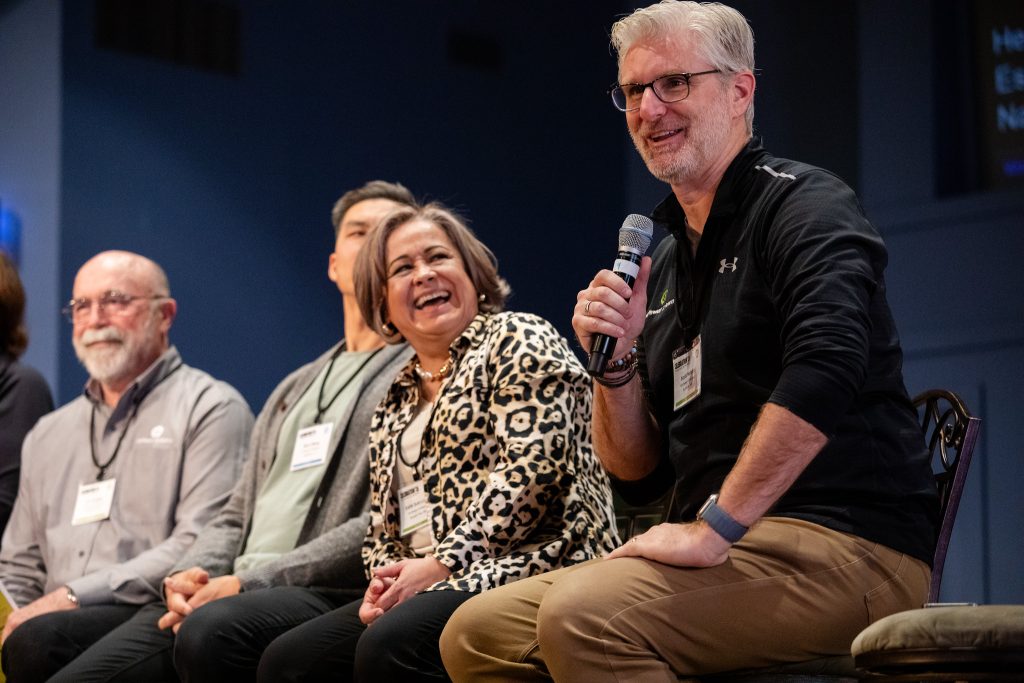
Today the Northwest Conference counts roughly 130 churches across Minnesota, North Dakota, South Dakota, and Wisconsin, plus five Bible camps and Minnehaha Academy, which serves students pre-K through twelfth grade on two Minneapolis campuses.
Recently Stromberg returned from International Falls Covenant Church, near the Canadian border, where the congregation was marking its hundredth year. “It was packed,” she said. “They had a whole gym full of people, and there was such an emphasis on next generation ministry. I mean, I was blown away.” Although the conference office is in the Twin Cities, 60 percent of its churches identify as rural or small town, and staff work to contextualize their support with rural training webinars and the Rural Impact Leadership Conference, led by Jon Kramka, director of congregational vitality.
Conference staff fulfill a range of responsibilities. Scott Nelson, who serves as associate superintendent, is a thirty-year veteran of local church ministry and focuses on church planting and leadership development. Ginny Olson directs Next Gen ministries, and Steve Wong works with pastors on ministerial health. Edith Soto López coordinates Latino ministry, and Greg Ellis serves as Latino liaison, together supporting Spanish-speaking pastors and planting new congregations. Sandy Norris handles finance, Cheryl Theilen manages administration and credentialing, and Bryan Malley handles communications. All are required to be active members of a local Covenant congregation.
Seasoning the Hotdish
The Twin Cities has functioned like a church-basement hotdish, with a few ingredients from one kitchen turning up in everybody’s supper. For example, Kramka came into the Covenant through Hospitality House, an urban youth center in Minneapolis started by a Covenant layperson as a summer outreach in city parks. There he met a high school student named Efrem Smith. Later, when Smith was sensing a call to pastoral ministry, Kramka talked with him about planting with the Covenant. He introduced Smith to church planting leaders Don Davenport and Mark Stromberg and worked with him to assemble a core team and find a lawyer to set up the church’s nonprofit foundation. In 2003 Smith
planted Sanctuary Covenant Church in Minneapolis. Kramka went on to serve on its board for five years.
Kevin Farmer joined the launch team and served as associate pastor for a decade. He said that at the time nobody in the room knew what the Covenant was. Smith had been raised in the Black Baptist church in Minneapolis, Farmer in the Black Baptist church in Philadelphia.
Smith and Wiley Scott, a Young Life executive who would later chair Sanctuary’s elder board, informally started Urban RECLAIM, a nonprofit for urban youth development. It incorporated in 2003 with Kramka and Farmer among its founding board members. Kramka and Smith also built a multicultural ministry cohort that brought “particularly white and Black pastors and leaders together for honest conversations around the state of race,” Kramka said. Those networks “have been tapped a lot by the Covenant over the years.” In 2011 Farmer hired Edrin Williams as Sanctuary’s youth pastor, introducing him to the Covenant much as Kramka had introduced Smith. Williams is now Sanctuary’s lead pastor.
Smith was eventually called to the Pacific Southwest Conference. Farmer went on to plant his own congregation, Epiphany Covenant Church, in South Minneapolis, in 2018. The multiethnic congregation partners with Hope Academy, supports Epiphany Turtle Mountain, and this year raised more than $17,000 for clean water through a marathon fundraiser. Farmer credits the same connections for hiring Minnehaha Academy’s first Black board chair and its first Black woman president, Donna Harris. Paul Robinson, who formerly served as pastor of Community Covenant Church in Minneapolis, now serves the denomination as executive minister of Serve Locally.
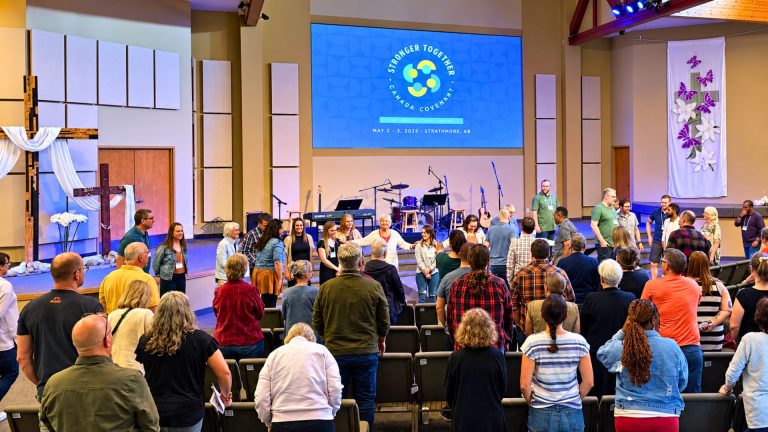
Multiethnic diversity is “one hundred percent a priority,” Stromberg said. In practice, that has meant ten Latino churches planted or revitalized in the Twin Cities and Rochester. Immigrant congregations that are not part of the Covenant have begun sharing space with existing Covenant churches, expanding those churches’ imagination for multiethnic ministry. A partnership with Immigrant Connection supports those arrangements. AI translation tools are available at the conference annual meeting so everyone can fully participate. This fall will bring the conference’s first Journey to Mosaic experience.
Who Comes Next
The newest emphasis is on the age demographics of the conference ministerium. In 2023 the conference projected that by 2028 one-third of its lead pastors would have retired. Figures since released by Serve Clergy suggest that half of the Covenant ministerium will reach retirement age within ten years. “We’re looking at massive shifting of leadership,” Stromberg said. Fourteen churches are in pastoral transition right now.
Stromberg describes her work as a season of rebuilding trust after some difficult years. The denomination voted to remove First Covenant Church of Minneapolis—Skogsbergh’s tabernacle congregation—in 2019, and Awaken Covenant Community Church in St. Paul in
2023. They were the first involuntary removals of congregations in Covenant history. Today, Stromberg said, the conference feels “steadier and calmer,” but she acknowledges that the wounds still feel fresh for some people. A friend reminded her that after Jacob wrestled with God, he walked with a limp. “I feel like we’ll always kind of have that limp,” she said. “That will always be a part of our story.” But, she added, “So many people in our conference can trace their origin story of their call to ministry back to First Covenant Church, and I thank God for its legacy.”
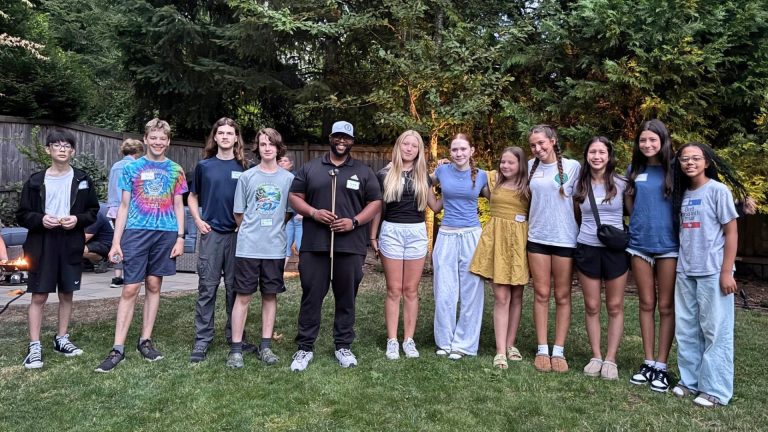
When it comes to creating space for future generations, the conference’s goal is to create an intentional pipeline. It recently added “forward in mission” to its longstanding tagline, “Developing leaders. Thriving churches.” An Exploring Call retreat will be offered this fall for prospective leaders. Earlier this month, more than five hundred middle schoolers attended an event called MUUUCE. “It’s a little piece of heaven,” Stromberg said. “We get to help show them that they’re a part of something bigger.”
In 2034 the Northwest Conference will turn 150, and Stromberg thinks another written history may be due. Looking ahead to that milestone, she said, “I just want us to be faithful. Maybe that means we’ll be smaller in numbers, but I hope not. My hope is that we will have more churches, more leaders, more people following Jesus.” She wants to see Minnehaha thriving and camps busting at the seams: “Healthy and missional at 150.”
In his written history A Precious Heritage: A Century of Mission in the Northwest, 1884–1984, Phil Anderson made a case for memorializing such anniversaries with written accounts, echoing historian Jaroslav Pelikan’s line that tradition is “the living faith of the dead,” not the dead faith of the living. He dedicated the book to Covenanters “of Swedish descent or not.”
Forty years after Anderson wrote those words, the conference that came first is still moving faithfully forward.