In a recent six-minute video for the New York Times, the columnist Thomas Friedman makes a startling claim. Humanity, he says, has just set off a second Big Bang. The first was set off by our Creator 13.8 billion years ago. This one we set off ourselves. Through artificial intelligence and a cluster of other technologies, we have made ourselves “godlike as a species.”
Then he reaches for a biblical image: “We now have the power to part the Red Sea, but without the Ten Commandments” and “Moses ain’t coming down with the two tablets.”
In other words, no one is coming to save us. We will have to write the rules ourselves, and he says we will either “rise together” or “fall together.”
The conversation about AI swings widely between two poles. On one end is utopia—cures for cancer, unlimited productivity, an age of abundance. On the other is collapse—mass unemployment, runaway machines, a world we no longer understand or control. Salvation or destruction. Pick your headline.
Depending on the day, I’m tempted to believe both. But Scripture is clear that salvation never comes from anything we build, and destruction never gets the final word. So the real question isn’t what AI will do. It’s who we are trusting to save us.
“Scripture is clear that salvation never comes from anything we build, and destruction never gets the final word.”
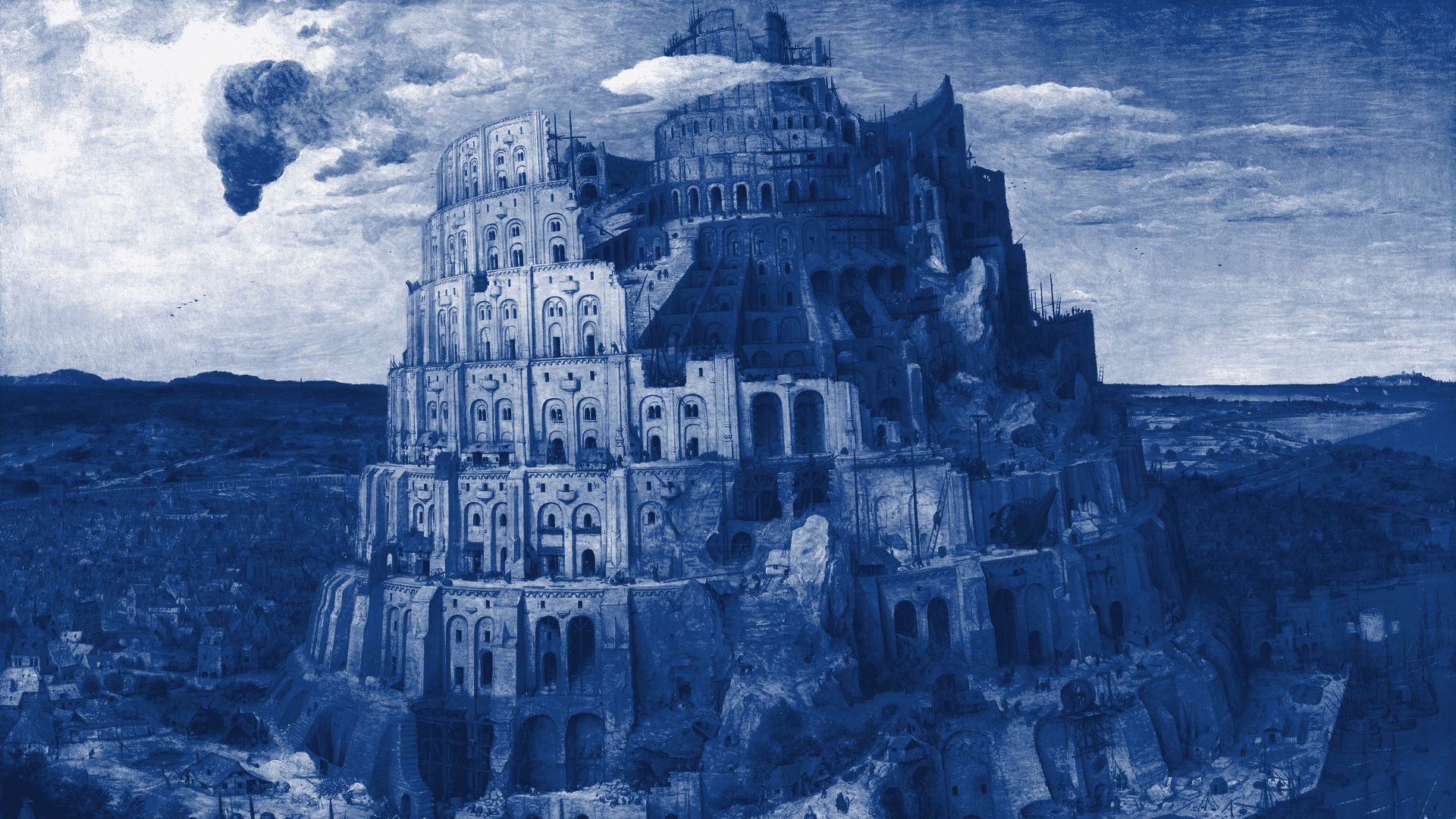
That question is very old. “Come, let us build ourselves a city, and a tower with its top in the heavens,” the people of Babel said, “and let us make a name for ourselves” (Genesis 11:4, NRSV). They had one language, a new technology, and a plan to reach heaven on their own. Friedman’s godlike humanity is not new. It’s Babel with better hardware.
Pope Leo XIV begins his first encyclical at the same tower. Released in May, Magnifica Humanitas, or “magnificent humanity,” is a 42,000-word letter on human dignity in the age of AI, and all Christians should pay attention to it. Russell Moore called it “a protest this Protestant can gladly join.” Leo opens with a choice: “Humanity, created by God in all its grandeur, is today facing a pivotal choice: either to construct a new Tower of Babel or to build the city in which God and humanity dwell together.”
Leo does not call AI evil, but he insists that technology “is never neutral.” What struck me most, though, is what he says lies underneath our anxiety: the “particularly insidious” belief that we must earn our worth, that the most efficient among us count for more. His answer is this: “The value of persons, however, does not depend on what they achieve or produce.”
I need to hear that, because I come to this question as someone who works with these tools every day. I lead the digital communications team for the Evangelical Covenant Church—websites, email, video, social media. Part of my job is to stay curious about new technology, not afraid of it.
Lately, though, I’ve noticed a quiet fear settling in. It shows up when I watch AI produce in seconds what used to take my team an afternoon, and again late at night, when I’m scrolling the news instead of sleeping. Three fears in particular have stayed with me, and I suspect many pastors and ministry leaders feel them too.
The first is that AI will replace us. On the October 13 episode of The Daily podcast, Cornell mathematician Steven Strogatz described what happens when AI comes not just for your job, but for your purpose. In a matter of months, AI has cracked problems that stumped mathematicians for decades. Strogatz recalled a student at a department town hall who asked, “What’s the point? If the AI can do math better than any human being . . . I want to discover things, too.” (His tearful reflection on that question is worth watching.) Pastors may soon be asking a version of the same question. What’s the point of learning Hebrew and Greek, sitting with a passage of Scripture all week, or crafting a sermon line by line if AI can produce one in seconds?
The second fear is harder to name, because it isn’t about AI failing. Most anxious headlines are about failure: a bubble that bursts and takes the stock market with it, or AI agents that go rogue. In a recent column for the New York Times, Ezra Klein asks the opposite question: “What if A.I. works not as its architects fear, but as its inventors and investors hope?” Many of AI’s builders imagine a world where we no longer need to struggle, or even work, to live long lives of luxury and ease. It sounds like paradise until you notice the price. We get there one convenient shortcut at a time, handing over our craft until we forget how to write a sentence, wrestle with a text, or think a hard thought. Klein calls it “inferiority as a condition of prosperity.” He believes “the struggle for human progress is essential to the human story, and even the human soul.” I think he is right.
The third fear is the darkest: that AI will be used for evil. Friedman warns that more people can now “do unto you farther, faster, deeper, cheaper than ever before.” Add AI agents and robots, and it isn’t hard to imagine some kind of digital apocalypse. C. S. Lewis faced his own version of this fear when the new technology was the atomic bomb. In his 1948 essay “On Living in an Atomic Age,” he offered this counsel:
“If we are all going to be destroyed by an atomic bomb, let that bomb when it comes find us doing sensible and human things—praying, working, teaching, reading, listening to music, bathing the children, playing tennis, chatting to our friends over a pint and a game of darts—not huddled together like frightened sheep and thinking about bombs.”
— C. S. Lewis, “On Living in an Atomic Age” (1948)
Notice what all three fears have in common. Whether AI replaces us, pacifies us, or is turned against us, the story is only about what humans and machines will do. God is nowhere in the picture. That’s the same assumption underneath Friedman’s video: if anyone is going to save us, it will have to be us. His answer is that we’ll write new rules and learn to cooperate fast enough to survive. I hope we do. But on its own, that’s still a Babel kind of hope, the belief that if humanity just pulls together, we can reach the heavens without God.
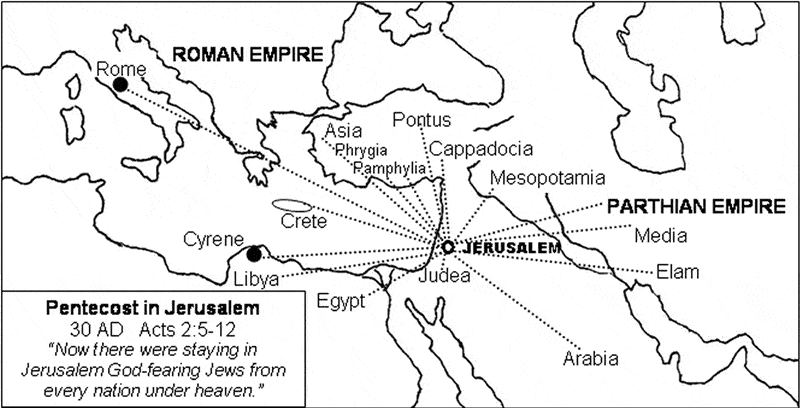
Scripture tells a different story. Moses did not come down the mountain with tablets because Moses had good ideas. He came down because God came down first. “The Lord descended upon Mount Sinai” (Exodus 19:20, NRSV). That is the pattern throughout the Bible: we build up, and God comes down. Even at Babel, while the builders strained upward, “the Lord came down to see the city and the tower” (Genesis 11:5, NRSV). At Christmas, God came all the way down: “The Word became flesh and lived among us” (John 1:14, NRSV). At Pentecost, the Spirit came down, and people from every nation heard the good news in their own language. Babel undone.
That is why Pope Leo can call humanity magnificent without calling it godlike. Our greatness is not that we have climbed to heaven. It is that God has come down to dwell with us. Leo closes his letter with the hope that we “may bear witness to the grandeur of humanity, in which God has made his dwelling.” That is a splendor, he writes, that “no machine can ever replace.” AI may outperform us at many tasks, but it will never be what God made us to be.
Remembering who we are frees us to use these tools for good rather than simply fear them. Leo calls scientific discoveries “talents entrusted to humanity so that they may bear fruit.” Like the servants in Jesus’s parable (Matthew 25:14–30), we are not meant to bury our talents but to invest them in people, letting them free us for the work only people can do. AI can write fifty social media posts before the coffee finishes brewing. It cannot sit with a pastor whose church has just closed, hold a hand in a hospital room, or pray with a family at a graveside. In an age of artificial everything, a real human presence has never been more precious. It may be one of the most powerful witnesses the church has. “True progress,” Leo writes, “always stems from a heart open to others.”
Fear has a way of shrinking our vision. When we worry that machines will outthink us, outwork us, or outlast us, we start to measure everything by what we can build and control. We forget that the story was never ours to finish. A confession we prayed together in church recently put it better than I can:
“Our Father, forgive us for downsizing you in our minds—for thinking small thoughts of you, and for ignoring your immensity and greatness. Lord Jesus, forgive us when we forget that you rule the nations and our small lives. Holy Spirit, we offend you in minimizing your power and squandering your gifts. O triune God, we confess that our blindness to your glory has resulted in shallow confession, tepid conviction, and only mild repentance. Have mercy upon us. In Jesus’ name, Amen. “
— Kenneth D. Koeman, “O Triune God,” Reformed Worship
Maybe our deepest problem is not that we think too much of AI, but that we think too little of God.
Friedman says no one is coming down the mountain. The last pages of Scripture say otherwise. John sees “the holy city, the new Jerusalem, coming down out of heaven from God,” and hears a voice: “See, the home of God is among mortals. He will dwell with them” (Revelation 21:2–3, NRSV).
The builders of Babel wanted to reach heaven. But heaven was already coming down. Whatever AI becomes, the future does not belong to the machines or to the people who build them. It belongs to Immanuel, God with us. So let us use these tools well, tend our calling with care, and not be afraid. We do not have to climb our way to God. God has already come down to dwell with us, and Christ will come again.
Even so, come, Lord Jesus.