
[vc_row][vc_column width=”1/2″][vc_column_text]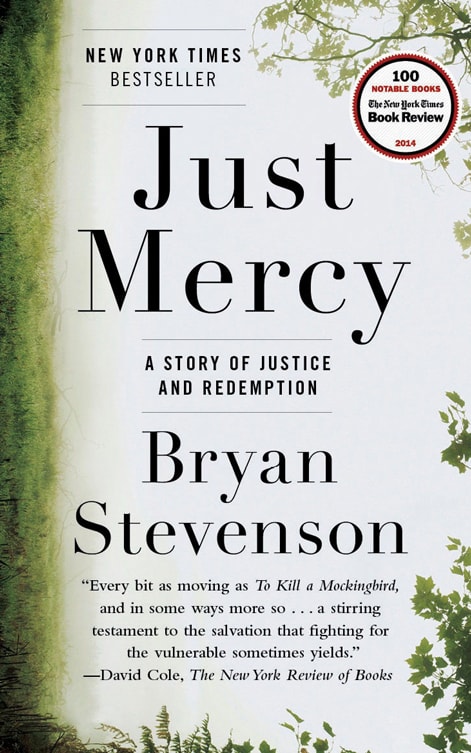 [/vc_column_text][vc_column_text]
Just Mercy
Bryan Stevenson
Spiegel & Grau, 368 pages
[/vc_column_text][/vc_column][vc_column width=”1/2″][/vc_column][/vc_row][vc_row][vc_column][vc_column_text]
Reviewed by Chris Sanchez | August 3, 2016
[/vc_column_text][/vc_column][/vc_row][vc_row][vc_column][vc_column_text]New York Times bestseller and recipient of the NAACP Image Award for outstanding literary work (nonfiction), Just Mercy: A Story of Justice and Redemption is a critical and creative examination of the U.S. legal system. Written by Bryan Stevenson, a Harvard Law School graduate and founder and executive director of the Equal Justice Initiative, this fluid examination orients itself around the murder trial of Walter McMillian, an industrious yet illiterate black man from an economically depressed and racially segregated region outside Monroe County in rural Alabama in the mid-1980s.
When a young white woman is murdered, Walter McMillian becomes the main suspect, and, despite possessing a demonstrable alibi confirmed by a cloud of eyewitness testimonies, he is wrongfully accused and placed on death row without a trial or conviction. Through truly masterful and dynamic storytelling, Stevenson seamlessly weaves in vivid details of his own case work and professional experience as a practicing defense attorney representing the “condemned”—a term revisited throughout the book—and those who are the most politically, economically, and socially vulnerable.
This spiritually inspirational, morally challenging, and emotionally tumultuous work places race, racism, and poverty at the core of its narrative. Their pronouncement is visible regardless of which topic or individual the author chooses to explore—mass incarceration, prison reform, or American philosophies about crime and punishment.
Stevenson is firm on both his legal and moral stance: if it is to be just, our criminal justice system must also be merciful. As it stands, it is neither. This assertion is observable throughout the criminal justice system, a system with the harshest sentencing laws, most extreme punishments, and the highest incarceration rate in the world, boasting a prison population of 2.3 million.
This book brings attention to the astonishing racial disparities in arrests, convictions, and court practices that disproportionately target communities of color. When African Americans are incarcerated at nearly six times the rate of whites, the interplay of race and racism in the criminal justice system is undeniable. For Stevenson himself, raised in a poor and racially segregated area of Delaware, this reality is unacceptable and is a driving force for his social justice work.
I found considerable value in his repeated and unapologetic concentration on the racial component as it relates to mass incarceration, police mistreatment, and unfairness in the courts. He provides expert information on the power structures and structural obstacles limiting the autonomy and life chances of racial minorities, particularly in the context of encounters with law enforcement and the prison industry.
While Stevenson’s personal experiences with institutionalized racism as a defense attorney are sure to arouse feelings of anger, both his tone and language remain gracious, conscientious, and most important, hopeful. As a nation currently engaged in a racially polarized political and social climate ready to again explode with just one more miscarriage of justice, we would all do well to learn from his balanced and charitable approach.
As a person of color and professing Christian, I have too often been offered a sanitized and politically stagnant gospel that is proclaimed to be color blind and equally accessible. Yet it is my firm view—a view cultivated, developed, and nurtured within a theological and cultural tradition long preceding me—that the gospel message is intimately concerned with the socioeconomic and political conditions experienced by oppressed and marginalized peoples. In Just Mercy, Bryan Stevenson provides that gospel message, a message that allows space for my racial identity, tethering activism inseparably to a biblically informed and healthy corporate faith expression that is committed to the liberation of oppressed, indeed condemned, peoples. It is a gospel message the church would do well to remember.[/vc_column_text][/vc_column][/vc_row]