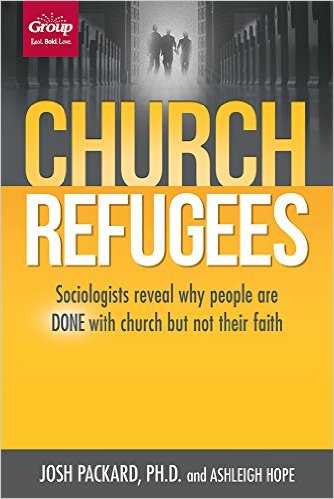
[vc_row][vc_column width=”1/2″][vc_single_image image=”31449″ img_size=”full” alignment=”center”][vc_column_text]Church Refugees
Josh Packard and Ashleigh Hope
Group, 143 pages
[/vc_column_text][/vc_column][vc_column width=”1/2″][/vc_column][/vc_row][vc_row][vc_column][vc_column_text]
Reviewed by Peter Sjoblom | August 3, 2016
[/vc_column_text][/vc_column][/vc_row][vc_row][vc_column][vc_column_text]A little over a year ago a leader at one of the churches I have been consulting passed on an interesting article. He thought it would be important in light of conversations which continued at this congregation in a time of transition.
The article referred to the sociological findings of people and faith, identifying “nones”, those citing no faith affiliation, and the “spiritual but not religious” SBNR. The writer, who came from a faith based background said that their research has found a more nuanced phenomenon called the “DONES”, those who had been deeply invested in church life, only to experience disillusionment and fatigue causing them to choose to leave.
“Church Refugees” is a deeper analysis of the DONE’s authored by sociologists Josh Packard and Ashleigh Hope. The book looks at the growing numbers who, having been significant contributors, the primary “doers”, and active participants of congregations have left to “save their faith.”
“Church Refugees” outlines four key tensions contributing to the leaving.
- They wanted community… and got judgement.
- They wanted to affect the life of the church… and got bureaucracy.
- They wanted conversation… and got doctrine.
- They wanted meaningful engagement with the world… and got moral prescription.
The rest of the book is given to fleshing these concepts out and challenging the church to evaluate itself in light of them. It concludes with the chapter, “Being the Church No One Wants to Leave.” I am in the midst of working with several churches that, in their own way, are looking critically at themselves in light of these social pressures within and without. Could it be that congregational vitality is not only about “conversion growth” but also congregational retention? These are important ideas for us to explore.
How’s that for some light summer reading?
Peter Sjoblom is the Central Conference director of church vitality.
Topics: Book Reviews, Planting Vitality[/vc_column_text][vc_column_text][/vc_column_text][/vc_column][vc_column width=”1/2″][/vc_column][/vc_row][vc_row][vc_column][/vc_column][/vc_row]