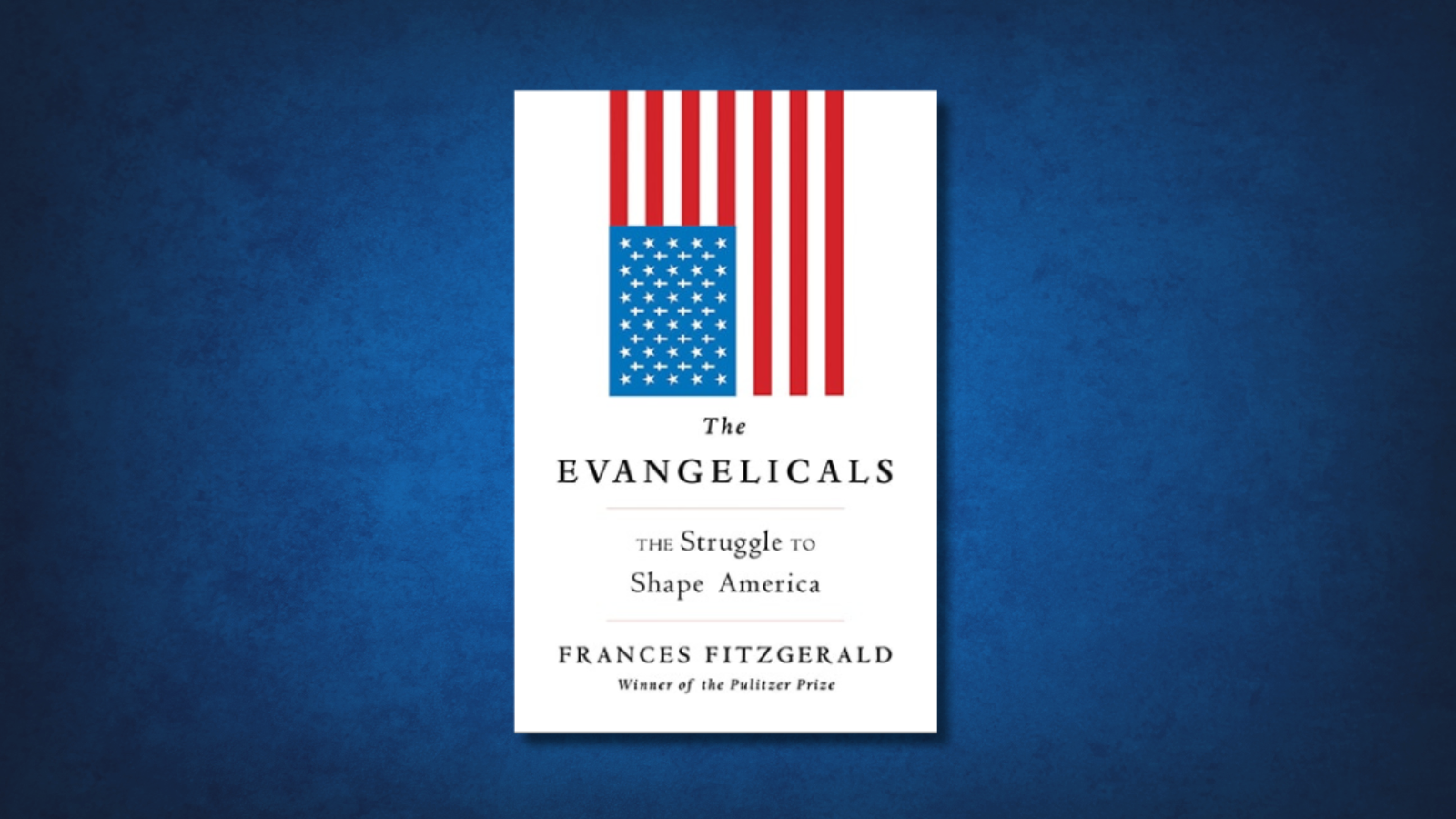
The Evangelicals
The Struggle to Shape America
Frances Fitzgerald
Simon and Schuster, 752 pages
About ten years ago, I was in Washington DC with a group of Christian leaders discussing the intersection of evangelical faith and US foreign policy on Israel/Palestine. After a dinner with some lawmakers at the Capitol
building, we took a short bus ride back to the hotel. I remember discussing the day’s events with a new friend. Although she certainly fit the definition of an “evangelical,” she refused to self-identify as such. The label was too charged, too loaded, too politically divisive, she said.
It seems like every time there’s an election in the US, the direction in which the “evangelical bloc” is leaning becomes a headline. Yet most people who are not evangelicals would be hard-pressed to define the term. In fact, even bona fide evangelicals would struggle to articulate a succinct, consistent answer these days.
I grew up attending evangelical churches: Baptist and Assemblies of God. I’ve attended evangelical schools: Taylor University, Wheaton Graduate School, and Fuller Seminary. I’ve served in evangelical congregations (Presbyterian, non-denominational, Wesleyan) for twenty-five years. The term “US Evangelicals” is in the title of my dissertation. Even so, I find my understanding of and definition of what it means to be an “evangelical” to be both nuanced and fluid.
Perhaps that is why I find Frances FitzGerald’s hefty tome, The Evangelicals, so helpful and thought-provoking. The author identifies her book as “a history of white evangelical movements necessary to understand the Christian right and its evangelical opponents that have emerged in recent years.” She begins with the two Great Awakenings then goes on to identify Jonathan Edwards and George Whitfield, the concept of separating church from state, and the early proliferation of denominations as key influences in early American Christianity.
FitzGerald continues by exploring the shifting view on slavery among the three major denominations in the early nineteenth century: Baptists, Presbyterians, and Methodists. These groups began to splinter over slavery along regional lines, especially as the abolitionist movement grew in the 1830s. FitzGerald then examines the liberal/conservative divide in the post-Civil War North, which eventually evolves into the fundamentalist-modernist conflict of the early twentieth century.
The accounts of specific events are detailed and thorough. FitzGerald covers the1925 Scopes trial, the rise of Billy Graham, and the introduction of the abortion debate in the 1960s. The second half of the book is devoted to the conflation of evangelicalism with Republican politics. The author gives considerable time to Jerry Falwell and the Moral Majority, Pat Robertson, the Christian Coalition, and the Christian Right influence on the George W. Bush era. FitzGerald notes how issues of sexuality were dominant themes in this era, specifically in regard to abortion and the definition of marriage.
The author closes the book with a brief description of the “New Evangelicals” and a summary of how the Christian Right responded to its diminished cultural influence over the past ten years. In short, FitzGerald asks, “How did American evangelicals come to where they are? What is the current state of American evangelicalism? And what are the possible future iterations of evangelicalism?”
As a journalist, FitzGerald often seems to be describing evangelicals to secular outsiders. At times she portrays evangelicals as a curiosity, like a plaque identifying some exotic animal at the zoo. While the focus of the book is largely a political overview, FitzGerald does a noble, if imperfect, job of capturing the essence of distinct streams of evangelicalism.
FitzGerald would identify me as a textbook evangelical. (She uses religious historian George Marsden’s criteria, which includes belief in “the authority of the Bible, the real historical character of God’s saving work, salvation through the redemptive work of Christ, the importance of evangelism and missions, and the importance of a spiritually transformed life.”) So, for me, this read demands self-reflection and a proactive critique. For the author, the primary means evangelicals use to shape America is national politics.
These questions remain: Are national party-driven politics the best, or even a biblical, way to shape the soul of the nation? Does the demise of evangelical leaders as dominant power-brokers and/or kingmakers allow rank-and-file evangelicals to get back to the heart of the gospel? Which expressions of evangelicalism are worth continuing? Which ones need to be discarded? Can any aspects of evangelical political activism be redeemed?
I certainly recommend this work for church leaders, seminary students, and anyone who’s curious about the intersection of faith and policy.