
The bleeding woman in Mark 5 has no name. That has always bothered me.
Her story unfolds in the shadow of Jairus, a synagogue leader who boldly approaches Jesus on behalf of his dying daughter. His request is urgent and understandable—a desperate parent doing what any parent would do. Jairus is seen. He is titled, respected, and privileged. He comes forward, speaks directly to Jesus, and is heard.
But the woman? She comes up from behind.
She has been bleeding for twelve years, rendered unclean by her condition and her body. She has suffered under many doctors, spent everything she had, and only grown worse. She is isolated, ashamed, and invisible. And yet, she dares to reach for healing.
As an Asian American woman, I resonate deeply with this story. I was raised—like many of us—to be polite, unseen, and accommodating. To read the room. To anticipate others’ needs. To function quietly in our families, churches, workplaces, and seminaries without drawing attention to ourselves. Even in our faith, we are often taught to shrink. To defer. To serve without complaint.
The bleeding woman embodies this experience. She doesn’t approach Jesus the way Jairus does. She doesn’t speak. She doesn’t ask. She reaches. Quietly. Carefully. Desperately. She believes that even just touching the edge of Jesus’s cloak might be enough.
And it is.
Her bleeding stops. She knows in her body that she has been healed. But the story doesn’t end there.
Jesus stops. He asks, “Who touched me?” The disciples are baffled. Jairus is still waiting. But Jesus waits too—not to shame, but to see.
The woman, trembling with fear, comes forward and tells him the whole truth.
Jesus doesn’t just heal her body. He restores her dignity. He calls her “daughter.” He sees her fully—her fear, her faith, her suffering. He does what no one else around her does: he makes her visible.
As Asian American Pacific Islander women, we often live in the tension between hyper-visibility and invisibility. We are taught to swallow our suffering, to correct or erase parts of ourselves that feel “too much” or “not enough.” We strive to be good daughters, good Christians, good workers—often at great cost.
And yet here is Jesus, not rushing past us to attend to more powerful voices, but stopping, turning, and calling us beloved.
Healed. Whole. Seen.
This story also holds a word for our brothers. While the woman’s posture reveals her fear, Jesus speaks directly to Jairus, “Don’t be afraid. Just keep trusting.” Sometimes fear hides in confidence and control. Sometimes the ones who seem most secure are also waiting—also in need of healing. Jairus thinks he is advocating for his daughter, but Jesus is also inviting him to deeper faith and self-awareness.
So to my sisters: You are not forgotten. You are not dirty or unworthy or “too complicated.” You are seen—in all your AAPI glory. Your presence matters. Your voice matters. Your healing matters. Not because an institution or a church tells you so, but because Jesus does.
And to my brothers: We do not need you to be our saviors. We need you to do your own honest work before Jesus. What are you afraid of? How do you operate from that fear? When you face those questions, healing begins—for you, and for the community around you.
As we honor AAPI Heritage Month, let us remember that recognition from institutions is not the same as being seen. Titles, programs, and acknowledgments can be meaningful, but they are not our source of healing. Jesus sees. Jesus heals. Jesus calls us daughter.
That is enough.
Amen.
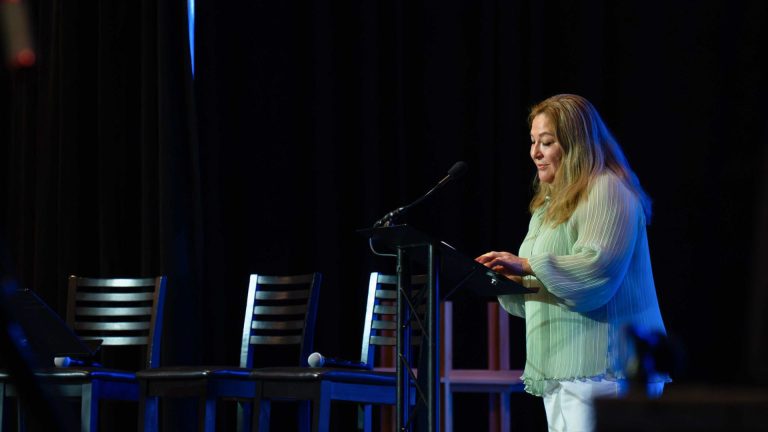
This article is adapted from a sermon delivered by Kathy Khang on May 1, 2019, at Fuller Seminary. Watch the recording here.
This is part of our ongoing “From the Pulpit” series, where we share inspiring messages from the Covenant Church community.