Rediscovering the Hidden Legacy of Black Evangelicalism
When I was growing up in the 1970s, my family attended a predominantly Black nondenominational church that was also very charismatic. The prayer line involved a heavy slathering of olive oil on your forehead in the shape of a cross, and the minister or evangelist praying for you always placed their hand on your forehead. There were always ushers standing nearby with a white sheet to cover anyone who was “slain in the Spirit.” But we also used old, red Lutheran hymnals alongside purple Maranatha songbooks. Our Sunday school class used the old flannel boards with images of a white Jesus, all the Bible verses I memorized were from the King James Version, and my brothers attended the neighborhood evangelical Christian school for their first few years of early elementary school. “Witnessing” was an important aspect of our faith, so we’d go out in the community on the weekends to pass out Chick tracts, which were three-by-five-inch tracts in the form of a short comic book. In vacation Bible school, I learned that the B-I-B-L-E is the book for me, and I looked forward to competing in the Bible Bowl every year.
I didn’t learn the definition of “evangelical” until the 2010s, during my first seminary degree program. Until that point, for me, evangelical was just another name for far-right political conservatives. But seminary conversations about evangelicalism reminded me of my experience in my childhood church as well as the predominantly Black Independent Baptist church I was attending at the time. Yet, despite the similarities, those conversations ignored my experiences and often assumed I couldn’t be an evangelical because I was Black. I found that odd since personal conversion, authority of the Bible, and witnessing (evangelism) were the “big three” for most Black Christians I knew.
Then I experienced two “aha” moments: I discovered Ed Gilbreath’s book Reconciliation Blues: A Black Evangelical’s Inside View of White
Christianity, and I learned about my heritage as a Black evangelical from my Korean American seminary advisor, Soong-Chan Rah. Both were equally impactful.
Gilbreath’s book gave me the language to describe my experiences and helped me realize I wasn’t alone and I wasn’t overreacting. Rah, a well-known voice in conversations about evangelicalism, gave a brief presentation on the history of Black evangelicals that showed me that I belonged at the table. So, it’s no surprise to me that both Gilbreath and Rah were involved with Black + Evangelical, a full-length documentary from Christianity Today and Wheaton College. Gilbreath is one of the film’s producers and directors, and Rah is one of many interviewees. Other Covenanters featured in the documentary are pastors Henry Greenidge and Stan Long. The film’s website describes it as a documentary that “profiles the history, struggles, and contributions of African American evangelicals,” but that doesn’t scratch the surface.
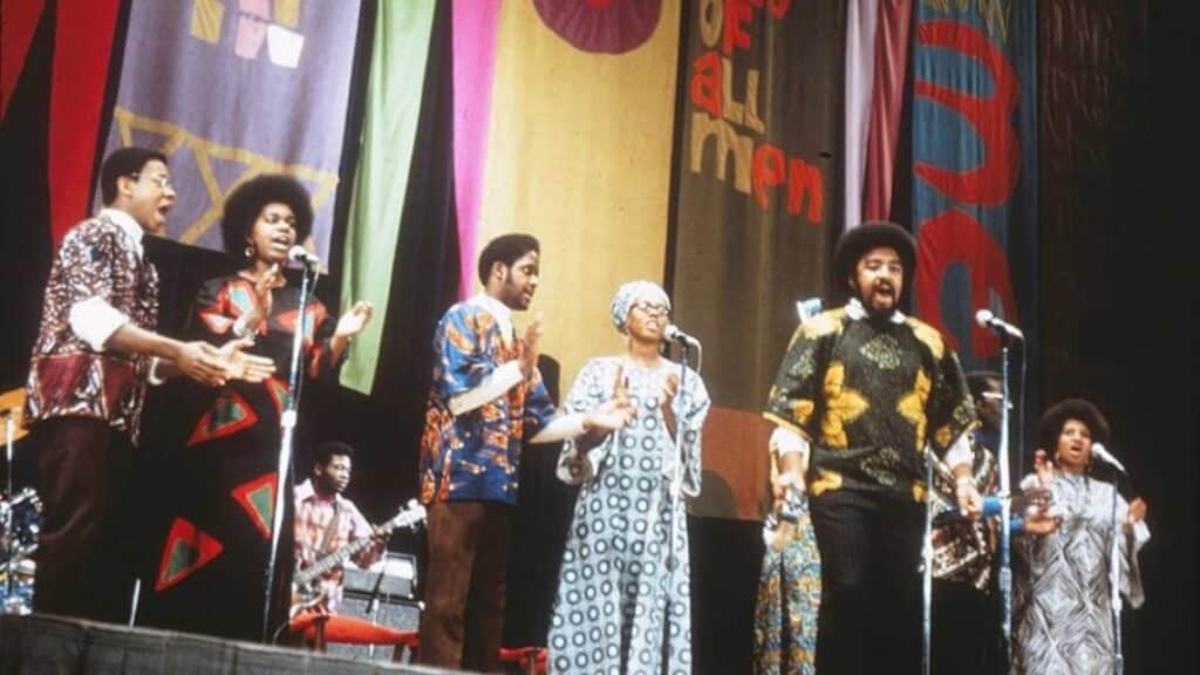
Hosted by Vince Bacote, Black + Evangelical is a kind of Sankofa experience. It takes us back through history with the purpose of helping us find a way forward. Starting with the Great Migration and ending in the present day, the film walks us through influential people and events connected with the Black evangelical experience. The ninety-three-minute movie includes interviews with theologians, scholars, and preachers such as Bill Pannell, Jemar Tisby, Lisa Fields, Nicole Massie Martin (also an executive producer), and Joy Moore. It also includes video footage of pioneers like Tom Skinner, Melvin Banks Sr., and Henry Greenidge’s band, Soul Liberation. There is a whole segment that features excerpts of Tom Skinner’s sermons, including his powerfully prophetic Urbana ’70 address, “Racism and World Evangelism.”
I really enjoyed Black + Evangelical for a few reasons. It personally relates to me, because of my overlapping connections with the Covenant, InterVarsity Press, and UMI (both as an editor/writer and a child who experienced awe when our Sunday school switched from White Jesus flannel boards to UMI books that featured kids who looked like me). But also I enjoy learning from documentaries (some of my top CliftonStrengths are Input, Intellect, and Learner, lol!), especially when there are Chicago connections.
This is a film that all Covenanters should watch—especially our leaders, both clergy and lay. In fact, I hope it lands on the “required resources” portion of a North Park Theological Seminary course that is required for all students.