It all started with a picture.
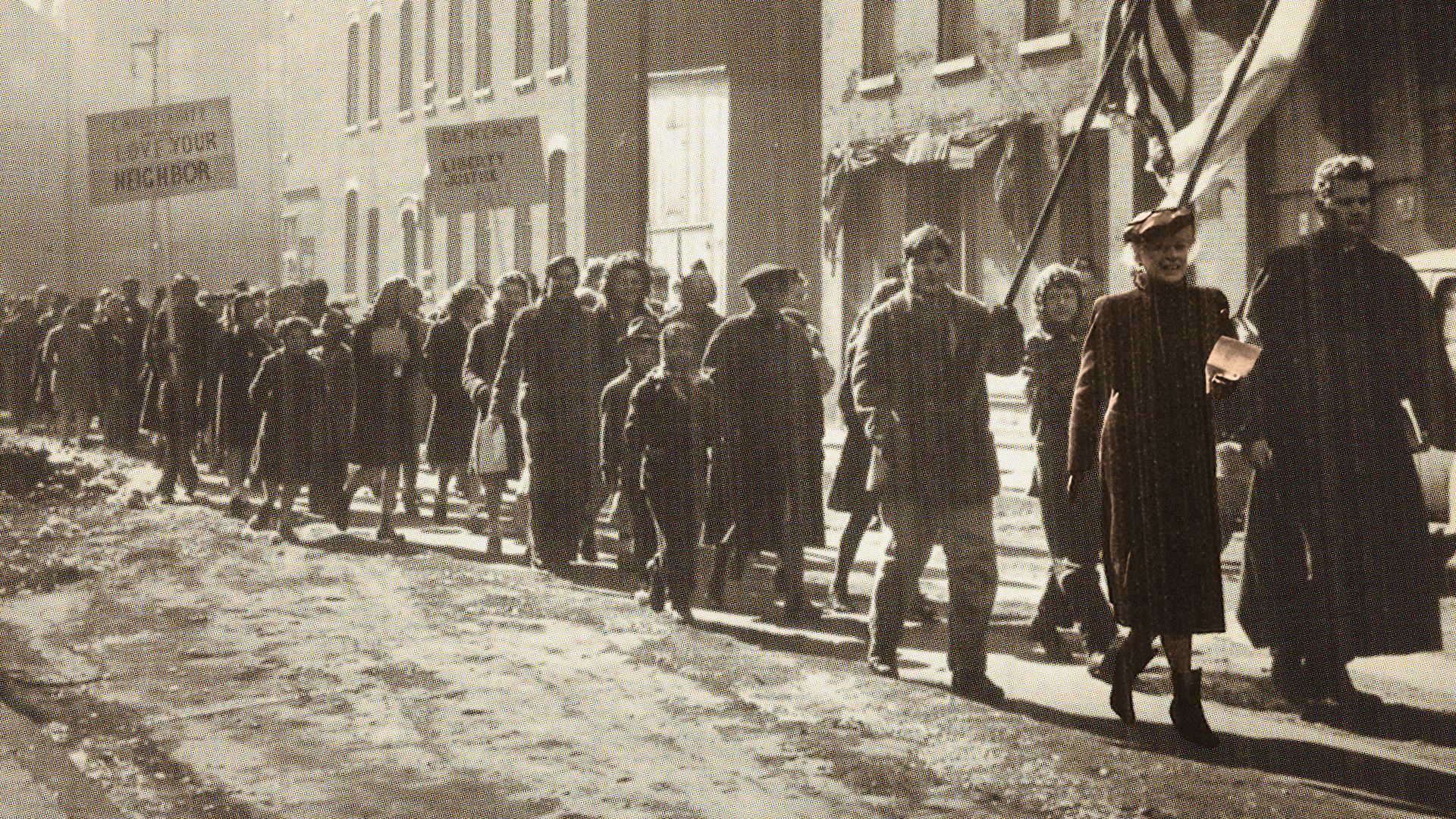
Something about the way she put her foot forward and looked straight at the camera told me I needed to know more about her story. I was in Covenant history class, and we were learning about how Covenant pastor Douglas Cedarleaf responded to racial violence in Chicago in 1945. Serving as pastor of Erie Chapel Presbyterian Church, located in a neighborhood of primarily Italian and Polish immigrants, Doug called the congregation to “love their neighbors as themselves” in response to assaults against an African American family who had moved in to the neighborhood. Yet he wasn’t the only one leading the congregation in a march down Throop Street to accompany the family, who were attending his church, safely to their home.
What caught my eye was the fact that I was also seeing a white woman in 1945, following only God as she marched in solidarity in the struggle against racial violence.
Changed the Covenant
I would come to find out that that woman, Florence Towne, was the very reason Doug Cedarleaf found himself on Throop Street that day. Listening to her message at North Park Theological Seminary chapel a few years earlier when Doug was a student had confirmed to him and his wife, Carolyn, that they needed to respond to the realities of their city in more radical, embodied ways.
Who was this woman who would have such an effect not only on her city but also on Covenant history during that period of civil rights? Reader’s Digest called her the “Angel of the Alleys.” A contemporary of Jane Addams and, with her, part of the Chicago Federation of Settlements, Florence Towne served the Erie Neighborhood House for thirty-seven years, helping to support immigrant and low-income families in Chicago until her death in 1951. She opened one of the nation’s first Meals on Wheels programs, along with a health clinic, a dental clinic, and other neighborhood efforts chronicled in her book Sheep of the Outer Fold: Stories of Neighborhood House Work in a Great City. But Florence did not only go to the alleys. She also took to the streets and to churches, asking who else might answer the call to pursue God’s glory and the good of their neighbors.
Changed a Family
At North Park Theological Seminary’s chapel one day in December 1940, Doug and Carolyn Cedarleaf answered that call. Historian Kurt Peterson describes how both Doug and Carolyn were “moved by this woman’s commitment and call for justice and mercy,” so much so that they immediately became active in the Erie Chapel Neighborhood House’s ministry. In fact, upon their first meeting at Erie Chapel, Doug recalled entering the room and learning that Florence had already invited him and Carolyn to move in and join the staff.
In an oral history interview, Carolyn and Doug’s daughter, Jeannine Cedarleaf Nordlund, told me, “As I got older and began to talk more with my mom about that time, I realized that she had just as strong of a desire as my dad for justice. She had as much vision too. Every decision during that time was a joint decision, and one they were equally passionate about.”
“As I got older and began to talk more with my mom about that time, I realized that she had just as strong of a desire as my dad for justice…’’
— Jeannine Cedarleaf Nordlund
Carolyn’s initial awareness of racialized injustices around her began in junior high with a teacher named Tecla Sandberg. Tecla was not afraid of what was called “the other side of the tracks,” a divide that was literal in their town. Reflecting on her mother’s early experiences, Jeannine recalls Carolyn saying, “That is when I began to see—when my eyes were opened to who is my neighbor.”
Because her husband’s schedule required travel while their children were young, Carolyn found ways to practice solidarity from home. She became a parent to six foster children, several of whom were from cultural backgrounds that made placement in other homes more difficult. Jeannine says, “I distinctly remember two Native American girls who were part of our family. I learned a lot and saw a lot. I was thankful because my eyes were not only opened to the painful realities of different communities; my eyes were also opened to the realities of mine. I got to know myself better when I got to know others better.”
Often people regard stage of life or lack of proximity as obstacles to engaging in the work of justice. But Carolyn saw these as opportunities to become more creative with what she could do. After raising her children and foster children, Carolyn found herself living in Rochester, Minnesota, near the Mayo Clinic. Although she seemed further removed from the injustices she and Doug felt called to engage in Chicago, she found a way to be in closer proximity to those in need. She opened her home to patients’ families who could not afford a place to stay while their loved ones were receiving care.
That faithfulness did not go unnoticed. Carolyn and Doug received an NAACP award in April 1945 and the Covenant’s Irving C. Lambert Award in recognition of their work in urban ministry in 1998.
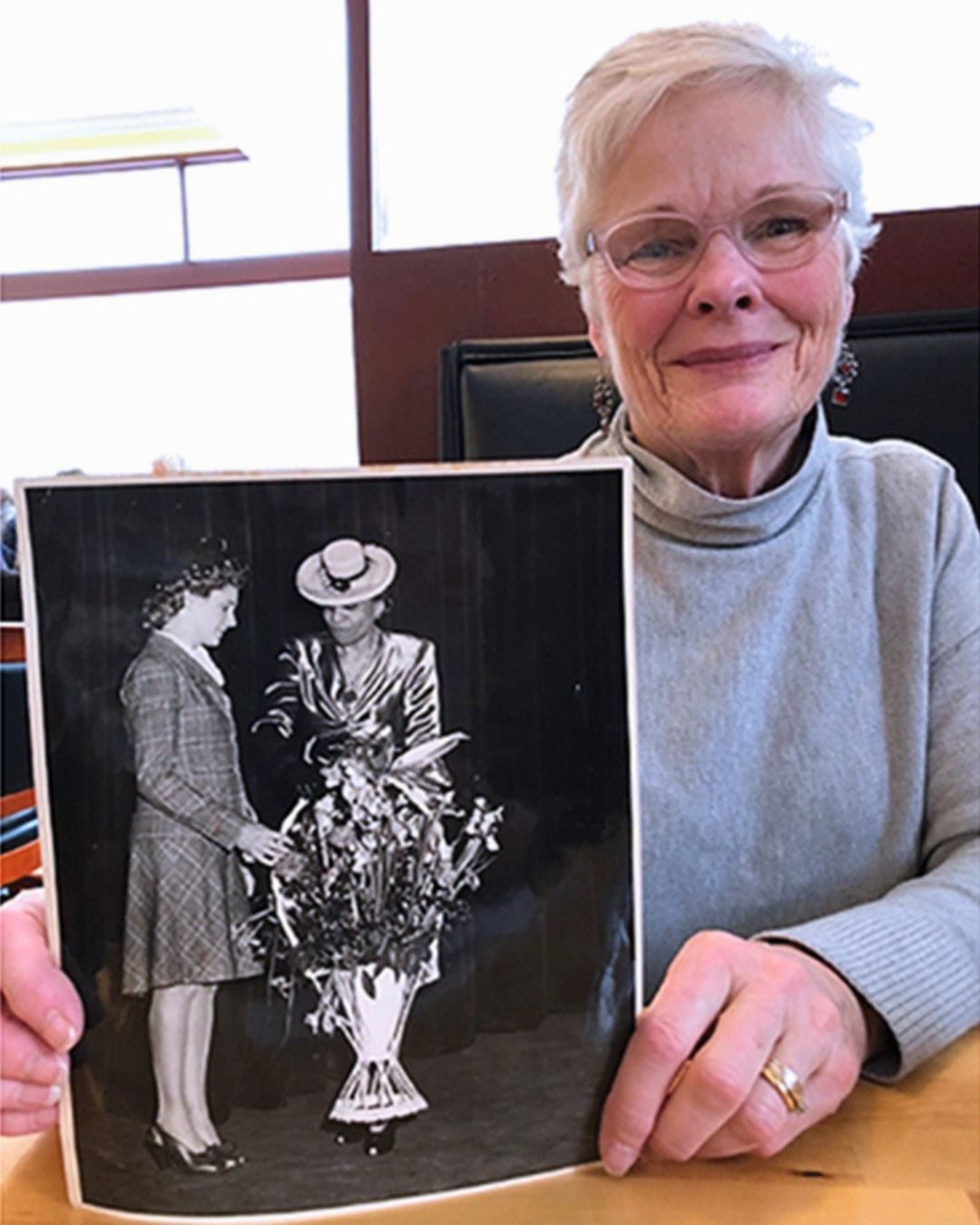
As I continued my research on women who stood in solidarity in the face of racial injustice, another name appeared in the footnotes of a different moment in Covenant history. This time it was Jeannine Cedarleaf Nordlund herself. The context was Oakdale Covenant Church in Chicago and the white flight that took place across America between the 1950s and the 1970s. While others were leaving the city for the suburbs, Jeannine accepted a ministry position at Oakdale Covenant and chose to walk in rather than out. When I asked her why, her response felt as natural as it was clear: she had seen what love and solidarity looked like.
“When you see other women model radical love of neighbor and see that they don’t look away from what is hard, it really isn’t a choice. For my father it was seeing Florence. For my mother it was seeing Tecla. For me, it was seeing both my parents. I guess in some ways these things are caught and not taught.”
“Solidarity takes more than one form. For some, it means walking in where others have walked out.”
— Cheryl Lynn Alexander-Bermúdez
During her time at Oakdale, Jeannine visited an older Dutch woman in her mid-eighties named Anna Groot who was determined to remain in solidarity with her neighbors. When Jeannine introduced herself, Anna paused and asked, “Your name is Cedarleaf?” She left the room and returned with an old cigar box. Carefully opening it, she pulled out a worn newspaper clipping from twenty-two years earlier—the article describing the march down Throop Street led by her father and his mentor, Florence Towne. The message was clear: “This is why I stay.”
At the end of their workday, as they shared a cup of tea together, Jeannine and Anna would discuss the issues of the day, whether it was a time that was clear or confusing. Anna would finally get up and say in her no-nonsense way, “Well, let’s get some rest. We aren’t going to solve the world’s problems tonight.”
Jeannine noted that the work of solidarity sometimes felt easier during her time at Oakdale. “I loved the kids. I loved the community. But I wonder if the reason some of us felt that ease was because we weren’t addressing the power differences. Perhaps the reason people are having a harder time now is because we are finally looking at the cost of that ease. We are finally naming the more hidden inequalities.”

Changed My Mind
As I listened to the stories of these women, I wanted to understand what they had in common. Was it their spiritual convictions? Their moral courage? Their upbringing? What I really wanted was someone to give me the “five steps to becoming a woman who walks in solidarity.” But as I listened to Jeannine and reflected on Carolyn and Florence and their impact on Covenant history, it became clear that being a woman who walks in solidarity with those experiencing injustice begins with having seen what lived theology looks like and telling the stories of women who do.
More than one Cedarleaf responded to Florence Towne’s call that day at North Park Theological Seminary. More than one person led that march down Throop Street. And solidarity takes more than one form.
For some, it means marching on the front lines. For others, it is opening their doors and schedules to those in crisis. For some, it means walking in where others have walked out. For others, it means naming hidden inequalities and confronting the cost of relational ease. And for others still, it may be something different altogether.
What will matter for the Covenant as we seek to live into practiced solidarity today is that we see the women—and become the women. After all, the embodied work of the gospel is women’s work.
This article was first published in the Covenant Companion Summer 2026 issue, the official magazine of the Evangelical Covenant Church.