A father and daughter reflect on his cancer journey and the caregivers who became family in life’s most vulnerable moments.
Two months before my dad died, he sent me essays he had written while going through his cancer diagnosis and treatment. He wanted me to put my expensive journalism degree to use by editing and publishing the essays in the hope that others could be encouraged by his own wrestling with pain, suffering, faith, and God’s presence in the midst of it all.
Ten years passed both slowly and quickly after his death, and now I’m finally sharing these essays along with my own reflections and replies in a series called the Weight of Hope.
I hope this selection can offer encouragement and ease the loneliness of pain. For me, it has been a joy to return to a conversation of sorts with my dad after all these years. You are welcome to keep reading along at lynettesanchez.substack.com.
Health Care Professionals
By Matt Anderson
I have met many people in the health care industry—make no mistake, it is an industry—a lot of truly competent and caring people, nurses mostly. There are some doctors who are really personal and personable, and a couple of really arrogant ones as well. My first doctor, who did the biopsy and diagnosed me, told me straight out how it may go, all the possibilities, and that whatever happened, we would deal with it along the way. I really appreciated his honesty and candor. My surgeon was very optimistic and told me that a person with my numbers and my condition had a 98 percent chance of living ten years. What he didn’t tell me about was what happens to the other 2 percent. It might seem that I was mostly being convinced that surgery at that hospital was the best thing to do. My radiation doctor was supremely competent, and also very arrogant—although toward the end of those treatments, he was coming around and becoming somewhat personable. My oncologist tells it to me straight, very straight, maybe too straight, without any false hope, but I like it. It allows me to prepare for what may happen if the treatments don’t work or God chooses not to intervene.
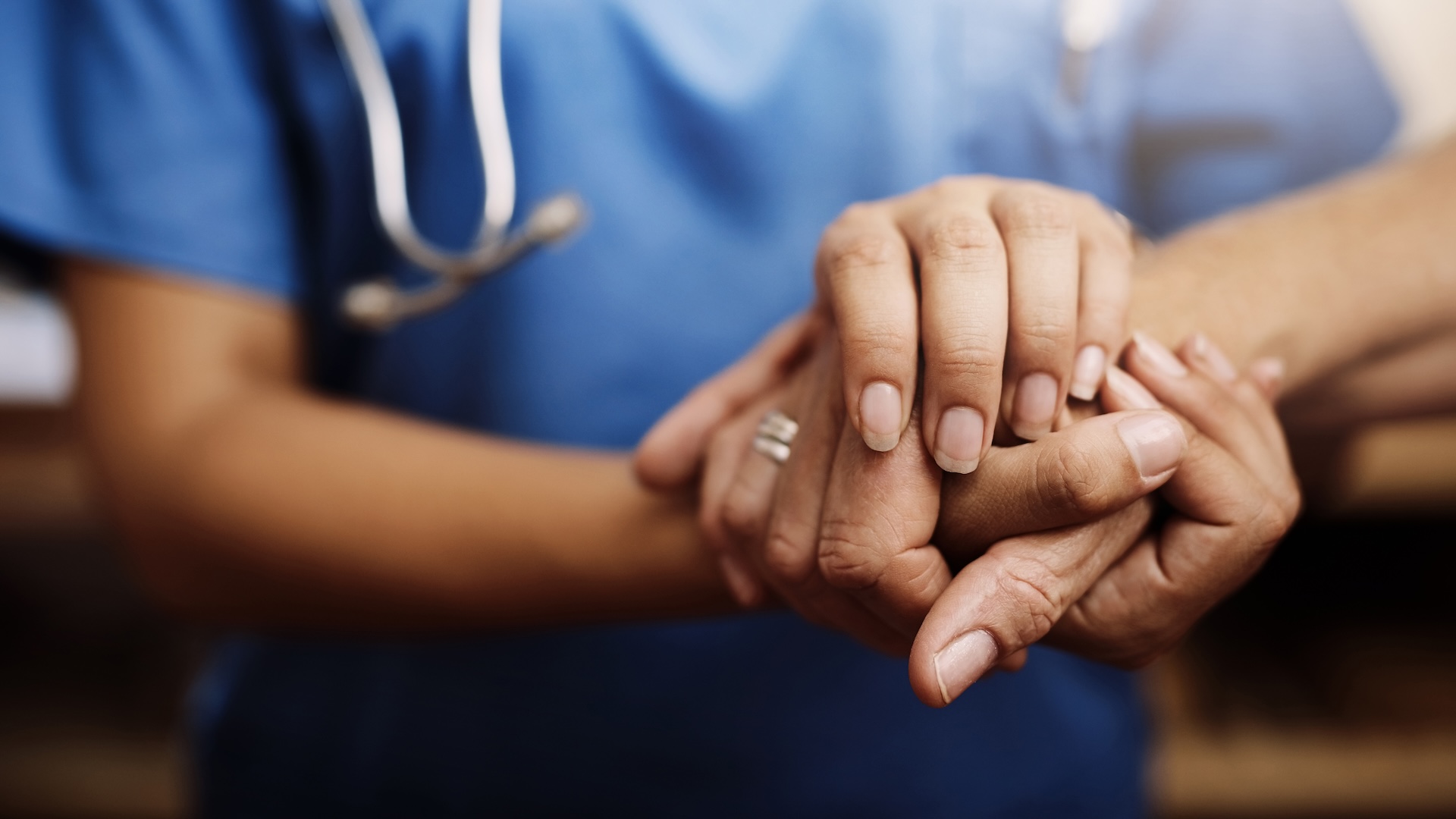
Ah, but the nurses. My post-surgery nurses were the encouragers to get me back on my feet again quickly. They woke me up in the middle of the night of surgery (I was very surprised they would do that) to get me walking again. They were the ones to start me on my way to recovery. My radiation nurses were sweethearts. I saw them for forty days straight, and they saw me at my most vulnerable, but they knew how to protect my privacy and self-esteem when I could have been the most humiliated. My treatment nurses have become my sisters, my moms, my true encouragers, and my givers of hope, however dangerous that may be.
Many people have taken my blood and started IVs during this process. I am a very difficult one to get blood from, which I always felt guilty about. If they fail to hit a vein the first time, I often get dizzy on the second or third try, which is why I don’t give blood. Some of the people don’t know what they are doing and really don’t care if they inflict pain on you. Some are good technicians, trained by practice and repetition. Others are true artists, with an obvious gift of touch and insight. I call them angels, and if you find one of them you ask for and go back to them as much as you can. One has memorized my veins and hits them every time. I know she has been sent here to help people.
I’ve come across some health care workers who seemed like they hated their jobs, but 99 percent of the doctors and nurses I have met have been truly professional and dedicated to their jobs and patients. It helps if you actually relate to them as people with families, kids, and problems of their own instead of as your servants or workers.
Matt Anderson was an avid hiker and backpacker who reveled in God’s glory in the mountains and valleys of Glacier National Park. Born and raised in Illinois, he worked as a mechanical engineer. He loved his wife and three children dearly and continues to be missed by his family and friends. He was diagnosed with prostate cancer in June 2013 and died in March 2016.
Found Family
By Lynette Sanchez
I remember being in awe when my mom told me the story of my dad fainting when they got their blood tests for their marriage license. My dad, of sturdy disposition and strength, was made faint by a needle! I thought about that story every time I had bloodwork done during my three pregnancies and when I donated blood, watching the vials and bags fill with the deep red liquid and realizing that at least in one thing, I was stronger than my dad.
It also makes me deeply grateful he found that medical artist who took the time to memorize his veins and showed him care in such a deep way. I wish I knew her name. I am grateful as well for the community of nurses who became sisters and mothers for my dad in a space where his own family could not be present. It reminds me of the woman who anointed Jesus for burial in Matthew 26, who also remains nameless in Matthew’s account. She took a great risk to meet Jesus and care for his body, bestowing dignity and honor on him during a time of great vulnerability and need.
I think, too, about the story in Mark 3 when Jesus’s mothers and brothers go to see him, perhaps because they thought he was losing grip on reality, or because they knew he needed food and care. It has often felt so cold, Jesus’s reply, in verse 33, when he asks, “Who are my mother and my brothers?” You know exactly who they are, I often think. They are the ones trying to care for you whom you seem to dismiss. I wonder if I’ve seen it as an act of exclusion, when Jesus was really trying to reveal a deeper reality of family and community. The crowd around Jesus wasn’t keeping them from his family. They became his family as they followed the will of God manifested in Jesus. Jesus expanded the circle of belonging rather than constricting it. He affirmed and included. Instead of rejecting his mother, he invited her into this broader family, too, when he called to one of his disciples from the cross to bring Mary under his care.
What a gift that we can find family in this greater sense. I think of the nurses who cared for and walked alongside me during the birth of my children, my most vulnerable experiences. They are a reminder that in the kingdom of God, the last will be first and the first will be last. Our world order of importance is often so counter to God’s.
And for my dad, who was always so strong and self-sufficient, I am ever grateful for those who held him during his time of greatest need. I’m grateful for a big family who shows up as God’s love and grace.