What does it mean to be a church where everyone truly belongs?
That question has shaped much of my life and faith, especially as the mother of a daughter with Down syndrome. Over the years, I have learned that when churches pay attention to people who are vulnerable or marginalized, we begin to understand more clearly what the kingdom of God looks like. We learn how to lift one another up, rather than lifting up some at the expense of others.
Our family experienced this kind of belonging in our home church—Salem Covenant Church—in western Connecticut. Our daughter Penny participated in the choir and the worship dance team. She grew up in Sunday school alongside her typical peers. And when she was a teenager, our pastor invited Penny to share during Down Syndrome Awareness Month about her experience in the congregation. Penny spoke honestly about her faith, her relationships, and her life in the church.
All these moments communicated a clear message: Penny belonged.
Because of that, our family wanted to show up. We invited friends. We invested in the life of the church. And our church, in turn, was shaped by Penny’s presence. Leaders learned that young people with disabilities could participate meaningfully in ministry. Belonging became something that extended beyond our family.
A Glimpse of the Kingdom
I have seen this same spirit at Hope Heals Camp in Alabama, a ministry for families affected by disability. Each year, the camp hosts a “Luke 14” banquet inspired by Jesus’s parable of the great feast.
On that night, everyone enters together—people using wheelchairs and walkers, children with sensory sensitivities, families carrying invisible burdens. No one is ushered through a side door. No one is hidden away.
As I once stood welcoming people into that banquet hall, I watched a whole community enter as one body. Old and young. Strong and fragile. Confident and afraid. It felt like a glimpse of the kingdom of God.
Our churches are called to offer that same glimpse—to be spaces where people are received as they are, where joy and lament coexist, and where truth and beauty are lived out, not merely proclaimed.
Nearly one in three adults in the United States lives with some form of disability. Yet many families affected by disability attend church less frequently than others. More than half report having experienced exclusion in faith communities.
Most churches want to be welcoming. Pastors and congregations consistently say that people with disabilities are valued. And yet there is often a gap between intention and experience. That gap invites us to examine the messages we have absorbed.
False Stories About Disability
Our culture tends to tell two false stories about disability. The first is that disability is a tragedy—something to be pitied, fixed, or erased. This view assumes that a “good life” depends on physical or cognitive perfection.
The second is that disability is an inspiration—something meant to motivate others. In this story, people with disabilities are valued for what they teach the rest of us, rather than for who they are.
Both narratives reduce human beings to categories. Both distance us from one another.
Scripture tells a different story—that human beings are created in the image of God. We are fearfully and wonderfully made. We are members of Christ’s body. Scripture reminds us that the “weaker” parts are indispensable.
Throughout the Bible, God works through vulnerable bodies and fragile lives. Jacob walks with a limp after encountering God. Moses speaks with difficulty. Paul carries an ongoing weakness. None of these is an obstacle to God’s purposes. As theologian John Swinton observes, the Bible’s vision of health is not the absence of illness, but the presence of God—shalom.
My own daughter’s diagnosis forced me to wrestle with these truths. At first, I wondered what Penny would “teach” me. A friend gently reframed my thinking, saying, “I can’t wait to see the ministry Penny will have.”
He was not talking about lessons she would provide others. He was talking about who she would become—her gifts, her calling, her life with God.
Rethinking Strength and Success
What if we understood disability, not as a defect but as part of the human condition?
All of us are limited, vulnerable, needy, and dependent. All of us are also gifted, valuable, and beloved. When we accept this truth, we stop pretending that some people are “whole” while others are “broken.” We begin to recognize our mutual need.
Jesus invites us into this new imagination in Luke 14. At a dinner with religious leaders, he tells guests not to seek the best seats. He tells hosts to invite those who cannot repay them. He describes a banquet where the poor, the blind, and the lame are brought to the table first.
Jesus is dismantling a transactional way of life—“I give you something, you give me something back”—and replacing it with a culture of abundance and belonging.
In many parts of Western culture, identity is built on appearance, ability, and achievement. We measure ourselves against others. We fear falling behind.
Jesus offers something different.
Our identity is grounded in belovedness. We are God’s children before we are anything else. When we receive that identity, we are free to celebrate others without rivalry. We can give without calculating return. We can belong without performing.
I learned this as a young mother when I was constantly comparing Penny to other children’s milestones. Only when I learned to celebrate her for who she was—not for what she could prove—was I able to rejoice freely in others as well.
Belonging is more than avoiding exclusion. It is more than providing accommodations. It is about mutual relationship.
Many churches move through stages:
- Tolerance: “You may be here, but we won’t change what we do.”
- Inclusion: “You are welcome if you become like us.”
- Belonging: “We are not whole without you.”
Belonging says, “We need you. We are changed by you. We give and receive together.”
Research shows that families feel most welcomed not through special programs but through simple acts: being known by name, being checked on, being invited into friendship, and being supported over time.
One mother told me about her autistic daughter having a meltdown in a church lobby. A volunteer knelt beside her, stayed on the floor, and said, “We’re so glad you’re here. How can I help?”
That family never left.
Becoming Communities of Belonging
So how do we grow in this direction?
We begin by paying attention. Who is present in our community? Who is absent? Who is invited? Who is known? Who serves? Who has a voice?
We learn from those who experience barriers. We ask rather than assume. We listen more than we explain. We build relationships that are not one-sided. We create opportunities for contribution. We honor spiritual growth in every person. Above all, we allow God to reshape our imaginations.
Luke 14 points us toward a feast—a celebration where every seat is filled, and every person is welcomed. This is not only about justice or charity. It is about joy. It is about blessing. It is about life together in God’s abundance.
When churches become communities of belonging, they offer the world a living picture of grace. They proclaim, through their life together, “You are beloved. You matter. There is room for you here.”
That is good news—not only for families affected by disability, but for all of us who long to be received as we are.
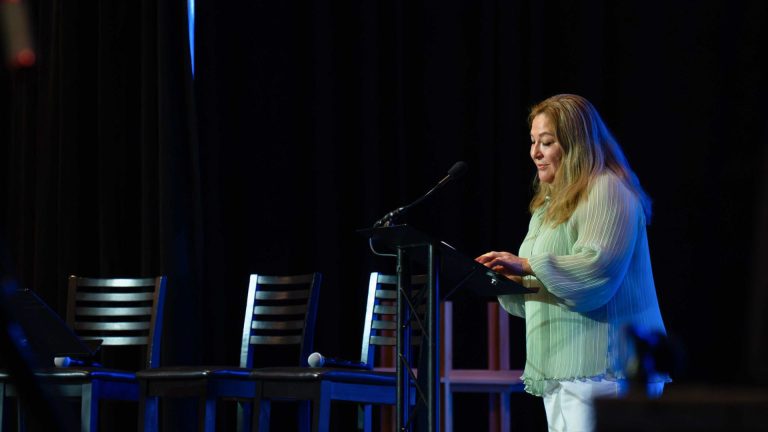
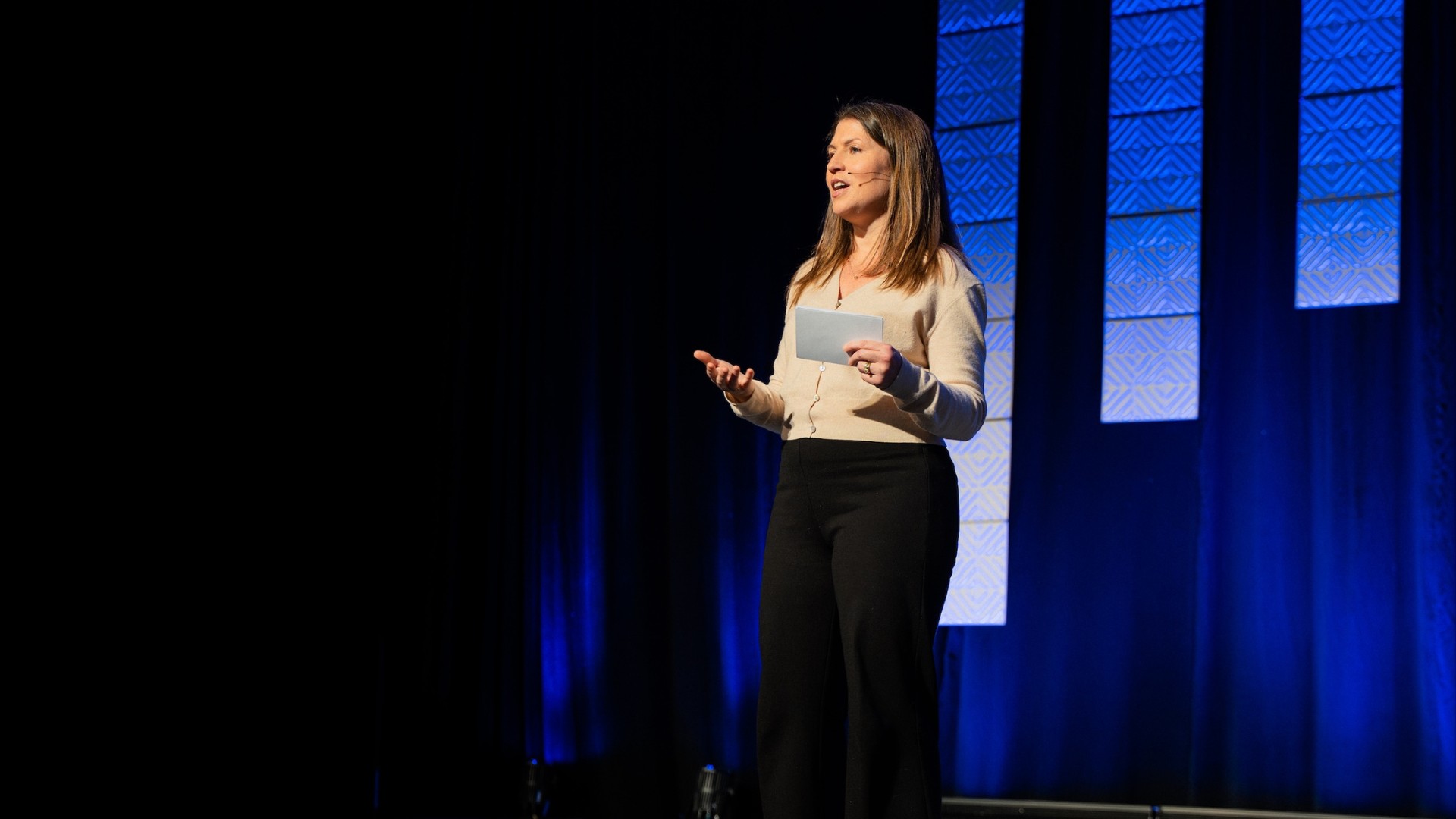
This article is adapted from a sermon delivered by Amy Julia Becker at the Midwinter conference in Chicago, Illinois, on January 30, 2026. Watch the recording here. This is part of our ongoing “From the Pulpit” series, where we share inspiring messages from the Covenant community.