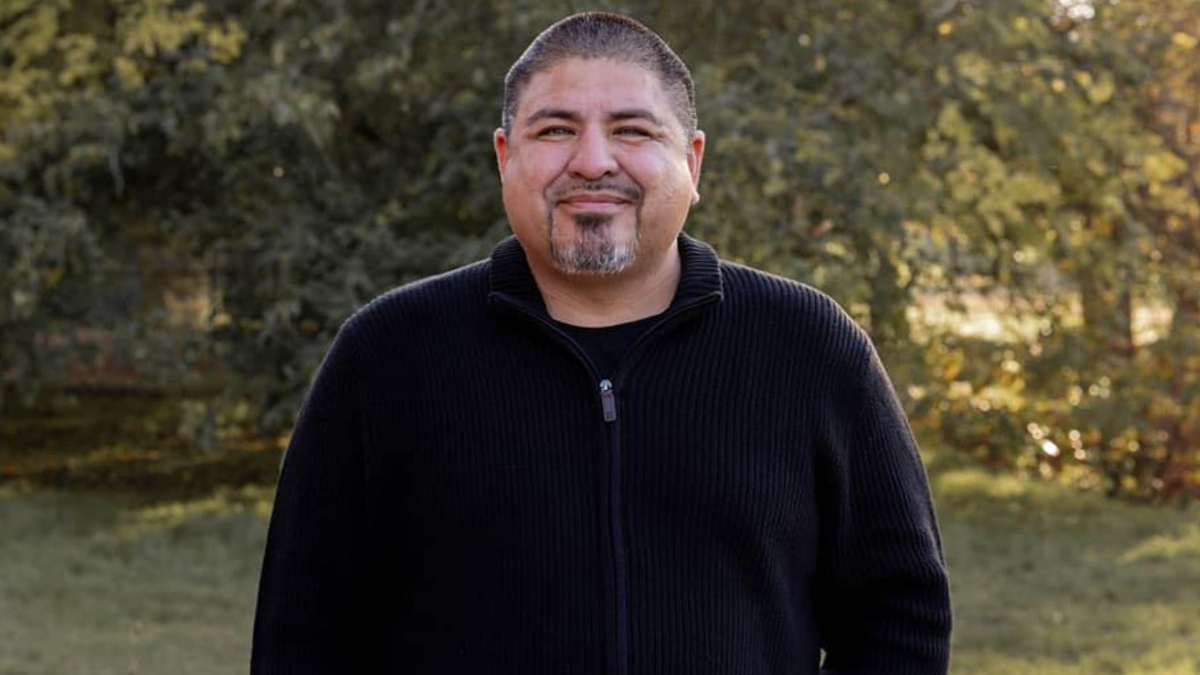
Fil Nesta is the new director of bilingual churches for Start and Strengthen Churches, part of the Serve Locally mission priority. He brings nearly two decades of experience within the Evangelical Covenant Church, along with a background in pastoral ministry and church planting. The Companion sat down with Fil to discuss his journey, the unique challenges and resilience of the Latino church, and his vision for the future of bilingual church planting. This interview has been edited for length and clarity.
What was your journey into this role?
I came into the Covenant about 17 years ago, looking for a denominational family. I had planted my third church and was looking for support and denominational covering when I stumbled onto the Covenant. It was a blessing because I got to meet with key church plant leaders, such as Dave Olson and Wayne Carlson. They were mentors, and the Covenant felt like family.
This role is something I believe God was guiding me toward and preparing me for all along. My journey has been shaped by pastoral ministry, both church planting and revitalizing churches. When denominational leaders affirmed me for this position, it was a confirmation—and I felt confirmation from the Holy Spirit as well.
How is church planting different today from when you were starting out?
In the Latino context, it’s becoming increasingly more challenging. As you probably know, there is a sense of fear in our communities surrounding immigration concerns and the presence of US Immigration and Customs Enforcement (ICE). That fear has seeped into our sanctuaries. It has affected our attendance, the life of the church, and the willingness of our people to engage fully in their spiritual communities.
All of this brings anxiety, uncertainty, and even trauma that requires ministry presence, compassion, and trust-building. In my first 120 days in this role, I’ve just been listening, being present, and offering support for our churches and leaders.
How are these current political realities impacting the pipeline of the next generation of upcoming leaders?
Overall, our pastors and young leaders are tremendously resilient. Even in the midst of all these challenges, they are able to keep their eyes focused on moving the mission forward. Our role is to come alongside and help build healthy structures, developing and supporting young leaders so that we can continue to plant churches.
Even amidst these struggles and anxiety, there’s tremendous hope in our community. It’s almost like an Acts 8 moment, where in the midst of persecution, the church went out and took the gospel even further. I feel we’re living in that moment where the Latino church, in the midst of challenges and even persecution, will continue to take the gospel even further.
What do you wish more people understood about bilingual church planting?
First, I want people to understand that multicultural ministries or ethnic-specific church planting is not a niche. I see it as part of the broader mission of the church, and we can learn a lot from each other. Our diversity is a strength God wants to use for his glory and for this specific time. We are better together when we understand each other’s cultures and struggles.
I also want people to understand that it is another layer of difficulty to plant a church in an under-resourced context, such as in poor communities. Although that’s changing as second and third-generation Latinos establish churches that buy buildings and operate similarly to more mainstream congregations, it’s the immigrant church that builds the foundation, struggles, and somehow makes it work.
Have you noticed any generational divides in the bilingual church?
In a lot of contexts, the Latino population is younger, with young families. It knows how to navigate generational and cultural gaps. Most of our churches are bicultural by nature because in one congregation, you can have people coming from different parts of Latin America. It’s a bicultural and multigenerational church that innovates to survive and thrive.
Some of the things being done in the Latino church can very well be practiced in the dominant culture church. For instance, bivocational ministry has existed in our Latino churches for a long time. Now we’re seeing dominant culture churches getting into these spaces and wanting to learn how to navigate them.
What else can we learn from the Latino church?
Most of our church planters and Latino pastors are bivocational. That’s always been our reality, so you have to learn how to plant a church while a person has a full-time job.
The Apostle Paul was heavily involved in the marketplace in the communities where churches were planted. A new term being used now is “co-vocational,” where people choose a vocation while simultaneously doing ministry in their settings, like a faith-based nonprofit. They fill a financial need for their family, but they are intentional about spreading the gospel in the marketplace. There’s a “make it happen” feeling that is strongly ingrained in our Latino pastors because they’ve had to figure it out as immigrants in a foreign country. There’s no other option, so they figure it out.
What do you think the future holds for bilingual church planting?
I see a bright future. I see a model of a church that is bridging generational and cultural gaps, really living into the Revelation 7:9 church. I see a church that is multiplying in the midst of challenges and struggles, and contributing to the broader Church. I see tremendous collaboration between the bilingual church and the broader church.
Do you have a final word you would like to share?
It’s always been said that the best way to reach the lost is by church planting, and I think we need to get back to that. Because of everything that’s happened—COVID, cultural shifts, and political challenges—we’ve been distracted from the mission. We need to focus on the main thing, which is reaching the lost for the glory of God. This is the heartbeat of God, and church planting is the best way to do it.