CHICAGO, IL (December 30, 2015) – Studies show that evangelicals are the religious group least likely to believe human activity contributes to climate change, but two young Covenanters are giving leadership to Young Evangelicals for Climate Action, a growing national organization that seeks to connect faith with creation care.

Riley Balikian, who attends Fountain of Life Covenant Church in Madison, Wisconsin, and Kaleb Nyquist, director of Student Ministries for Ravenswood Evangelical Covenant Church in Chicago, serve on the steering committee for the organization. Nyquist also previously served as the communications coordinator for YECA.
The organization was formed in early 2012 at a retreat of young evangelicals and professionals convened by the Evangelical Environmental Network in Washington, DC. Balikian and Nyquist joined shortly afterward because they believe that climate change will not only affect the planet in the future but already has begun to produce catastrophic results.
“Climate change isn’t a future problem or an environmental problem. It’s a humanitarian crisis now,” says Balikian, who graduated from Wheaton College with degrees in geophysics and biblical and theological studies and now is pursuing a master’s degree in sustainable community development and water resource management. His studies took him to work with farmers in Honduras, where he saw that a changing environment was contributing to reduced water and food supplies, which leads to deeper poverty and hunger.
Balikian and Nyquist say there still is plenty of opposition. One college Nyquist visited teaches that climate change is “a distraction at best, conspiracy at worst,” he says. “Some students are seeing that caring for creation is connected with faith, but others don’t want to believe that.”
Other evangelicals pit animal welfare against human welfare when considering climate change issues, Nyquist says. “We view all creation as sacred, but if their theology puts human suffering above animals, then we need to show how climate change is negatively affecting people. That’s why it’s so important to communicate that it’s not just polar bears who are suffering from climate change.”
But Nyquist, who graduated from North Park University with a dual degree in global studies and conflict transformation and now is studying at the University of Chicago, says he has seen the beginning of “seismic shifts” in the number of evangelicals who believe that humans are impacting the climate.

In October, the National Association of Evangelicals released a statement, “Caring for God’s Creation: A Call to Action,” that affirmed the Lausanne Capetown Commitment, which declared, “Probably the most serious and urgent challenge faced by the physical world now is the threat of climate change.…World poverty and climate change need to be addressed together and with equal urgency.”
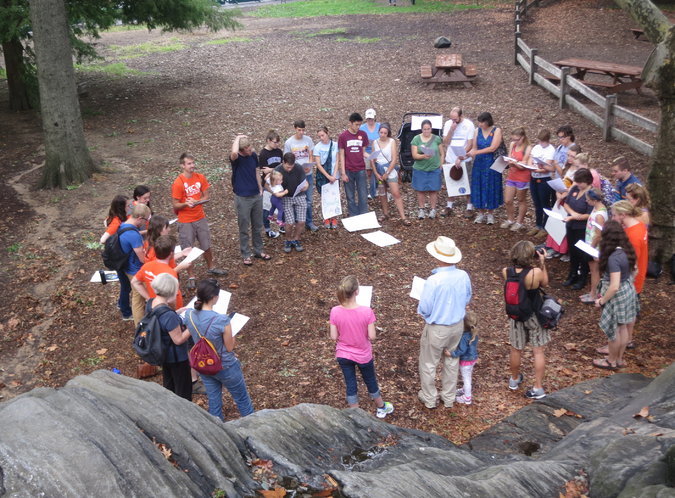
YECA also is extending its influence. The NAE document included language in keeping with suggestions from YECA, Nyquist says. A front-page article in the New York Times last September focused on the changing views among evangelicals and included comments from another organization leader as well as a photo taken by Nyquist of a YECA prayer gathering.

The YECA website states that the organization’s three overarching goals are to mobilize young people on climate change, educate evangelical leaders, and hold political leaders accountable on the issue. Nyquist and Balikian have spoken at campuses to encourage students to become involved at school but also to educate their communities and churches.
“I’ve sat in more science classes than I ever thought I would,” jokes Nyquist, who also spoke on environmental activism at CHIC this past June.
Balikian says the issue is about more than the environment for him. “What’s most important is that I’m pursuing Christ. Creation care is part of that.”
Balikian reflected on his faith, creation, and awe in a Companion “Voices” column posted online in September.