

Illustration by Eric Tai
Finding the Whole Gospel in the Whole World
My husband, Bob, and I arrived in Central Asia with three young children and far too many suitcases, bright-eyed and eager to “save people for Jesus.” As new Covenant project missionaries, we carried a seven-page plan and were determined not to disappoint supporters or God. This was the culmination of our call to serve at the ends of the earth. We were told that the spiritual need was great, and we were here to meet that need.
But unmet expectations and unachieved goals marked those first years, and God exposed our pride and revealed an important truth—we received far more than we assumed we would give. Our Kyrgyz sisters and brothers taught us about bold faith amidst persecution, generosity in scarcity, and the healing power of the gospel. They were discipling us and already taking steps of faith to cross into neighboring countries with the love of Jesus, where Western missionaries were not welcome.
We need the gospel’s transforming power through the voices and the presence of the global church.
A few years later, when we moved to Thailand to serve in medical and mental health ministries, the same lesson deepened. During Covid, I was in a prayer meeting in Chiang Mai with Thai colleagues. We typically prayed for our local community, but one Thai staff member asked, “Could we pray for the U.S.?” They were concerned about the violence after George Floyd’s murder and in reaction to mask restrictions. The request caught me off guard as I realized I still carried a long-held belief that we were the givers, the ones who had something to offer. That simple request unsettled me, challenging my subconscious narrative that mission was one-directional.
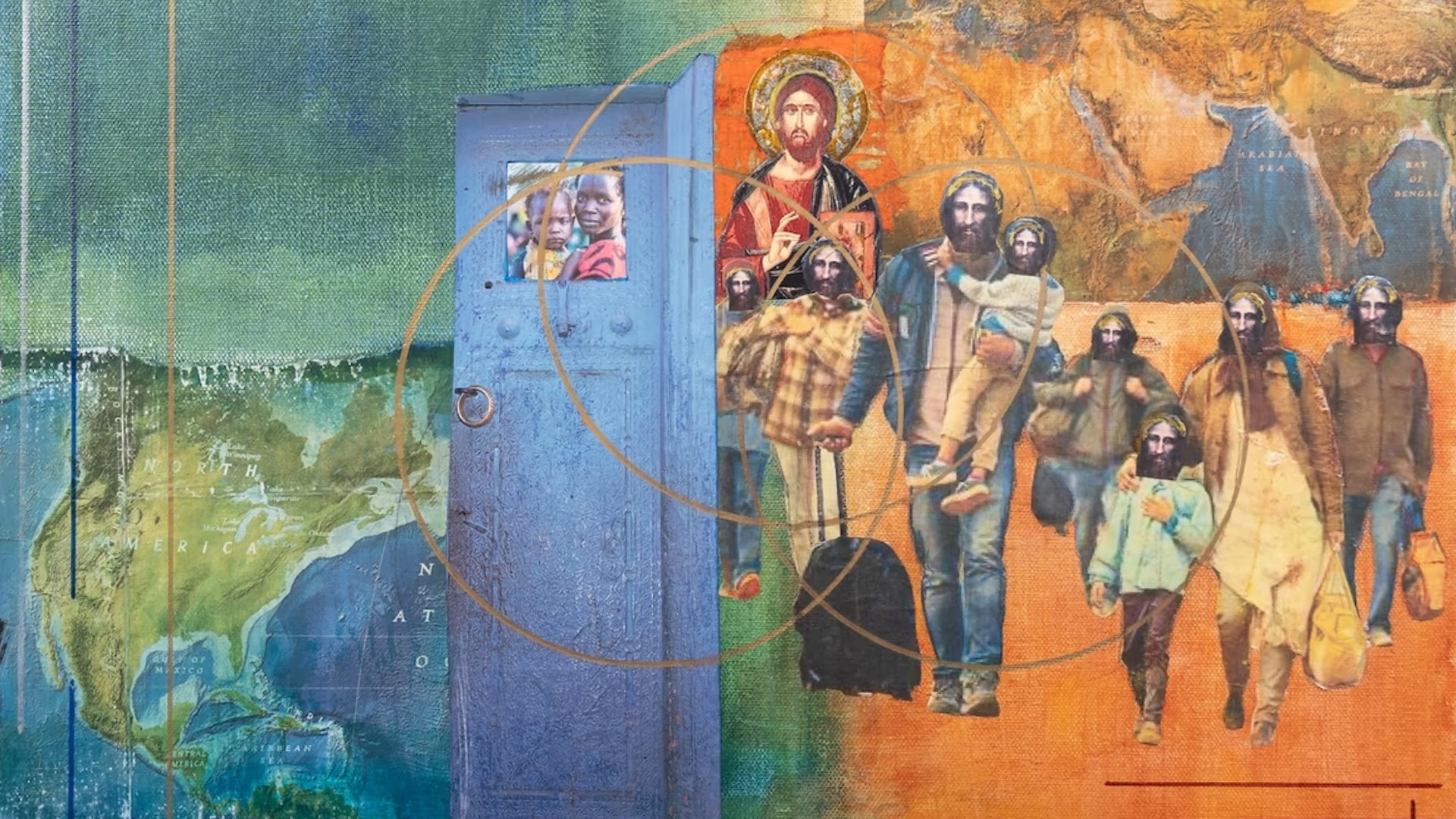
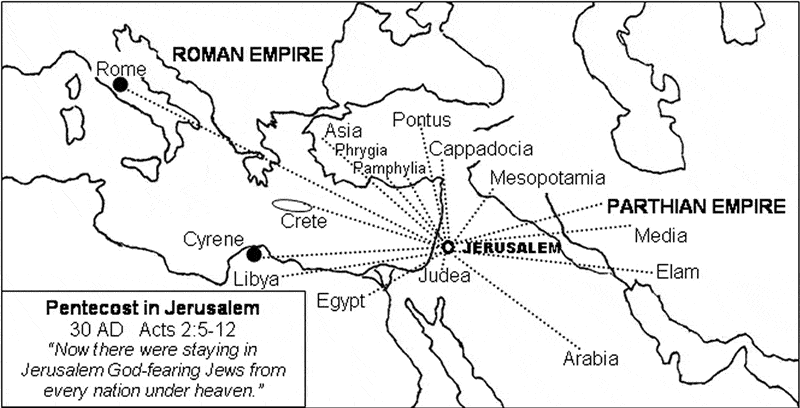
I had always read Acts 1:8 from my center in the United States, where the ends of the earth were places like Africa or Asia, often portrayed as places in desperate need. But after living and serving in Asia, I saw the passage in a new light. Asian sisters and brothers read Acts 1:8 from their center. Their Jerusalem is Bangkok, Seoul, or Delhi. And who is their “ends of the earth”? We are. Given what is transpiring in our nation, it is glaringly evident that we need the gospel’s transforming power through the voices and presence of the global church.
Today, nearly 70 percent of the world’s Christians live in Africa, Asia, Latin America, and Oceania. The center of global Christianity has significantly shifted. The global church is not the future of mission; it is the mission movement of today. God’s Spirit is moving powerfully through global believers who are planting churches, sending missionaries, and living out the gospel in diverse contexts. God’s invitation to us is to partner with, learn from, and posture ourselves to align with the Spirit’s work as part of the global church, from everywhere to everywhere.
What might this look like?
Humble curiosity
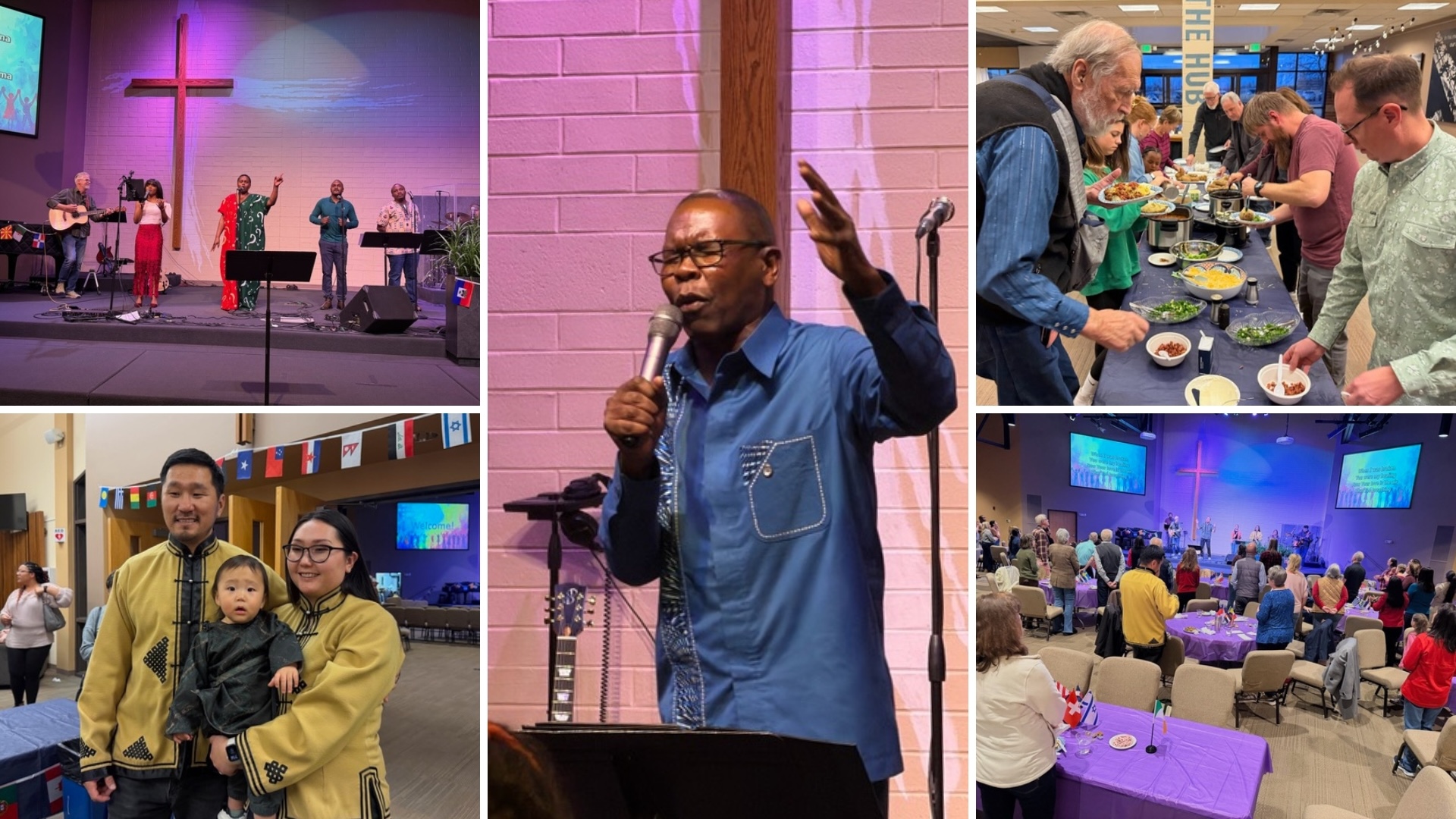
When we engage the world with humble curiosity, we acknowledge that God is already present and at work. First Corinthians 13 tells us that we “know in part,” and this truth reminds us to keep an open stance to ask and inquire, trusting that there is always something valuable for us to learn. As we celebrated 140 years of Covenant mission and ministry at Gather, the denomination’s annual meeting, last summer, President Tammy invited global leaders from seventeen sister Covenant denominations to join us. Delegates spent the week under the teaching and influence of these leaders. Their wisdom and testimonies encouraged, challenged, and inspired us to deeper faith and fresh imagination for how to follow Jesus where we are. Humble curiosity recognizes the need for diverse voices that expand and transform discipleship and mission. This posture shifts mission from doing to being, from leading to learning, from speaking to listening. As we humbly engage with the world in our communities or outside our borders, we are mutually transformed through the Spirit’s power.
Mutual hospitality
The word hospitality comes from two Latin roots: hostis, meaning “stranger” or “foreigner” (and later even “enemy”), and potis, meaning “master” or “host”—one who has power. At its core, hospitality is about how those with power choose to receive and relate to the stranger. In God’s kingdom, hospitality is not one-sided but mutual—and deeply transformative. Theologian Thomas Ogletree writes, “Hospitality designates occasions of potential discovery which can open our narrow, provincial worlds. Strangers have stories to tell which we have never heard before….The stranger does not simply challenge our assumed world of meaning; she may enrich, even transform, that world.” Mutual hospitality invites us to be both welcomed and changed by those we once called strangers.
Mutual hospitality invites us to be both welcomed and changed by those we once called strangers.
Latin America and Caribbean regional coordinators Eugenio and Pia Restrepo created an initiative with CIPE (the Covenant churches in Latin America and the Caribbean), where Covenant churches send and receive missionaries. Both the sending and receiving countries share costs, and host families open their homes to care for and learn with one another. Participants often testify that they didn’t realize how much they had to offer, or how much they would receive. One doctor from Uruguay gave up a month of vacation to serve in Ecuador’s Amazon jungle, saying it was “the best time I have ever spent.” The Spirit’s work through these partnerships invites us to consider how we can come alongside global partners in what they are already doing in their own contexts. The question is not how we can help them fulfill our vision, but how we can stand with them and strengthen their God-given mission.
This invitation is present in our own context. In our increasingly globalized communities—our own Judea and Samaria—we have the opportunity to extend hospitality to those whose language, culture, and faith are different from our own. As we do, the host receives and is enriched by the one who is hosted.
Wholehearted availability
Ultimately mission from everywhere to everywhere is about being available and willing to say yes to the invitation to participate in God’s mission in the world. Acts 1:8 reminds us we are already Christ’s witnesses, called to engage from where we are to the ends of the earth through the power of the Holy Spirit, wherever Christ’s body is present in the world. In Isaiah 6:8, God asks, “Whom shall I send? And who will go for us?” Isaiah responds, “Here am I. Send me!” “Here am I” in Hebrew is (hineni), which means “I am wholly available.” This wholehearted availability is not about capacity, adequacy, or certainty but about surrender. My prayer is that we in the Covenant would embody that hineni spirit—willing to respond to God’s invitation of “Whom shall I send?” to raise a new generation of those called to serve here and around the world.
Not just from here to there but from everywhere to everywhere. I’m still wrestling with and discerning what this truly means and looks like for the global ministry of the Covenant. Our founding history tells us that as an immigrant church, we were established because of the commitment to act justly, love mercy, and walk humbly with God. From the beginning, we committed together that we would be a church dependent on the Holy Spirit’s power to be witnesses in Jerusalem, Judea, Samaria, and the ends of the earth. My prayer is that as we join God’s mission in the world with the global church, we would be marked by humble curiosity, mutual hospitality, and wholehearted availability to say yes to God’s invitation, whether here or there so that the world might know Jesus everywhere.