
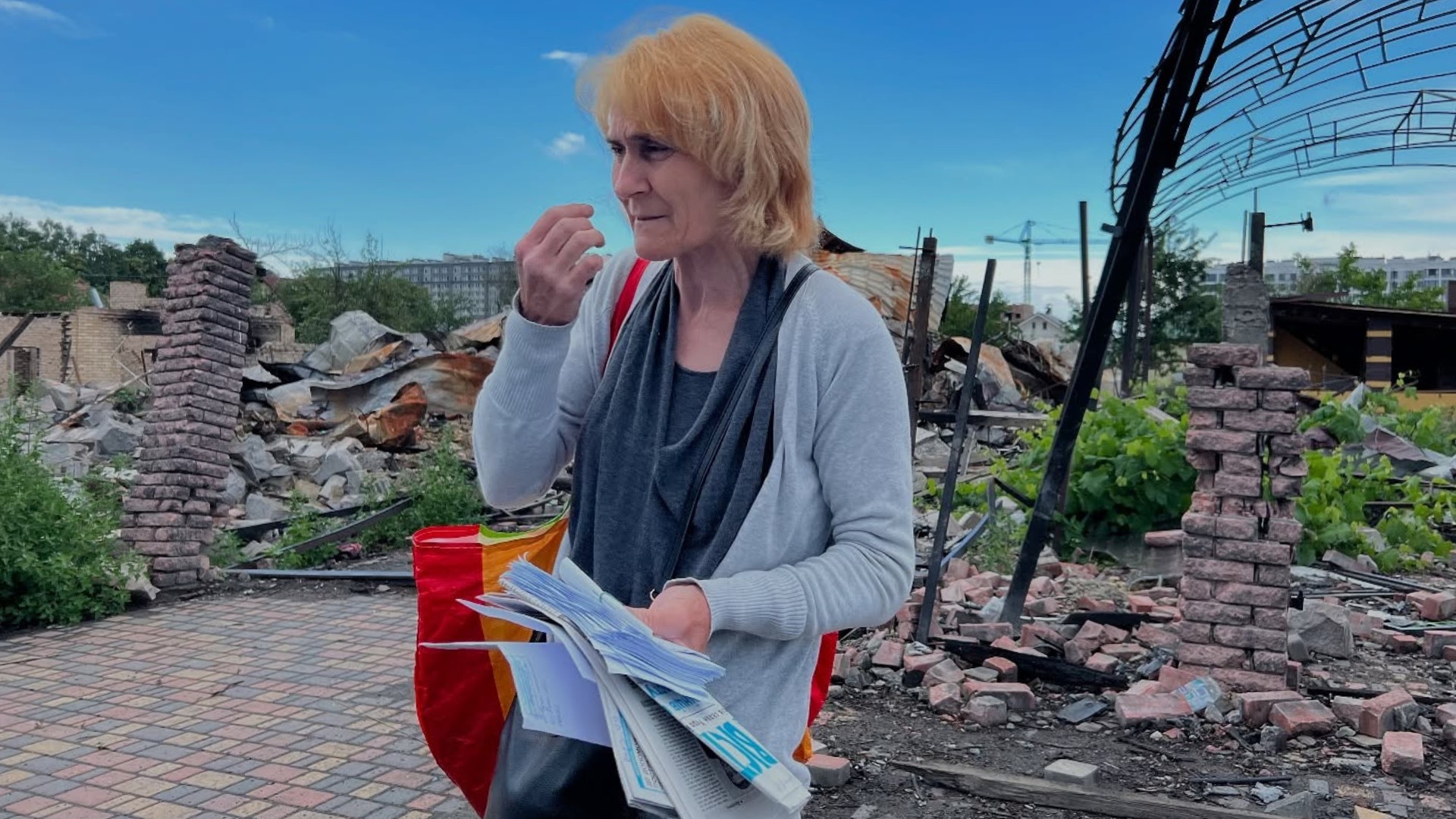
PICTURED ABOVE: A LOCAL POSTAL WORKER STANDS AMID THE RUINS—REALIZING THERE’S NO LONGER A BUILDING, OR A FAMILY, TO DELIVER LETTERS TO.
A young woman in Ukraine stepped forward, her expression flat. Her husband, she said, had been killed at the front. They had been married for three months when he was mobilized. Six months later, she received notice of his death. She was taking antidepressants, but they were making her condition worse. She was asking for prayer at a trauma-healing conference organized by Covenant World Relief and Development partner Hope International Ministries. It was her first time in a church.
Another woman described a life erased in a single night. Before the war, she owned a dental clinic, a car, and an apartment. Then drones struck her city, destroying her business. Insurance, she said, was meaningless in wartime. Six months later, her husband left. Now she was raising a newborn alone. Her child was the only reason she got out of bed. She did not know what to pray for.
A Christian couple from Odesa described feeding tens of thousands through their businesses during the war’s first three years. One night, three drones struck their warehouses, food factories, and bakeries in what they described as a coordinated attack launched from Russian-occupied Crimea. The damage left them with roughly $10 million in losses. “If they had destroyed our house, we could have rebuilt it,” they said. “Without our businesses, we have no way to start again.” When words of comfort failed, they asked simply for a song. The group sang. The couple wept.
Such accounts have become familiar over four years of war.
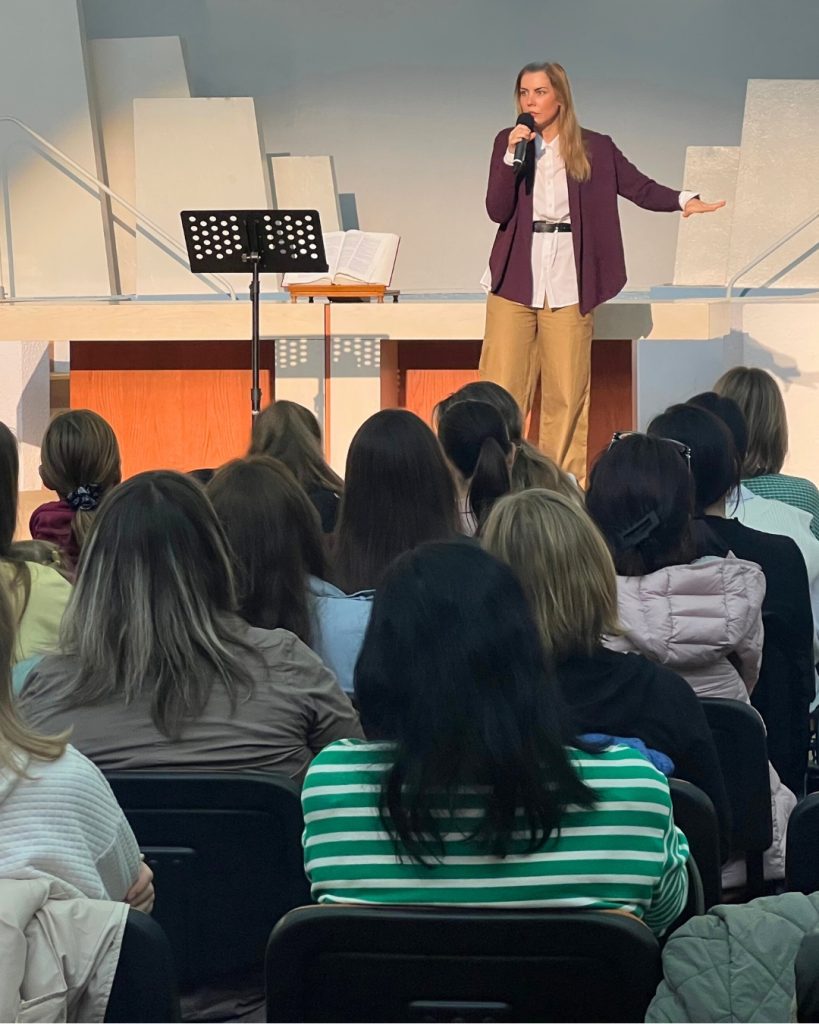
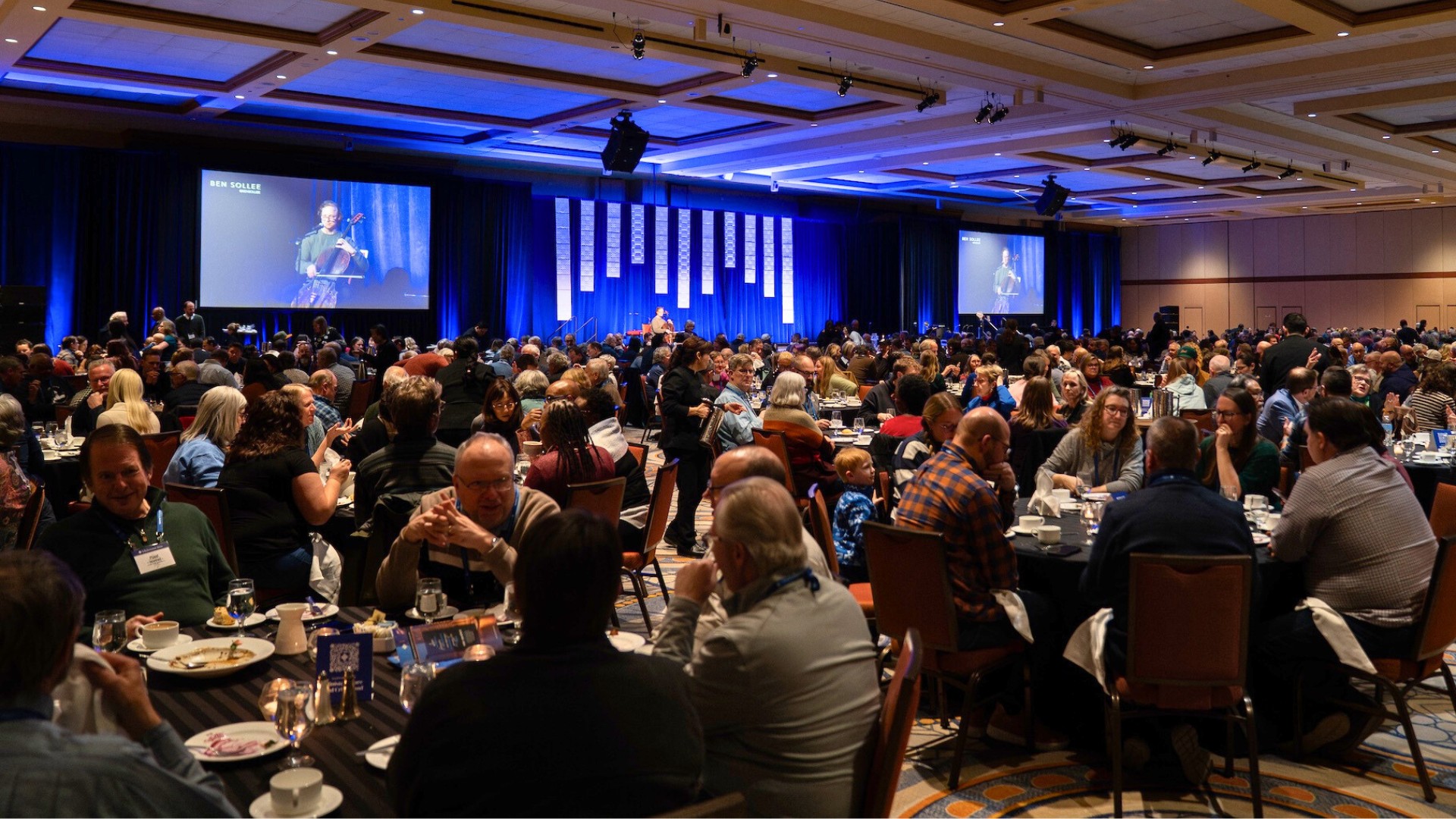
TRAUMA HEALING CONFERENCE FOR UKRAINIAN REFUGEE WOMEN IN WARSAW,
POLAND, SEPT 2023
Hope International Ministries (HIM), a US–based nonprofit, began trauma-healing work in Ukraine and with Ukrainian refugees shortly after Russia’s full-scale invasion on February 24, 2022. Since then, HIM has led ten trauma-healing conferences for women across Europe—including in Poland, Germany, Latvia, and Italy—and five more inside Ukraine, in Odesa, Kyiv, and Kharkiv.
Working with Covenant pastors and volunteers from California, Texas, and Iowa, and with support from Covenant World Relief and Development, the organization now leads annual trauma-healing retreats in Ukraine for frontline pastors, their spouses, and families.
In October 2025, HIM opened a trauma healing center in Kharkiv, Ukraine’s second-largest city, about 20 miles from the Russian border. This year, in partnership with trauma specialists from Johns Hopkins University, HIM is launching an online professional development program for Ukrainian clinicians and therapists.
Ukrainians say they are exhausted by the war. What they seek, many emphasize, is not simply an end to the fighting, but a peace that does not erase what has already been lost. What is treated by some as a political issue—or even a bargaining chip—is, for Ukrainians, a matter of national survival. Again and again, Ukrainians have appealed to the world to remember that this war is not merely about territory seized by Russia but about soldiers and civilians, children and entire families who continue to be killed each day by Russian attacks, whether on the battlefield or by missile and drone all across the country.

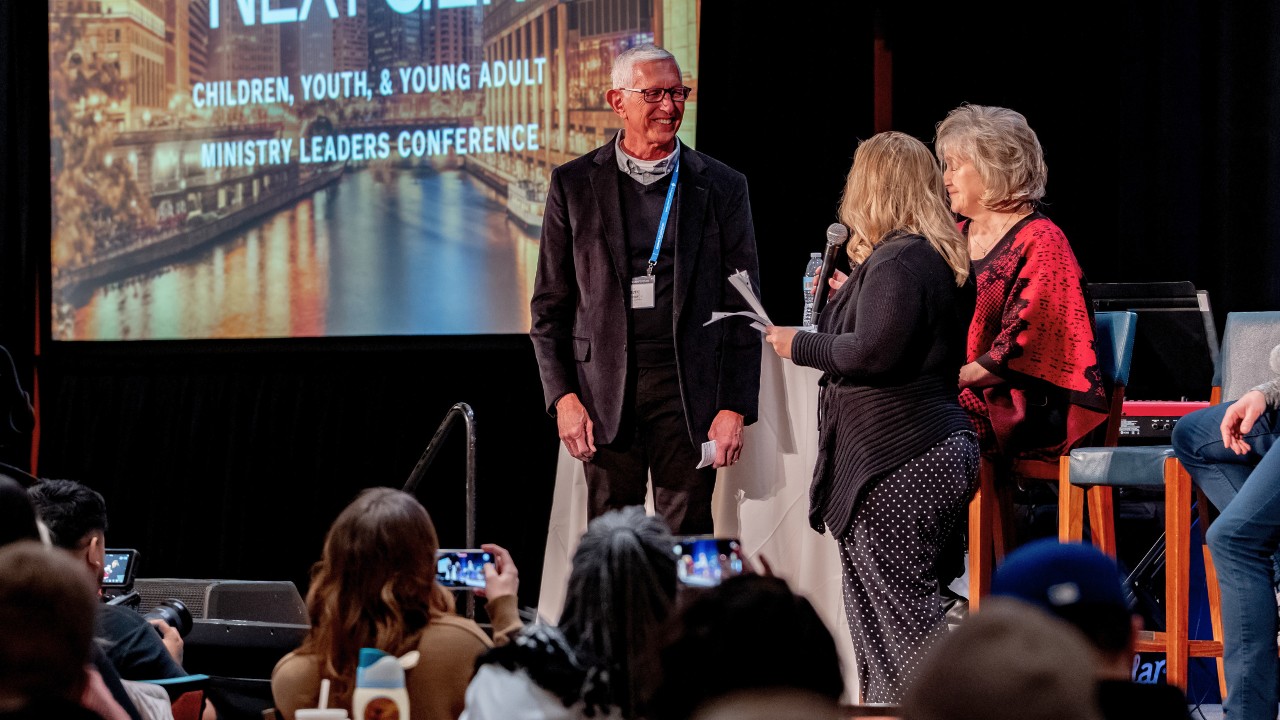
TRAUMA HEALING CONFERENCE FOR WOMEN IN KYIV, UKRAINE, OCTOBER 2025
An entire generation of men has been thinned, leaving behind a generation of widows. United Nations agencies and humanitarian groups report staggering levels of physical injury, with amputations affecting civilians and soldiers on a scale not seen in Europe since World War II.
Since the invasion, volunteers and staff with HIM have traveled into Ukraine ten times and made dozens of additional trips to assist Ukrainian refugees across Europe. The work has unfolded against the backdrop of documented atrocities in places like Bucha and Izium, and amid the quieter, daily traumas that do not make headlines: families separated and livelihoods erased.
Retired Covenant pastor Doug Stevens and his wife, Nancy, are part of this mission. They say, “The stories are hard to hear but necessary to tell. Providing a brief break from the constant hostilities and endless distress opens a window of hope, a fresh breath of air infused with faith, rich in reassuring relationships, an invitation to greater transparency, and even the intrusion of joy. We would not understand the awful depth of the struggle and the shock of grace that visits us in such a circumstance if we were not there to listen with hearts engaged and plead to heaven for relief.”
“We stood on the Black Sea beach and listened to Roman and Artem, a pastor and his younger protégé, as they recounted the special challenges of serving in an area near the front lines. They had become extremely adaptable and resourceful as they responded to all sorts of needs in the villages nearby. They have contingency plans now for a number of scenarios, including the requirement to evacuate, relocate, and restart ministry.”
Yet alongside the devastation, there are heartening signs of renewal.
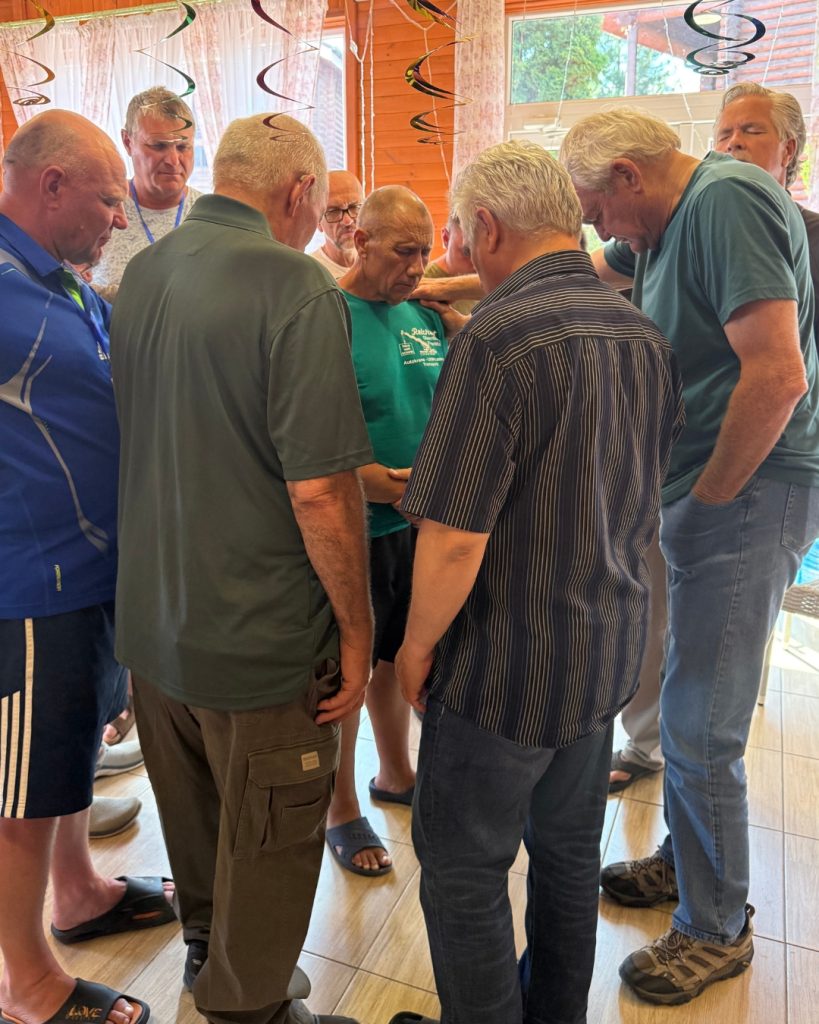
PASTORS PRAYING FOR EACH OTHER DURING THE PASTORAL TRAUMA HEALING RETREAT IN ODESA, UKRAINE; JUNE 2025
Church leaders report that while some congregations lost as many as 80 percent of their members in the first year of the war, many churches are now filled again—often with people attending for the first time. New churches continue to be planted inside Ukraine, even as air raid sirens remain part of daily life.
Perhaps less visible is what has happened beyond Ukraine’s borders. Ukrainian refugees across Europe have begun forming congregations of their own, often in rented halls, apartments, and shared church buildings. Evangelical networks estimate that more than 300 Ukrainian-led churches have been established across European countries since the war began.
The Apostle Paul wrote, “Where sin increased, grace increased all the more” (Romans 5:20). Some pastors in Ukraine now paraphrase that verse in their preaching: “Where war and trauma abound, grace abounds much more.”
For believers living through the war that conviction has become a source of resilience. Healing, they say, comes not solely from endurance or therapy but from what they describe as life “through the One, Jesus Christ.” The language is familiar in Ukrainian churches, where pastors often return to Jesus’s words “I am the resurrection and the life” (John 11:25).
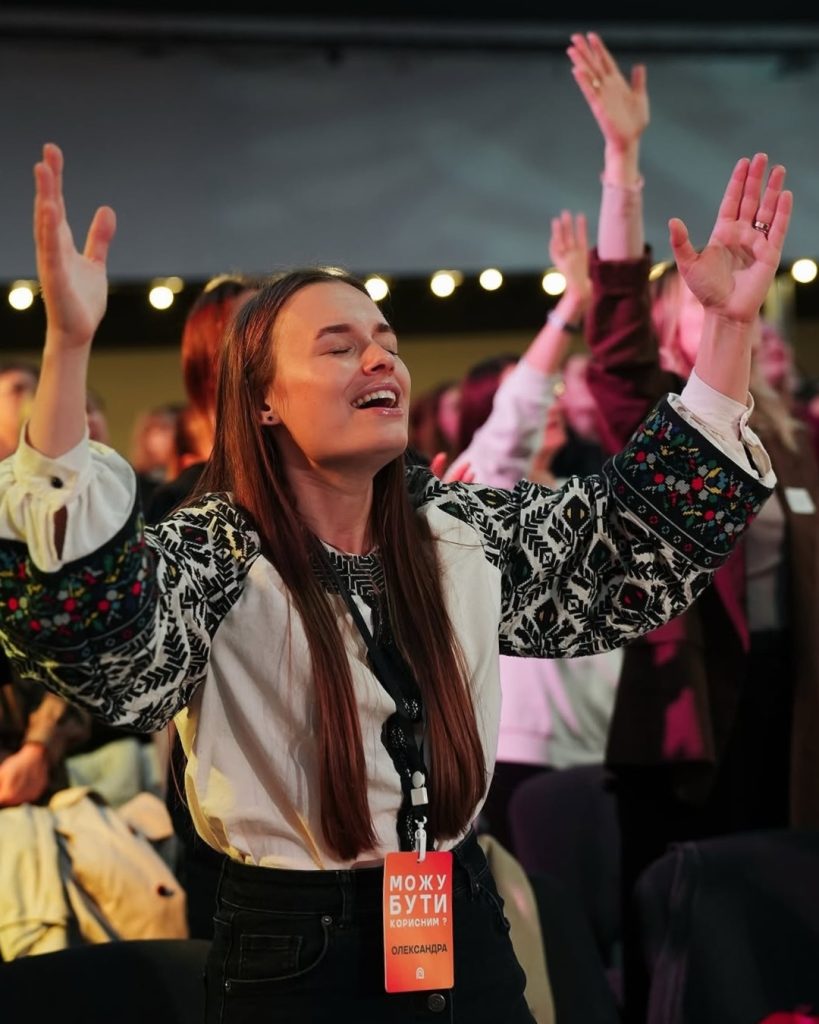
TRAUMA HEALING CONFERENCE FOR WOMEN IN KYIV, UKRAINE, OCTOBER 2025
In trauma-healing retreats organized for Ukrainian families, that theology is expressed in practice. For some participants healing means learning to live again. For others—particularly those who have lost spouses, children, or homes—it means encountering what they believe to be the source of life itself.
The purpose of a Christ-centered trauma ministry is captured in a drawing made by the wife of a Ukrainian pastor during an art therapy session at one retreat. Under the guidance of Nancy Stevens, the woman painted her family home, then covered it in black paint. “That is what the Russians did to it,” she said.
Across the canvas, however, she added streams of yellow light, representing the grace of God breaking through destruction. For many Ukrainian Christians that image has come to define their faith during the war—a belief that life, healing, and even resurrection can emerge miraculously in the midst of devastation.