
For years Rev. Jeremiah Fair and Rev. Justin Noseworthy have been ministry colleagues and brothers in the faith. But recently their bond was solidified through an unexpected reunion with a piece of their past.
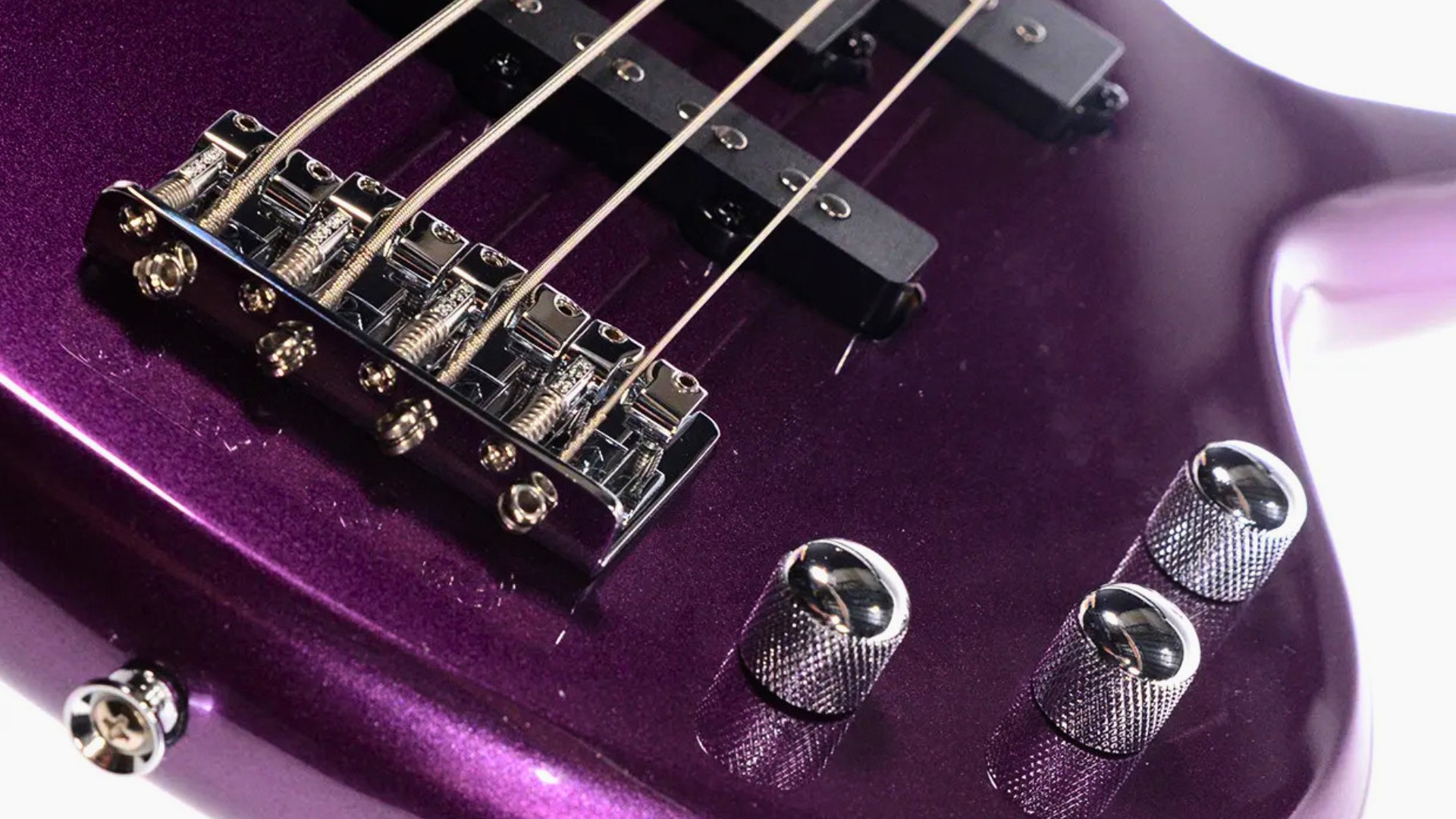
Jeremiah, who is the teaching pastor at University Covenant Church in Davis, California, has always found a life-giving refuge in music. Growing up in a poor family, he relied on the generosity of others to pursue his talent, eventually earning first-chair honors in the state of California as a classical upright bass player. Around 1993, while he was in high school and his parents were both serving as ministers at a Presbyterian church, a generous older woman in the congregation gave him $500 to buy a bass guitar so he could play in the praise band. Gratefully, Jeremiah picked out a beautiful purple Ibanez bass. Unlike an upright bass, it was small and easy to transport. It was fretless, which is typically more difficult to play, but because he’d been playing classical and jazz music, he picked it up right away. He played it faithfully in musicals and church worship sets.

But then Jeremiah’s world fell apart. His father, who was the church’s youth pastor, had an affair, and the family hastily left the congregation in deep pain. As they tried to pick up the pieces and find church community elsewhere, Jeremiah took his beloved bass with him.
By 1996, 19-year-old Jeremiah was interning at a Baptist church. His former pastor, still bitter over his father’s exit, accused Jeremiah of stealing the purple bass from the church. His new senior pastor advised him to take the high road, so Jeremiah surrendered the beloved instrument, dropping it off at the church with a heavy heart, assuming he would never see it again.
Meanwhile, Justin Noseworthy was a middle schooler in the same Presbyterian youth group. He learned to play worship music on a low-quality bass guitar. He was close friends with Jeremiah’s younger brother and had heard about the purple bass. He knew the abandoned instrument had “blood on its hands,” so to speak, but he felt powerless to do anything about it. When he was in high school, he accepted an offer to play the beautiful fretless Ibanez for the church’s contemporary service, and he did so for an extended period—despite his uncomfortable knowledge of its history.
Years later, Justin and Jeremiah’s lives unexpectedly intersected.
When the youth director at the Presbyterian church became ill in 2001, Justin began leading the high school ministry. He and Jeremiah were surprised to bump into each other at a Fuller Seminary campus, and they realized they were both starting their theological education at the same time and faced similarly long commutes. Their friendship blossomed as they navigated their callings, and Jeremiah eventually encouraged and coached Justin through the process of planting a Covenant church in Monterey, a highly unchurched, post-Christian area.

But planting the church turned out to be a discouraging process. Both Justin and Jeremiah were carrying deep wounds from the trauma they had experienced at their former church.
“That church was crumbling and splitting as we were transitioning out,” Justin recounted. “I was on the receiving end of some toxic leadership. My wife and I were licking our wounds coming out of that, and then we went straight into planting a church.” They wondered, “What are we doing here? Is God really calling us to do this?”
Seeking to build a core team, Justin reached out to a former student from the youth group, Doug Fernside, who agreed to help out with sound. Eventually he became the church plant’s worship leader.
One day, while visiting Doug’s music studio, Justin spotted something in the far corner that made his jaw drop. It was the purple fretless Ibanez bass. When he asked Doug about it, he said he had found it abandoned in a closet at the Presbyterian church years ago and was given permission to keep it. Astounded, Justin recounted the back story of the bass and the deep friendship he now shared with Jeremiah, noting that their church plant wouldn’t exist without Jeremiah’s guidance.
Doug immediately offered to return the bass to its rightful owner, along with its original case.
A short time later, when Jeremiah was visiting Monterey to help strategize the church plant, Justin led him to the hatchback of his Ford Taurus station wagon. When Jeremiah looked inside and saw his long-lost bass in its original case—the scent of which he could still clearly remember—he was overcome with shock and memories of his past. “I could see myself retelling the story of my parents and first internship,” he said. “It felt like a bit of redemption for all that.”
For both Justin and Jeremiah, music represents a life-giving force and an anchor for their souls. For Justin, music is deeply intertwined with his pastoral ministry, worship, and the loving community he built alongside Doug. Seeing the bass restored to its rightful owner felt like a confirmation that God had placed him right where he was supposed to be. For Jeremiah, who left ministry for a decade to work in retail and business before returning, music remains his sanity and his core identity outside of his pastoral duties. Playing that upright bass in bluegrass bands—and eventually working with Doug to restore its previous luster—helped him to find himself again.
“It’s a piece of external validation,” he said. “It’s like a large, standing stone, as the ancient people might say.”
An Ebenezer, perhaps—the Hebrew word for “stone of help” and the stone Samuel raised in testament to God’s faithfulness?
“Yeah, that,” he said, smiling.