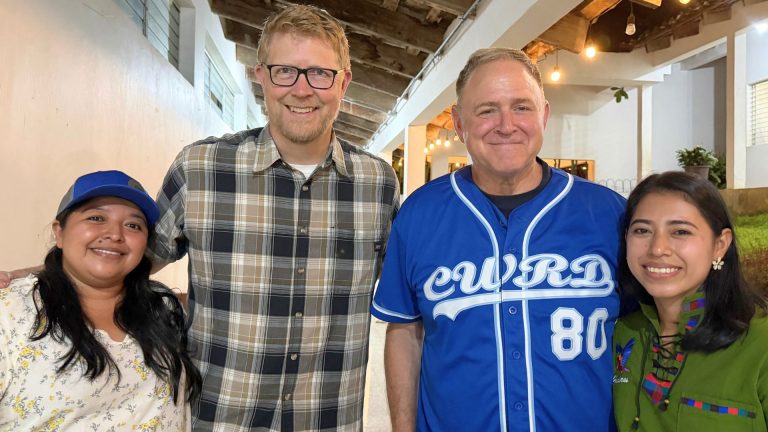
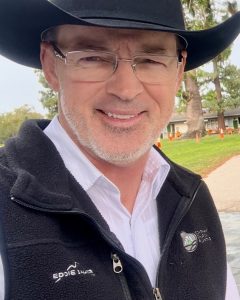
Rev. Pat Stark, director of church planting for Start and Strengthen Churches, brings decades of experience as a church planter and conference leader to this new role. Prior to serving in this position, Pat was associate superintendent of the Pacific Southwest Conference, where he oversaw church-planting efforts beginning in 2018. He also planted Genesis Covenant Church in Phoenix, Arizona, in 2003.
The Companion spoke with Pat about what is changing in church planting, how the Covenant is strengthening its planting pipeline, and why he believes this is a pivotal moment for the movement. This interview has been edited for length and clarity.
What drew you to this new denominational role?
After I served on staff with the Pacific Southwest Conference and had the opportunity to support church planting in that role, I saw the beautiful mosaic of Covenant churches and realized this is what I want to do with my life.
I still believe, and the data supports this, that church planting is one of the most effective and fruitful ways to reach people who do not yet know Christ. I believe I have the gift of evangelism, and I love to help people cross the line of faith. So, devoting my whole life to this with the tribe I have loved for 37 years is a dream come true.
What was your introduction to the Covenant and your journey into church planting?
I sensed a call to ministry in my early twenties. My background is in criminal justice, and I was working a secular job in downtown Seattle when a friend mentioned that First Covenant Church was looking for someone with a Young Life background.
Through serving there, I was adopted into this wonderful family. Later, God called my wife and me to Phoenix. The church there asked me to start a service for unchurched people, so I grabbed every resource I could find to learn how to start a church within a church. After about six years, I went through the assessment center and planted Genesis Covenant Church in 2003.
How has church planting changed since you started?
The pandemic brought devastation but also a needed reset for our movement. It forced us to improve our assessments—especially with race and diversity—and to refine our training.
Today, church planting is much more entrepreneurial. Instead of focusing just on solo planters or married couples, we are seeing teams of two or three people who want to plant together. We are also restructuring our pipelines. With fewer conference staff dedicated to finding planters, we are empowering catalytic pastors and local sending churches to find and develop people who are called to plant.
What’s significant about shared leadership and planting teams? How is that different?
The old normal was often a top-down model where everything went through the key leader. We have learned that it is not always the best way to go. Now we are saying yes to just about every creative idea, especially co-planting teams where people bring their unique gifts together.
Planters are coming to us from the beginning, saying, “I’m not good at this specific skill, so I brought on these people who are.” That allows everyone to stay in their lane and lead where they are gifted.
We are also reflecting this team approach at the denominational level. Our Church Planting team works closely with Missional Vitality leaders because we want established churches to be healthy enough to help give birth to new communities of faith. Having a separation between planters and vitality leaders does not make sense. We grow the kingdom by working together so that no church becomes a dead end on the Great Commission highway.
How do church planters balance being confident and entrepreneurial with maintaining humility?
The past six years have been incredibly challenging. Because of what they have been through, and sometimes because of difficult church experiences they are coming from, planters tend to be humble and ready to learn. They have tried things that worked and things that did not.
I also think the Covenant specifically attracts humility. Planters look at us, see our warts, and realize we do not think too highly of ourselves. They want to be part of a movement that prioritizes humility and a desire to be in relationship.
What do you wish more people understood about church planting?
I would want people to see church planting as part of a long story of faithfulness. Every church community exists because people before us took risks, made sacrifices, and created space for others to encounter Christ. I want that story to continue so future generations can look back and be grateful that we were willing to take risks too.
I cannot think of a church that regretted taking the leap to plant. There is great joy in seeing a new church reach people that an established church may not be reaching, and in watching young leaders flourish in places where they have room to grow.
What do you envision the future holding for church planting in the Covenant?
The Covenant is well-positioned to plant the kinds of churches the world needs. Our specific style of evangelism, our incorporation of justice and mercy, and our desire to see both women and men flourish in leadership are highly attractive.
When I meet with prospective planters who don’t know much about the Covenant, they are drawn to us because of these commitments. It is exciting to share our story and see how God is setting us up to be a missional movement.
Do you have a final word you would like to share?
I am so grateful to be in this role. I simply ask that our Covenant family ask the Lord of the harvest to give us workers.
The unchurched people I interact with are primed to hear the gospel, and we don’t know how long that window will remain open. Please pray that God would fuel this fire and give us a wealth of people called to plant churches, so that more people will know who Jesus is.