
This fall, I’ve met weekly with a group to go through The Artist’s Way workbook, a spiritual but not religious book that guides people to deeper creativity. As an intergenerational group with a variety of spiritual beliefs, we practice diverse mediums of art, ranging from filmmaking to creating elaborate meals for guests. I’ve witnessed participants wrestle with internalizing statements from the book like these:
“Creativity is God’s gift to us. Using our creativity is a gift back to God.”
“We know you created us and that creativity is your nature and our own.”
“Help us to know that we are not alone, that we are loved and lovable.”
“Help us to create as an act of worship to you.”
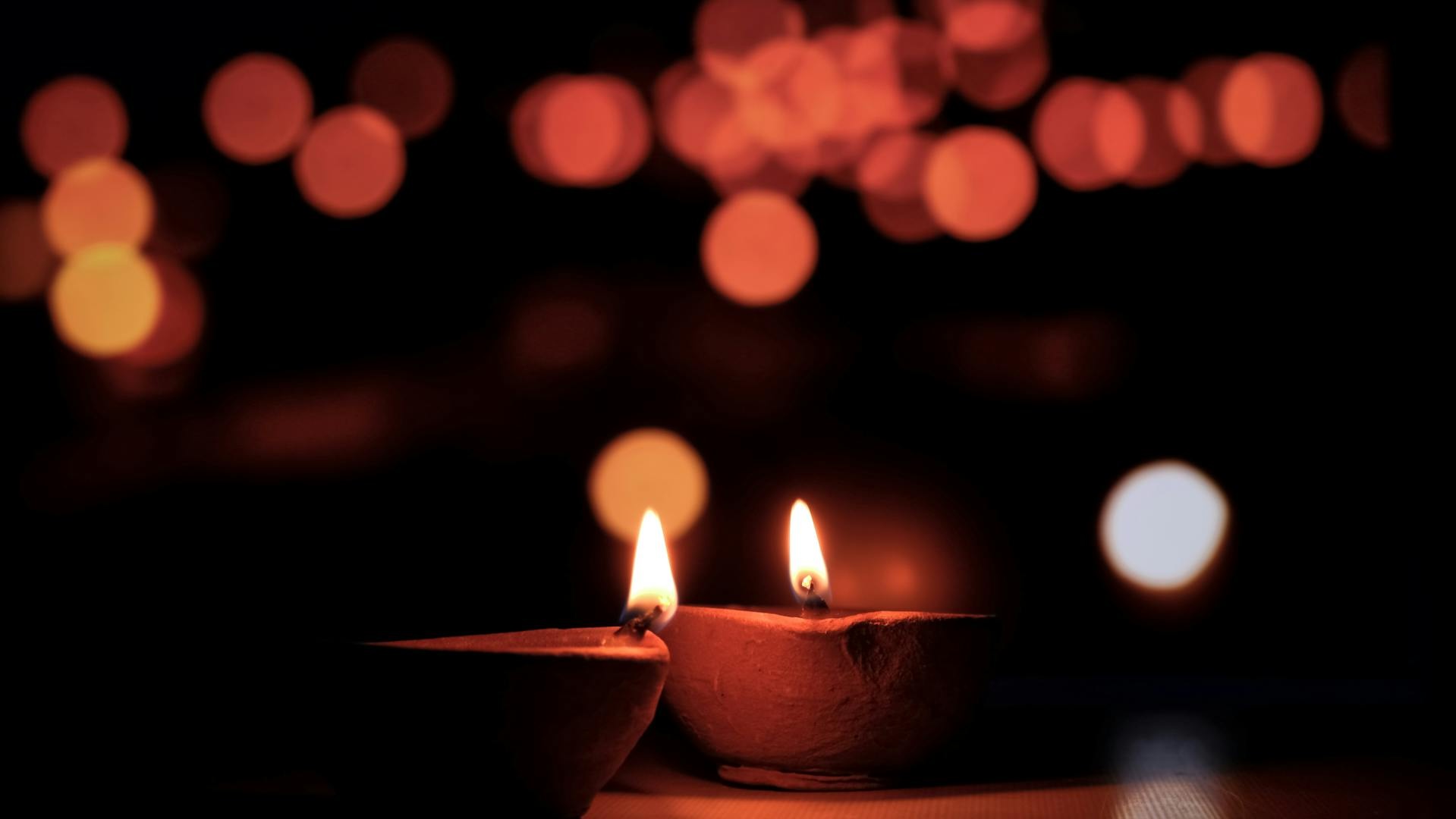
Each week, I light a candle in the shape of a snail to remind us to go slowly in our creative recovery. It’s also been a reminder to me that formation happens slowly, gradually, shaping us into something that can better reflect the brilliant light of Jesus. For people who have been wounded as they’ve offered something good and beautiful to the world, it’s been a moving realization that the Creator loves them and loves what they create. It’s challenged me to think about how I talk about God, what I share about my own friendship with Jesus, and to reconsider what types of communities are beneficial for people to encounter him in unexpected ways. These are things I don’t typically think about when I’m meeting with my spiritual director or journaling about my own mental health challenges. Because of this group, Jesus has grown my desire for a different type of formation.
Consider the people you encounter and the places you go during the week. Socially, we are shaped by many different interactions—intimate times with a friend or family member where we share vulnerably, with neighbors who have a similar set of values, even if their beliefs aren’t the same, in groups with common interests such as knitting or recreational soccer leagues, and ordinary social interactions with baristas, store clerks, or acquaintances. If your life only had one of these types of relationships, it would be strange and unbalanced. You might forget how to make small talk at the grocery store if you only talked with close friends about caring for aging parents or financial challenges! When we develop relationships with people from diverse spiritual backgrounds and stages of friendship, it opens us to consider how God is moving in their lives and ours. We remember what it is like to live in darkness and outside of the family of God. Our hearts begin to soften as the Holy Spirit stirs, drawing us deeper into prayer for friends who are far from God, and into gratitude for our relationship with him. The people and places form us by remembering.
Remember.
Remember.
Remember.
There is a reason for this refrain throughout Scripture.
Remember I am the Lord, your God who brought you out of Egypt.
Remember that while we were still sinners, Christ died for us.
Remember that I am with you until the end of the age.
Befriending people with varying levels of spiritual interest reminds me of the unique ways God forms us to be disciples and make disciples. For Jesus and his followers, they are formed in the abiding and the going. In Acts 17 in Athens, Paul reads the poets, observes the markets, and interacts with thinkers in the Areopagus. He spends time with people like him who are curious and culturally engaged. In Mark 5, as Jesus presses through a crowd on his way to heal Jairus’s daughter, who is a stranger, a woman is healed of perpetual bleeding simply by touching his garment—she hasn’t even spoken with him when this happens. In Acts 10, Peter has a culturally awkward conversation with Cornelius, who seeks him out to learn how his family can be saved. The disciples are shaped by the people Jesus sends them to interact with and the places where they meet. Their joys, longings, pain, and curiosity foster an insight that can only happen when spending time with people who are far from God. Their hearts are changed as they see God’s power.
Before Paul went to the Areopagus, he spent time in the city and was distressed by their idolatrous culture. God gave him eyes to see the emptiness of idol worship and the Athenians’ longing to meet the unknown and true God. Jesus is traveling and is interrupted by a woman in a crowd. He doesn’t know how desperate she’s been for healing or the faith it took for her as an unclean person to push through the crowd and reach her trembling hand toward the hem of his garment. A brief encounter is a moment of healing for the woman, restoring her body and her place in the culture that has rejected her. God moved because Jesus was in the crowd and was available to a woman seeking a miracle. Before Cornelius’s men arrive to summon Peter, he has been fasting and praying and has a vision of eating unclean foods. Wouldn’t you know it?! Unclean people just happen to show up right after Peter has this vision! Peter has an opportunity to immediately obey God’s commands not to call anyone impure or unclean. In each of these stories, the private formation of Jesus and the disciples ripens them for God’s movement in public places.
Spiritual formation often includes solitary practices—seeing a therapist, meeting with a spiritual director, journaling. I’ve benefited from all of these things, and they are core to my formation. Unfortunately, such practices often do not translate into missional vigor or engagement the way they did for Jesus and his disciples. Rather, the practices that can draw us into the presence of God don’t compel us to go and share his love with others. This can result in spiritual malformation. Over the years, God has shifted my heart to see that going to the people and the places isn’t an add-on to my professional ministry job. It is essential to my spiritual formation and missional vitality. On a silent retreat early in my ministry career, I saw an icon of St. John the Evangelist in the modest room of the retreat center where I was staying. It was painted with one hand over his mouth and one hand raised in worship, an angel perched on his shoulder. The image has stayed with me as a reminder that I close my mouth and stay in silence so that my ears would be open to the direction of the Holy Spirit. In the abiding and the going, we need discernment and prayerful hearts to know when to remain silent and when to speak up!
When we are with people who don’t yet know God, God is at work in us at the same time. We remember what it was like to live without the friendship of Jesus, and that remembering forms us. Our longing deepens for others to know that same friendship. We ask the Holy Spirit for insight and courage to share that hope with friends, acquaintances, and strangers. We remember not only for our own sake, but because God has chosen to carry that hope through us, awakening our hearts as we bear light into the darkness.
You can’t see the brilliant glow of candlelight in a room buzzing with fluorescent bulbs. You only see it when you bring it to the dark corners where people are searching for a glimmer of light. In our Artist’s Way group, the snail candle has become a symbol for me of holistic spiritual formation. There are torpid, sometimes imperceptible changes that God makes inside of us as he moves in our lives and the lives of others. It is often not big or flashy, but it is profound. Go slowly, friends. In the abiding and the going, God is moving.