
A Sermon on Micah 4
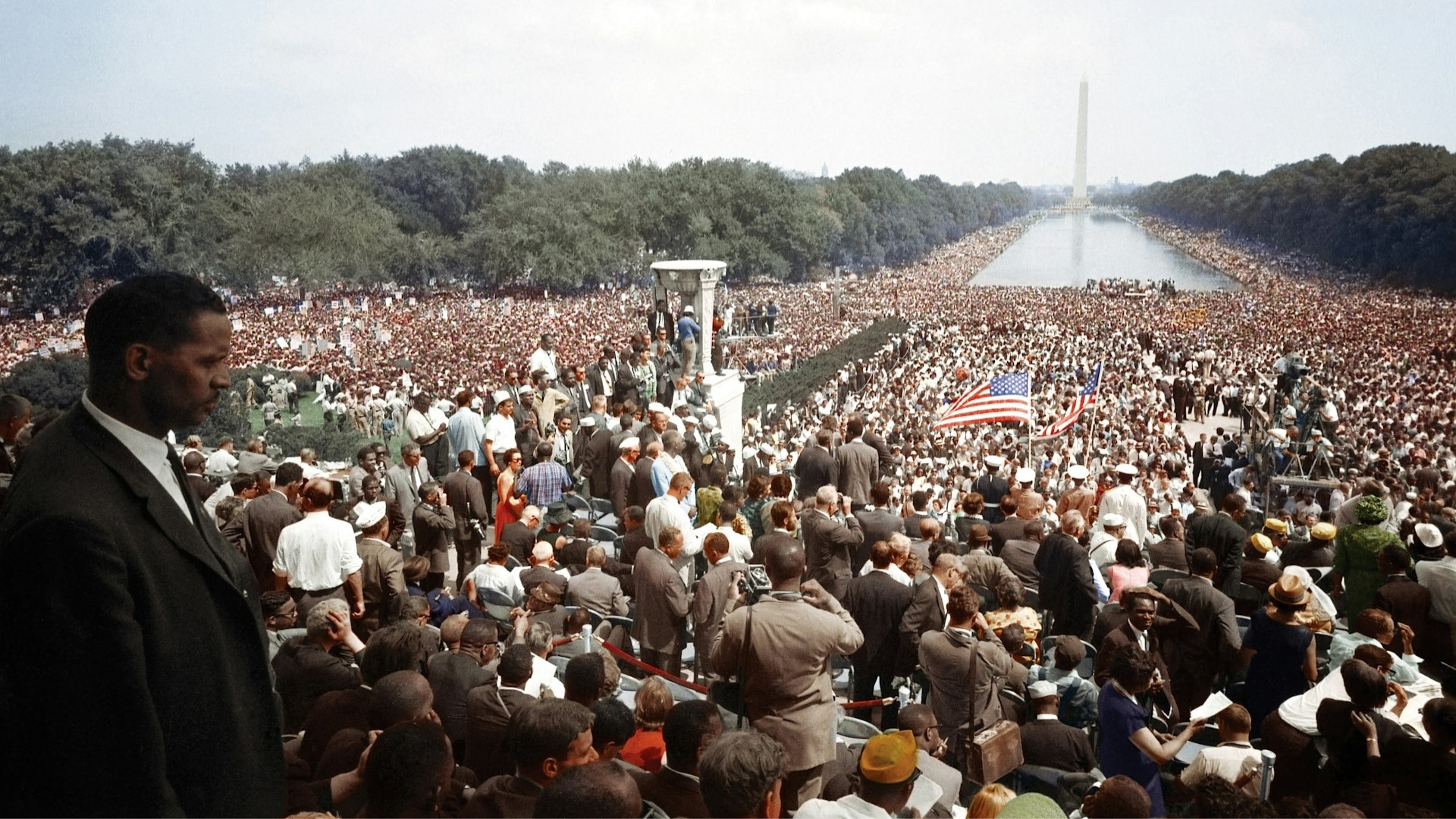
On August 28, 1963, Rev. Dr. Martin Luther King Jr. stood on the steps of the Lincoln Memorial and delivered a sixteen-minute speech that would reshape American culture. Remarkably, just twenty-four hours earlier, he didn’t know exactly what he would say. Yet he delivered what became one of the most significant speeches in American history.
The phrase “I have a dream” appears eight times as King paints a picture of an integrated and unified America. The most recognized part was largely unscripted. At a point when the speech began to lose momentum, Mahalia Jackson shouted, “Tell them about the dream!” She recognized that achieving equal rights and equal justice required a vision.
Vision is also the theme of Micah 4. After warning of coming judgment in chapter 3, the prophet Micah outlines a radically different future—the promised messianic kingdom. His hope was that if people could imagine God’s glorious future for them, they would be motivated to turn from their sins and live in obedience.
Do dreams work that way for you? Do you have a dream and then get to work to make it happen? Or do you passively hope it will come to pass on its own?
Justice is not just an impossible dream; it’s the inevitable future.
A Vision for All Nations
Micah 4:1-2 declares: “In the last days the mountain of the Lord’s temple will be established as the highest of the mountains; it will be exalted above the hills, and people will stream to it. Many nations will come and say, ‘Come, let us go up to the mountain of the LORD, to the temple of the God of Jacob. He will teach us his ways, so that we may walk in his paths.’”
After giving his warning, Micah dares to dream. This may sound surprising, but to be critical of one’s own nation doesn’t mean one doesn’t love that nation and want better for it. Right now, when people challenge a nation’s leaders on issues of racial justice, the response often sounds like, “Well, leave then if it’s so bad here.” But that misses the point. We’re not comparing ourselves to other countries—they are not the standard for justice or righteousness. God is the standard.
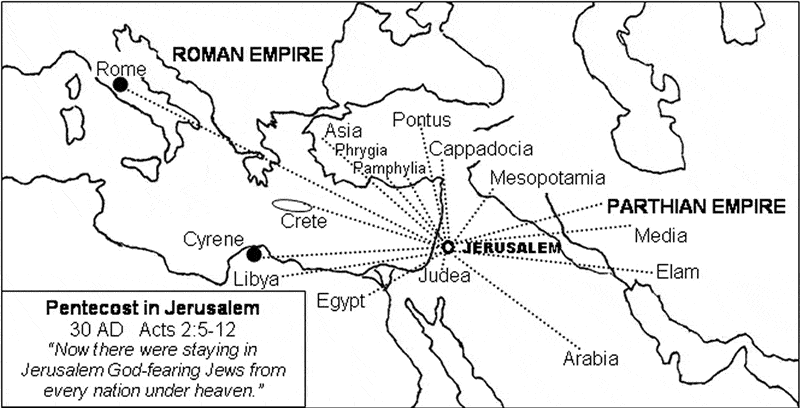
This dream isn’t just for the people of Israel. God’s dream is for all the nations of the earth to come to his holy mountain and surrender their ways to his way. The text declares that people will stream to it. Many nations will come to learn God’s ways, to obey God’s word, and to receive God’s wisdom.
It’s hard to imagine an international court that actually works—one whose decisions are considered binding by all. Today nations ignore the judgments of the World Court or the United Nations. Yet Micah envisions a day of one nation under God, marked by people who seek God, love God, listen to God, and share God with others.
This is the good news! This is the gospel of Jesus and his kingdom! Micah sees a revival of new believers coming from all over the world to meet with God.
From Personal to Social Transformation
But Micah’s vision doesn’t stop with personal transformation. The gospel leads to social transformation as well.
Verses 3-4 continue: “They will beat their swords into plowshares and their spears into pruning hooks. Nation will not take up sword against nation, nor will they train for war anymore. Everyone will sit under their own vine and under their own fig tree, and no one will make them afraid.”
Harder than imagining all nations seeking God is imagining that those nations will exchange weapons of destruction for tools of life, greed for generosity, and fear for love.
Is it really hard to imagine a time when tanks will be turned into tractors, when drones will be used as rescue operatives, when battleships will become passenger liners or grain handlers? Is it hard to imagine policing that doesn’t require weapons and body cameras? When gangs are rewarded for acts of peace rather than violence? When no one is afraid to leave their house?
Maybe it’s difficult for some to imagine this social transformation because there’s a hole in their gospel—one that leaves out the full picture. The gospel is not just the restoration of our individual hearts estranged from God; it is also the restoration of relationships estranged from one another. Biblical justice is social justice because the gospel has social implications.
The image of each person “under his own vine and fig tree” spells freedom—freedom from hunger and oppression, and the freedom to one’s own property. Can you imagine a time when everyone will have enough food? When the walls of tyranny will come tumbling down? When there will be no poverty, no unemployment, no slums? That’s what Micah foresees.
Even though we can’t see it now, the good news is that God has a plan already in progress. As followers of Christ, we are motivated to see all things made new, even in difficult times.
The Necessity of Hope
Let me ask you this: Are you consciously looking for God’s leadership in the midst of your crisis? How does God’s character and his future plans motivate you to active involvement in the needs around you today? Is your hope fixed on him?
C.S. Lewis wrote, “Hope is one of the theological virtues. This means that a continual looking forward to the eternal world is not a form of escapism or wishful thinking, but one of the things a Christian is meant to do….If you read history, you will find that the Christians who did most for the present world were just those who thought most of the next….Aim at heaven, and you will get earth ‘thrown in’; aim at earth, and you will get neither.”
Practical Application
Verse 5 declares: “All the nations may walk in the name of their gods, but we will walk in the name of the LORD our God for ever and ever.”
How does this vision apply to us practically? Two things stand out.
First, we must turn to God and away from fear. Whether we experience prosperity or disaster, good fortune or persecution—none of that can undo or frustrate the final goal God has for each one of us in Christ Jesus.
Fear is the tool of the enemy. Fear has no place in the body of Christ. Paul told Timothy, “God has not given you the spirit of fear, but of love, power and a sound mind” (2 Timothy 1:7).
We may not understand why things happen the way they do. We may not know how God will straighten out the mess the world is in. But we can look confidently to the future, knowing that eventually God will put all the parts together so that his plan is accomplished and the picture will finally make sense.
Second, we need to reengage our Christian imagination for a new world. Howard Thurman wrote, “Keep alive the dream; for as long as a man has a dream in his heart, he cannot lose the significance of living.”
Neuroscience research shows that dreaming helps people de-escalate emotional reactivity and enhances creativity and problem-solving.
Release your creative, justice-bringing, Christ-centered, restorative imagination! We need to see poets writing new sonnets, musicians making songs of justice and shalom, painters bringing color and imagery to what minds have not conceived.
I’m calling architects and entrepreneurs to dream of what shalom looks like for our neighborhoods and cities. I’m asking emergency service workers—firefighters, police, doctors, nurses, counselors—to reengage your imagination for being the peacemakers of society.
Micah’s hope in God’s ultimate eternal plans kept him actively involved in the spiritual needs of his day. He yearned for the glory of the promised kingdom, but he was bound in time within his own historical context just as we are.
God’s Plan: Revival from the Broken
Consider William J. Seymour, son of slaves, blind in one eye, who humbly paved the way and was used by God to ignite a revival.
On April 9, 1906, Seymour’s friend Edward Lee began to speak in tongues after Seymour prayed for him. They walked to the Asberry home on Bonnie Brae Street in Los Angeles for the evening prayer meeting, where about fifteen African Americans gathered because they wanted to encounter God in a greater measure. Seymour shared the testimony of how Lee had spoken in tongues less than two hours before.
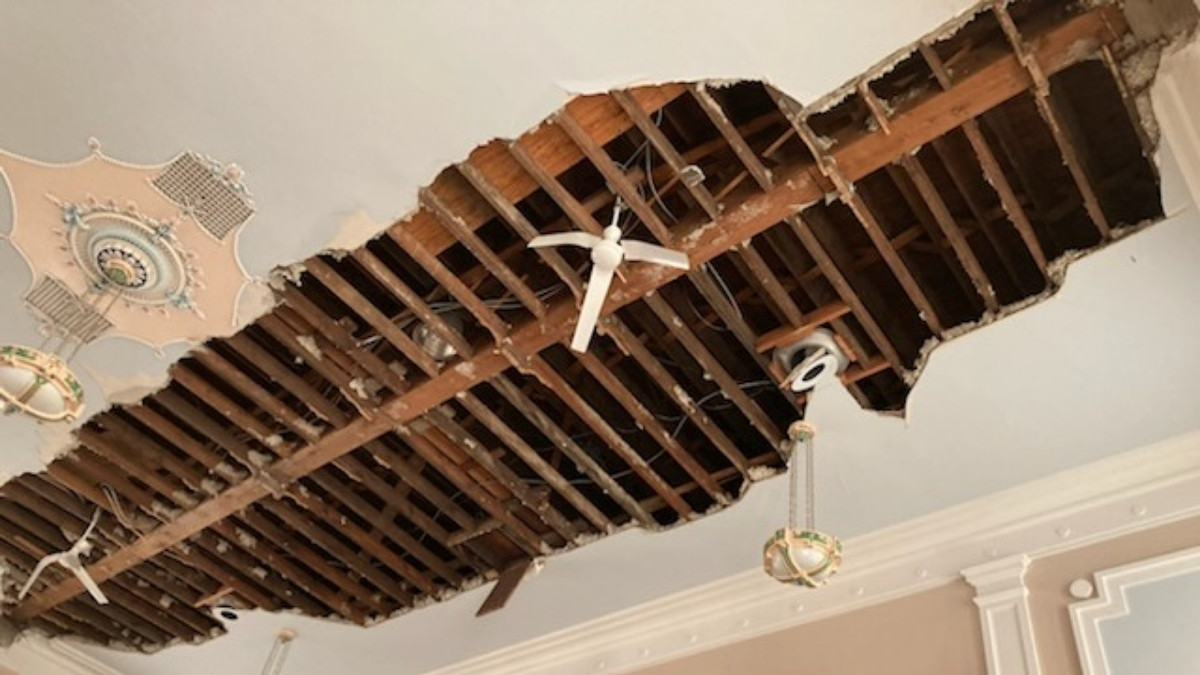
Crowds of both black and white people from different churches came to see what God was doing. At one point, the house swelled with so many people that the front porch caved in. Within a week, they moved to a vacant building at 312 Azusa Street.
During a time of heavy racial segregation, Seymour created a place where everyone would be welcome, regardless of skin color or nationality. One of the biggest breakthroughs at the Azusa Street Revival was that the walls of race, gender, and age were broken down. Eyewitness Frank Bartleman observed that the color line was washed away, racial divides abolished by the blood of Jesus.
Seymour’s early leadership team was racially mixed and included women. Regular participants included African Americans, European Americans, Hispanic Americans, Asian Americans, Native Americans, and more. One person said, “From the first time I entered I was struck by the blessed spirit that prevailed in the meeting, such a feeling of unity and humility among the children of God.”
The story of Azusa Street reminds us that God’s vision in Micah 4 is not mere fantasy. When the broken and afflicted dare to dream God’s dream, when they gather in humility and unity, when they refuse to let the divisions of this world dictate the boundaries of God’s kingdom—revival breaks out. The impossible becomes inevitable.
Seymour and those fifteen believers didn’t wait for society to change before they embodied the vision of Micah 4. They created a foretaste of that promised future right there on Azusa Street, where the dividing walls came down and people from every background gathered to encounter the living God.
The beauty of Micah’s prophecy is that it’s not wishful thinking. It’s the inevitable future that God has already set in motion. Azusa Street was just one eruption of that future breaking into the present. Every time God’s people choose unity over division, peace over violence, and justice over oppression, we’re not building the kingdom—we’re revealing what’s already coming.
Micah’s vision challenges us with a choice: Will we be dreamers or cynics? Will we participate in God’s coming kingdom or passively wait for it? The Azusa Street Revival shows us that when God’s people dare to embody the vision—when they refuse to accept society’s divisions as final—the impossible starts breaking into the present.
Your neighborhood, your workplace, your church are your Bonnie Brae Street. What would it look like for Micah 4 to break out there? Who needs to hear you say, “Tell them about the dream”?
The question isn’t whether swords will become plowshares. Micah assures us they will. The question is whether you’ll start beating your sword into a plowshare today. The question is not whether God’s dream will come to pass—the question is whether we will be among those who keep the dream alive in our generation, who refuse to let fear extinguish imagination, who gather with others to create spaces where heaven touches earth.
All the nations may walk in the name of their gods, but we will walk in the name of the Lord our God forever and ever. Not someday. Not eventually. But starting today.
Keep alive the dream. For as long as God’s people have a dream in their hearts, we cannot lose the significance of living or the power to transform the world around them.
Reflection Questions
- Is it easy or difficult for you to imagine a world of total peace?
- What dream do you have for a more just society?
- How is your life moving toward or away from this dream?