
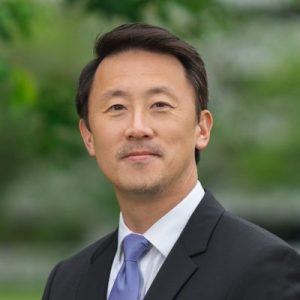
Wayne Park is the Chancellor of Fuller Texas, and Assistant Professor of Congregational and Marketplace Leadership. He will. be speaking on Thursday afternoon at Midwinter 2026.
Where do you call home these days—and what does community look like for you there?
Houston, Texas, is home and has been for 15 years. Surprisingly, this city is incredibly diverse and overflowing with immigrants. My home church community—Kingdom City—is predominantly African / African American and pan-South American, and is located near Houston’s International District.
What’s a moment when you’ve seen love between people change a situation, a team, or a relationship?
I see it quite often in the context above; contrary to what many might dream multiethnic community to be about, it is incredibly hard work that involves different ways of doing things, wrestling with which culture is the norm, navigating offense—sometimes repeatedly—humbling oneself before the immigrant. The way of love has always worked. It changes the atmosphere in a room.
What helps you stay open to loving others when life or ministry feels demanding?
An evening examen or nightly review is necessary to see where I have or have not been loving, kind, patient, tolerant. In the stillness of those moments I can look back and see clearly and discern if an apology or amends is necessary. Rinse and repeat. This practice keeps me safe and continually open to loving others.
When the church truly lives out “one another,” what kind of impact do you think becomes possible?
I see it in two areas. My church community continually exists as a counterpoint to the prevailing narrative of extreme Christian nationalism in Texas. In fact, I would say the entire Midsouth is like that. I have seen hard, conservative men soften up because they have lived in community closely with people of color and immigrants. They don’t join in the rhetoric of hate. They become moderated and softer in their views.
Secondly, at my work. Fuller Theological Seminary has existed since its inception as a counterpoint to fundamentalism. “Reforming Fundamentalism” has been a mantra of sorts, and in many ways I have seen the campus I lead in Texas exist in this space of conciliatory reasonableness —”come let us reason together”— in helping shape and disciple a new generation of pastor and ministry leader who has been rehabilitated from the prevailing fundamentalist narrative.
What do you like to bring to the potluck?
What, you mean other than the beer?