
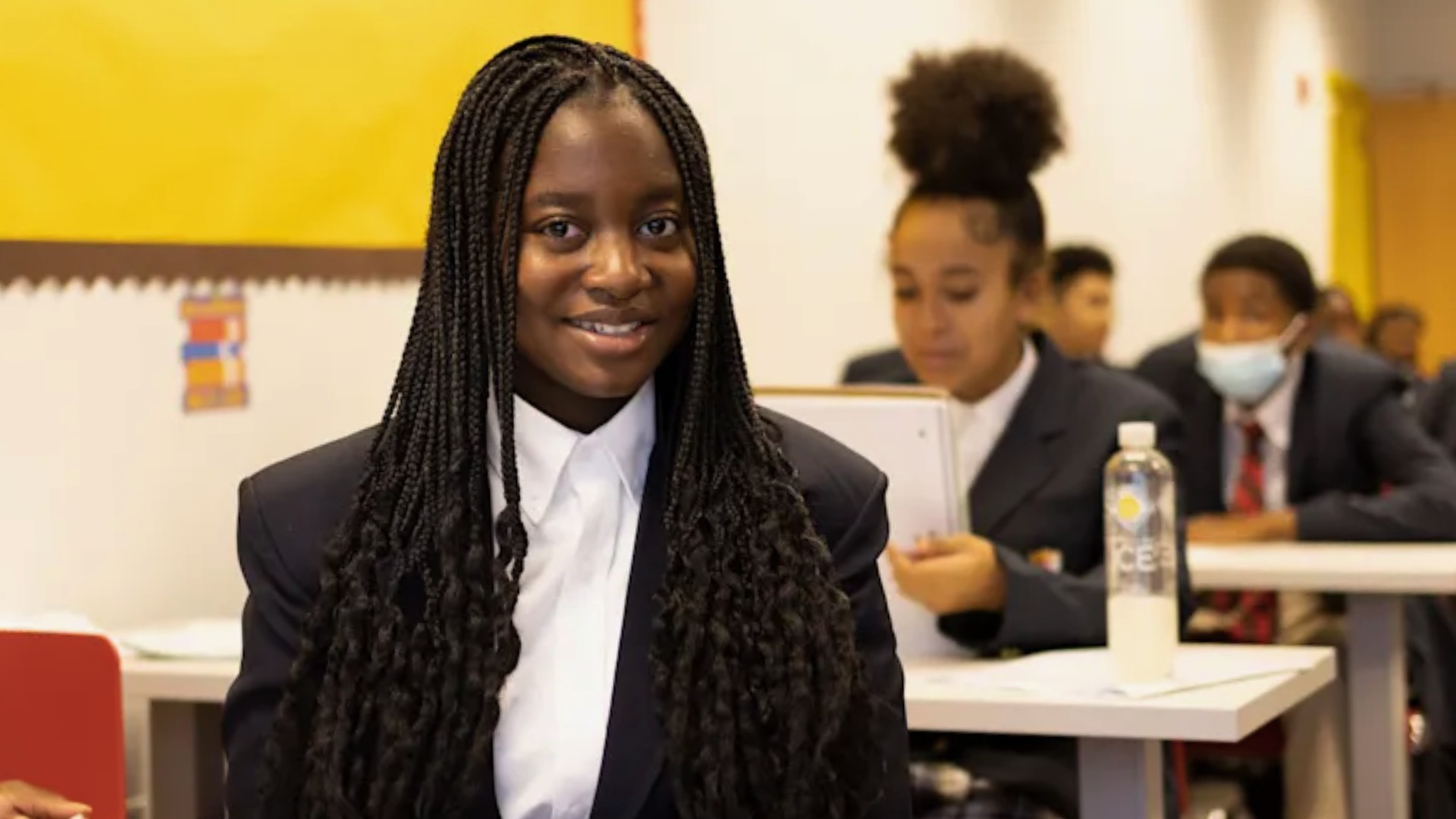
Last fall, I got to participate in a tour of a Capital Preparatory Charter School in the Bronx, New York. The tour was part of the Covenant Justice Conference in New Rochelle, New York, hosted by Rev. David Holder and the good people of New York Covenant Church. It prompted me to consider questions around justice and how young people are educated in this country.
We talk about justice often in the Covenant. Education is one place where questions of justice become immediate and personal because they touch real children, real families, and real futures. Families pursue that hope through a range of education models—public schools, private schools, charter schools, alternative schools, and homeschooling—and each comes with its own promises and limitations. In the Covenant, you’ll find people in many lanes.
A Pastor’s Burden and a Charter School Tour
As a teen, Holder had some difficult experiences in a racially segregated public school. After he transferred to Talent Unlimited, a program within the public Julia Richman High School in Manhattan, he thrived. When he had children, he sent them to public schools in New Rochelle, New York, where his children thrived as well but only because Holder and his wife advocated intensely on their behalf.
Although his children’s schools were technically desegregated on paper, Holder noticed huge gaps in proficiency scores and advanced placement between white and Black and brown children. Despite being a racially diverse community, New Rochelle was still segregated.
“There were even two different Little Leagues,” he told me over the phone, referring to kids’ baseball programs. “I had never seen that before—how does a city have two different Little Leagues?”
Holder and New York Covenant Church decided to start a free entrepreneurship program for kids. They approached several schools in New Rochelle, exploring partnership options, but each one rejected the proposal. Finally, a school in the wealthy neighboring town of Mount Vernon accepted it. Holder described these historical disparities as part of what pushed him to keep looking for additional educational solutions.
Dr. Steve Perry, a friend of Holder, was an educator who had launched a series of charter schools in Connecticut. His network had recently received approval to launch a school in New York. After hearing about Capital Prep’s sustained track record of success in college placement (100 percent of graduates are accepted into four-year colleges), Holder began working to launch one of their schools in New Rochelle as a way to bring better outcomes to more families in his community, especially those who could not afford private school tuition.
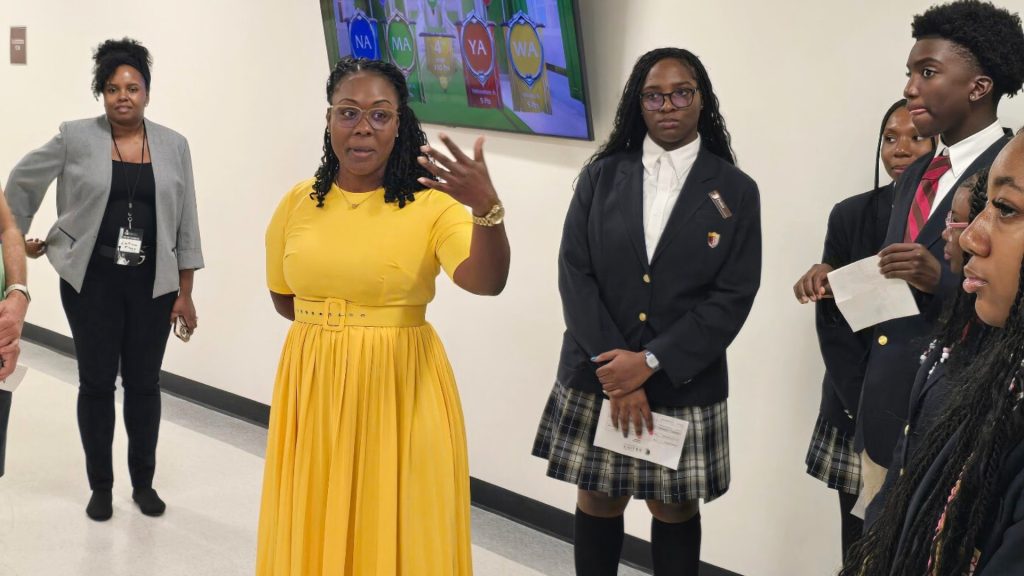
To say I was impressed by Capital Prep is an understatement. The building was bright and colorful, and the students—not just the ones who gave us the tour but the students we encountered in the classrooms—appeared excited and engaged. It seemed like the kind of school that only exists on television, except all the faces looked like mine. As part of the tour, we got to hear directly from Dr. Perry, and I later scheduled a phone call to hear more of his story.
“I was born on my mother’s 16th birthday, third generation into poverty, in public housing,” Perry told me over the phone. He watched his mother fight for things that other families take for granted, like keeping the heat on in their apartment in Middletown, a suburb of Hartford, Connecticut. “You do the math on that…you can die from that kind of cold,” he said.
From there Perry started an Upward Bound program for students from historically disadvantaged populations to prepare them to enroll and graduate from college—they would be the first in their families to do so. But when he visited the urban and suburban schools those students were attending, he found the same kind of segregation and low expectations for the Black and brown students that Holder had witnessed.
“I thought maybe there was just some sort of misunderstanding, but then it just kept happening,” he said. “We would work with them over the summer and help them plan their classes for the fall. But when I visited them two weeks in, I found them in classes I did not sign them up for. Eventually I was told our kids weren’t put in those classes because we didn’t use the right math curriculum. So the following summer I used the exact same curriculum with the exact same textbooks the schools were using. But they were still being left out. That was the genesis of Capital Prep, which started in Hartford and expanded from there.”
I asked Dr. Perry about the claim that charter schools like his only have great outcomes because they can filter out the worst performing students from their enrollment. He recoiled.
“This is what I hear when I hear that question: ‘The only way you could possibly have a school where Black children are outperforming their low expectations is if you somehow found the only Black children who could do that.’” He went on to describe the hardship some of his students face outside the school building, including unstable housing. “The reason we put them in uniforms is to disguise their poverty,” he said. “Dr. King said that a school should be so good that you can’t tell who the child’s parents are.”
Perry continued, “Our school works because it was designed by the community, for the community. We place high expectations on these children and build up their confidence so they can learn. We hire people who believe they can learn, and if they act like they don’t believe our kids can learn, we fire them.”
Our tour made clear why charter schools can be both celebrated and contested—and why education remains such a charged justice issue.
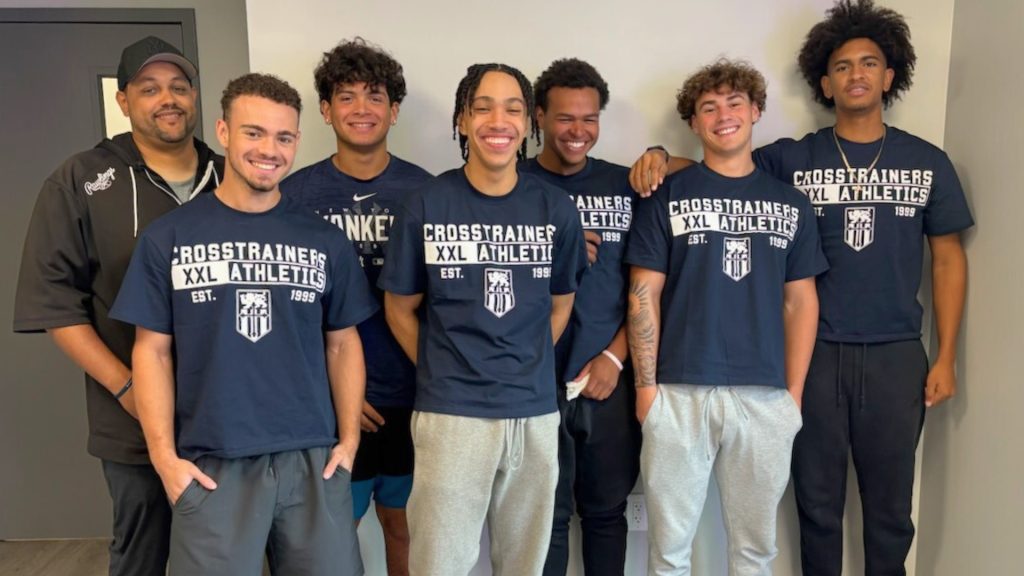
New York Covenant Church also operates a private Christian school on the property of their new building. The Crosstrainers Christian Academy is focused on pairing elite athletics with religious instruction and character development. When I asked about being involved in two such different models of schooling, Rev. Holder told me both models have a lot to offer.
That conversation led me to seek out the perspectives of Covenant educators on how we view education through the lens of justice. As you might expect, given the diversity of our Covenant family, I heard a range of opinions and feedback.
Covenanters Reflect on Education
Many of the educators I heard from work in public schools. Several emphasized that at its best, public education is a commitment to dignity and opportunity for every child. But they were also honest about the inequity and harm that can occur within the system.
Katie Elliott, a member of McMinnville Covenant Church in McMinnville, Oregon, teaches English language arts to sixth and eighth grade students. “Education is the biggest bang for our buck in providing a just and ennobling world,” she said. Public schools are the only institutions that don’t get to “cherry-pick” their students. “Without education, an individual cannot know how their experience lines up with the experiences of others, and they certainly cannot act to advocate for their own or others’ rights,” she said. “Some of my students face the everyday reality of our culture, telling them they are the least. It is my responsibility and my privilege to show them that they are worthy of every investment.”
“I strongly believe that Christian educators need to be in the secular school setting,” said Covenanter Sandy Hoppenrath, also of the Portland area. With more than 20 years in K-12 public education, she added, “Students and families need Jesus. I have the honor of praying for my students and families, which I take seriously.”
Yet public education is not always equitable. Britt Schachtele, a K-12 educator who serves in a therapeutic day treatment program in an alternative high school, named the fact that the school-to-prison pipeline for young people of color is real. Hoppenrath also noted that children and staff can be subject to significant violence. If a child is dysregulated, she said, “the needs of the one outweigh the needs of the many.”
Debbie Montzingo, who serves as chaplain for Covenant Living of the Great Lakes and is a former educator with over 20 years of experience, said that “funding formulas are inherently unjust.” When educational priorities, testing, and standards are identified by non-educators, those standards can actually harm students.
One educator who asked to remain anonymous said that schools do not tend to prepare students to be creative or to think or behave as leaders, and that efforts to prepare children for “the real world” can become punitive and reinforce oppressive systems that administrators claim to oppose.
Blending Faith and Education
Some Covenanters serve in private Christian school settings, where academic curriculum can be paired with religious instruction.
Two renowned private institutions in the Covenant are Oakdale Christian Academy and Child Care Center, an operation of Oakdale Covenant Church on the south side of Chicago, and Minnehaha Academy in Minneapolis, Minnesota, a ministry of the Northwest Conference of the Evangelical Covenant Church.
Donna Harris, president of Minnehaha Academy, spoke in a 2023 Minnesota Public Radio interview about leading the school through the COVID-19 pandemic, as well as returning to campus after a violent explosion in 2017 that killed two staff members.
“You need to be doing the things to cultivate a strong team before a crisis happens,” Harris told MPR host Angela Davis. In an educational context, that means investing in relationships between parents and children, parents and teachers, students and other students, and families and other families.
Regarding returning to campus after the blast, Harris said, “I just needed to be there with the community”—even though it meant she had to use a wheelchair. In a different way, her comment reflects a core justice posture: showing up. To make an impact, you show up. It also matters not just that you show up, but how.
A Hybrid Model
Rev. Kelly Ladd Bishop, associate pastor at Newton Covenant Church in Newton, Massachusetts, shared the educational model at Grace Prep Academy of Greater Boston, where she teaches. “Our school holds classes on campus with professional teachers and administrators two days a week,” Bishop said. “The other three days parents follow lesson plans and educate their children at home.” She explained that the model offers strong education and flexibility for different learning styles and families who can afford to pay tuition and have a parent available at home three days a week.
“I originally worked in public education because I loved it,” Bishop said. “I landed in the University Model because of my children, the hybrid model being important for them. I love teaching middle school Bible, and we have a fabulous chapel and spiritual formation program.”
TAKEAWAYS
One main takeaway I got from these conversations is that there are many ways to provide a quality education. Ascertaining the right path in any given setting for a specific family takes diligence and discernment, especially because there are so many options.
In the end, the pursuit of justice begins and ends not with us, but with God. God cares about our kids just as God cares about all the people in our community—more than we do. And all the people we interact with in the context of education are made in God’s image.
So let us go forth in Jesus’s name. Let us pursue justice and righteousness through the work of education. Let us do it for our kids, and for ourselves. Wherever you are, and wherever you ultimately land, don’t be afraid to pick a lane and get moving.