
Much has been written about the decline of the American church. Attendance is down. Younger generations are leaving. The numbers tell a story of a church in crisis. But what if we have been looking at the wrong problem? What if the crisis is not just that fewer people are attending church, but the way people are choosing which church to attend?
American Christianity is sorting itself into hardened camps. These days, the pew you sit in says as much about your politics as your theology. The Evangelical Covenant Church has always believed something different. Born among immigrants who refused to write a creed, the Covenant was never built around ideological uniformity. It was built around relationship — around questions like How goes your walk? and Are you living in Jesus? In a church culture built to sort, those turn out to be quietly countercultural questions.
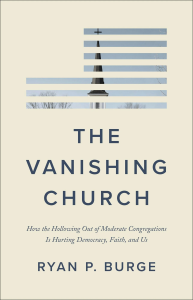
Sociologist Ryan Burge has spent years tracking what many of us have sensed in our pews, council meetings, and fellowship halls. In his recent book, The Vanishing Church: How the Hollowing Out of Moderate Congregations Is Hurting Democracy, Faith, and Us, he describes a profound shift in American religious life that has been building for fifty years and now feels almost inevitable.
In the 1980s, evangelicals were just as likely to sit beside a Democrat as a Republican in church. Political diversity in the pews was unremarkable; it was simply part of congregational life. That world is gone. Today evangelicals have consolidated into an overwhelmingly Republican voting bloc, while mainline Protestant churches—long home to the moderate middle—have tilted Democratic even as they hemorrhage members. The congregations that once held people of genuinely different political convictions together are vanishing. Burge calls it “the Big Church Sort,” and he argues that it is nearly complete.
What makes his analysis so clarifying is not just the data but what lies beneath it. Polarized churches often succeed in the short term: strong in-group identity, consistent attendance, reliable giving. But the cost is steep. When a congregation becomes an extension of a political tribe, it loses something essential—the capacity to form people spiritually rather than simply confirm them politically. Those who do not fully align politically or culturally tend to leave. Some move toward ideological extremes. Others walk away from faith altogether, unwilling to have their deepest convictions reduced to partisan identity.
Burge suggests that American religion has become an “all or none” proposition—conservative evangelicalism or nothing at all—leaving millions of theological and political moderates effectively homeless. The middle, he argues, is disappearing. And with it goes one of the last spaces in American civic life where people of genuinely different backgrounds and beliefs could encounter one another, be changed by one another, and practice the difficult art of remaining in community across difference.
Survival and faithfulness, Burge insists, are not always the same thing. A church can fill its pews by becoming a mirror of its members’ politics—and lose its soul in the process. The harder calling is to remain a place where people are formed rather than confirmed, where identity in Christ outranks partisan identity, and where the community holds together even when the culture expects it to split.
For members of the Evangelical Covenant Church, that calling isn’t new. It’s the tradition we’ve been standing in all along. The Covenant has long embraced the phrase “in essentials unity, in nonessentials liberty, in all things charity.” At our best, this has been our practiced posture—shaped by mission, tested through disagreement, and sustained by the belief that the unity of the Spirit runs deeper than uniformity of opinion. We have not always lived this out cleanly or courageously. At times, the desire to hold people together can drift into ambiguity or avoidance. Still, this aspiration has marked the Covenant for generations.
Consider the sacrament of baptism. The Covenant has historically welcomed both infant baptism and believer’s baptism, refusing to make either one a condition of fellowship. In most Christian traditions, that question is long settled. The Covenant chose to hold it open—not out of theological indifference, but out of a conviction that belonging in Christ is not contingent on resolving every secondary question. People who disagree on how we practice the sacrament of baptism can still share a table, share a mission, and share a life of faith together.
From our beginnings, the Covenant has resisted making every secondary conviction into a boundary marker of belonging. That instinct came from the pietist belief that the Christian life is deeper than intellectual alignment and that unity in Christ can survive real disagreement. These are not incidental features of Covenant life. They reveal the shape of a people who have often chosen the harder, slower, more human work of staying together over the easier satisfactions of ideological clarity.
That places the Covenant squarely in the territory Burge describes as vanishing. But it also positions us to offer something the wider culture desperately needs: a church that has learned, however unevenly, how to have difficult conversations without losing one another.
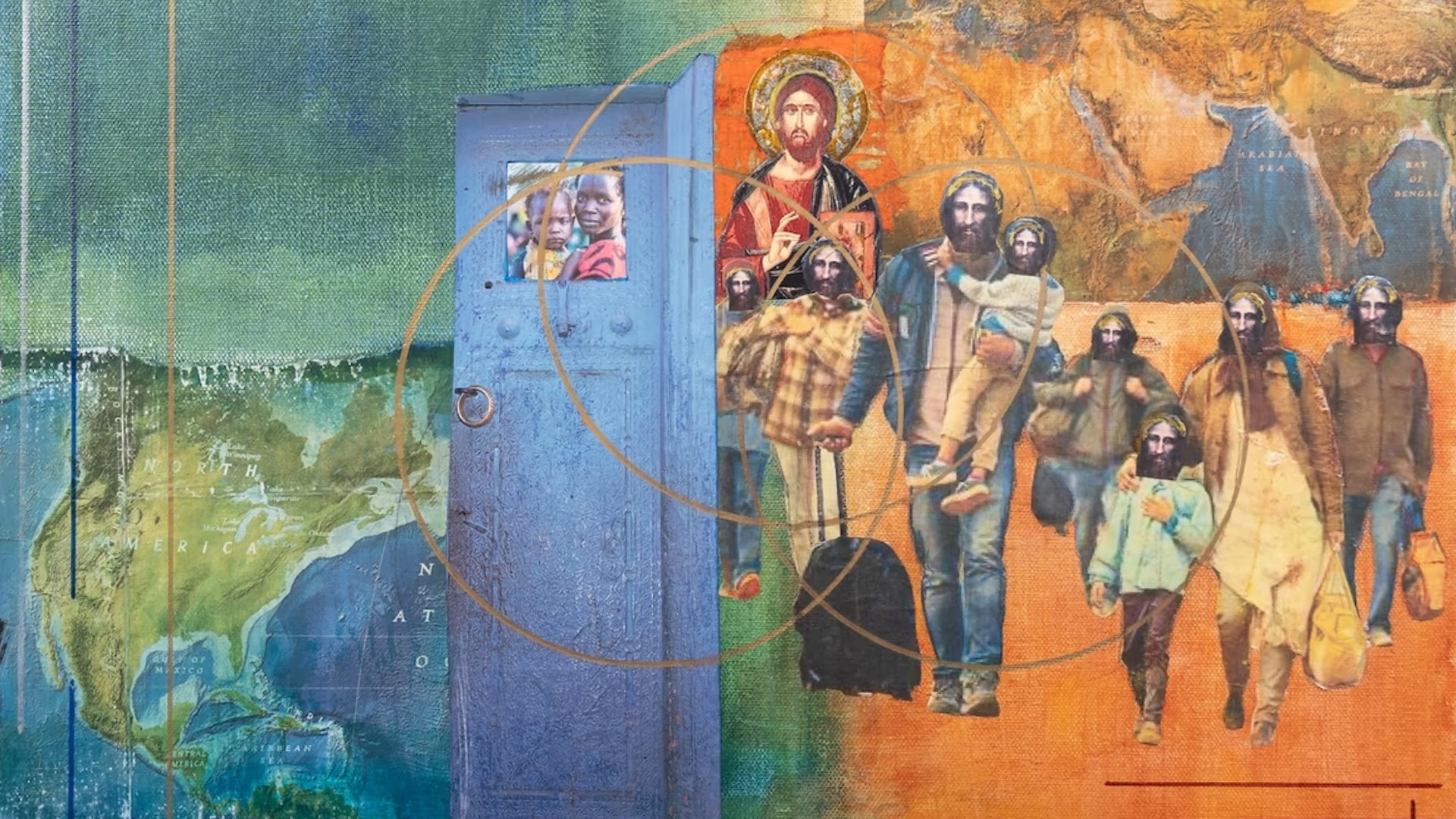
I saw this lived out recently at First Covenant Church in Moline, Illinois, where I now worship. Our Wednesday night Bible study participated in the Covenant’s Liturgical Common Read, reading and discussing Matthew Soerens and Jenny Yang’s book, Welcoming the Stranger. The room held a wide range of opinions on immigration. The conversations were, at times, intense. People brought their convictions, fears, questions, and personal histories. There were moments of real tension—the kind that makes you wonder whether the group will hold.
We did not solve the issue of immigration. We did not all leave with the same conclusions. Something else happened. We learned to listen to one another. We made space for perspectives that were not our own. At the end of it all, we prayed together—genuinely and vulnerably—for God’s will to be done, even when we were not sure what that looked like.
That is the kind of thing Burge’s data cannot finally measure, and no church growth strategy can manufacture. It is the work the Evangelical Covenant Church, at its best, has long tried to do.
For the Covenant, The Vanishing Church is less a lament than an invitation to remember who we have been at our best and to discern together whether that calling is still worth the cost. If the middle disappears, we lose more than moderate politics. We lose spaces where faith is shaped through patience, where disagreement becomes an occasion for growth, and where the church offers a foretaste of the reconciled humanity God is bringing into being.
The people in the room at First Covenant did not have all the answers. But they knew how to pray. And they knew how to stay. In a church culture built to sort itself into tribes, that kind of staying may be one of the most radical forms of discipleship we have left.